
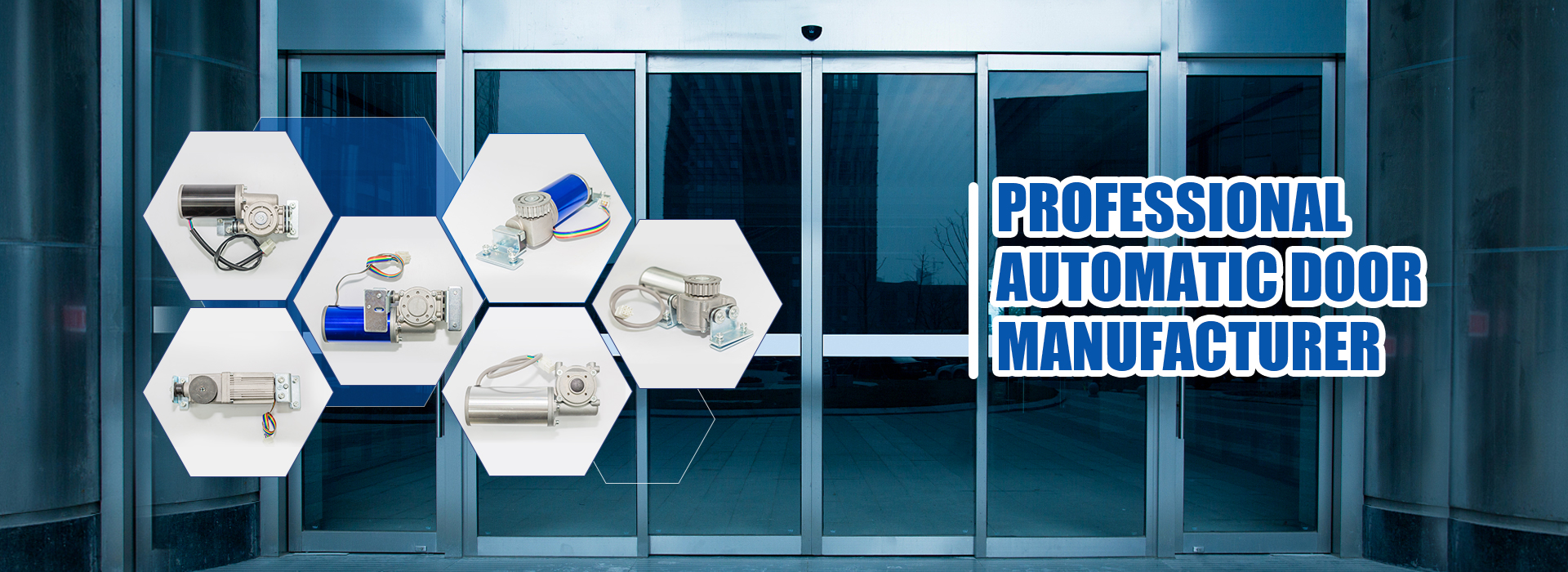
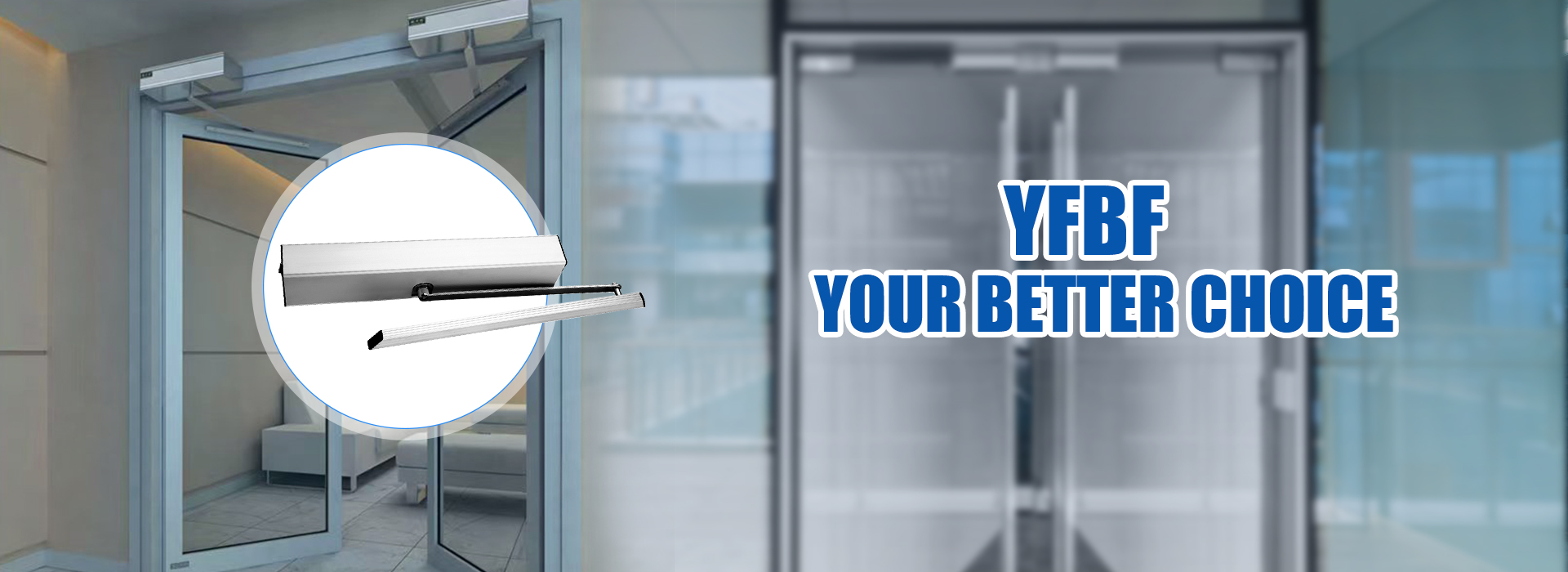

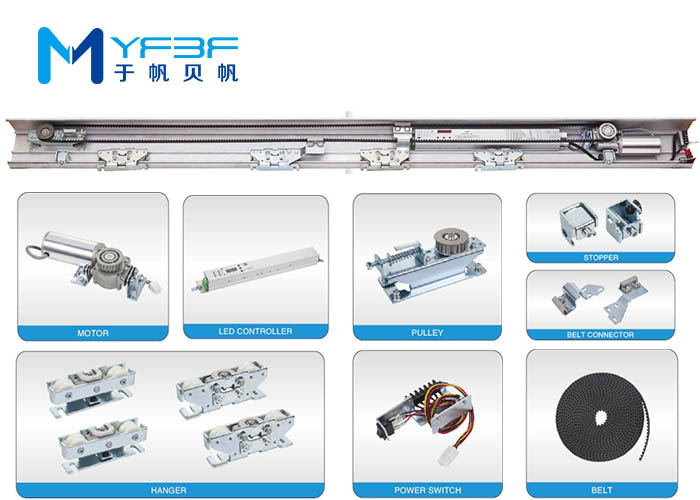
For most facility managers and OEM distributors, the automatic sliding door operator is the most visible automatic device on a building entrance, and the operator is the device that breaks the most quietly when the operator is not on a maintenance schedule. The operator runs 1,000 to 3,000 open-close cycles per day on a commercial site, and the operator runs 5,000 to 10,000 open-close cycles per day on a public facility site, and the operator’s mechanical wear parts (belt, idler pulley, 24GHz microwave sensor relay) have a service life of 18 to 36 months on a commercial site and 12 to 24 months on a public facility site. Because the mechanical wear parts have a fixed service life, the maintenance schedule is the variable that determines whether the operator reaches the published service life or fails before the published service life, and the maintenance schedule is the variable that determines whether the service contract is profitable or unprofitable. This article walks through the four-tier maintenance schedule for a 24V brushless DC sliding door operator, drawing on the manufacturer-issued thresholds for the YF200 automatic sliding door operator and the full sliding door operator product line from Ningbo Yufan Beifan.
Why Automatic Door Maintenance Is the Most Skipped Trade on a Service Contract
There is a structural reason the automatic sliding door operator is the most skipped trade on a building service contract. The operator runs quietly, the operator is invisible to the building occupants, and the operator is on a preventive maintenance contract that is renewed automatically every year. The combination of the three (quiet, invisible, auto-renewed) is the right combination for a service trade to fall through the cracks of a facility’s budget, and the combination is the right combination for the operator to fail at the worst possible time — during a peak-occupancy morning, during a customer-facing retail window, or during a hospital corridor access event. Because the operator is quiet, invisible, and auto-renewed, the operator is the device that the building’s facility team forgets to inspect until the device fails, and the failure is the most expensive way to learn the lesson.
There is a second reason the operator is the most skipped trade. A facility’s preventive maintenance budget is allocated by line item, and the line item for the automatic sliding door operator is usually a small share of the building’s total maintenance budget — typically a low single-digit percent of the building’s annual maintenance spend, because the operator is a single device on the building’s facade. A small line item is the right place for a facility to defer maintenance to the next budget cycle, and the next budget cycle is the right place for the operator to reach the end of its service life without a maintenance visit. The cost of a deferred maintenance visit is a low two-figure sum per visit, and the cost of an operator failure is a high four-figure to low five-figure sum per failure, and the cost ratio is the right ratio to remember when the facility team is reviewing the maintenance budget.
There is a third reason the operator is the most skipped trade. The OEM-issued maintenance schedule is usually published in the operator’s installation manual, and the manual is filed in the building’s plant room, and the plant room is the right place for the manual to be lost. The right way to fix the third reason is to extract the maintenance schedule from the manual into a per-quarter checklist, and the per-quarter checklist is the right place to file the maintenance log, and the per-quarter checklist is the right place to file the OEM service report. For the broader industry context on how service contracts are written and how facility budgets are allocated across trade lines, the BloombergNEF insights on industrial services is a useful practitioner reference for the service-contract economics that frame the operator’s maintenance budget.
What Are the Three Maintenance Tiers for an Automatic Sliding Door Operator?
An automatic sliding door operator with a 24V brushless DC motor and a 24GHz microwave sensor runs on three maintenance tiers, and the three tiers are the right place to set the maintenance schedule. The three tiers are: daily visual inspection, periodic mechanical check, and annual factory recalibration. Each tier has a published list of tasks, a published cadence, and a published log format, and the three tiers are the right tiers to write into the building’s preventive maintenance contract. Because the three tiers are the right tiers to write into the contract, the three tiers are the right tiers to defend the maintenance budget when the facility team reviews the contract, and the three tiers are the right tiers to defend the operator’s service life when the operator reaches the end of its warranty.
Daily Visual Inspection
Daily visual inspection is the first tier, and the daily visual inspection is the right tier to catch the small anomaly before the small anomaly becomes a failure. The daily visual inspection has five tasks, and the five tasks are the right tasks to assign to the building’s first-shift security or maintenance team. The five tasks are: (1) listen for unusual noise during the open-close cycle, (2) observe the open-close speed against the published 0 to 9 second open time, (3) verify the door leaf’s alignment against the rail and the floor guide, (4) verify the safety sensor windows are clean and unobstructed, and (5) test the manual release in case of power outage. The five tasks take 2 to 3 minutes per door, and the five tasks are the right tasks to log in the daily maintenance log within 24 hours of the inspection. The daily visual inspection is the right tier to catch the anomaly at a cost of 2 to 3 minutes per day, and the daily visual inspection is the right tier to avoid the cost of a multi-day failure that runs into the high four-figure to low five-figure range.
Periodic Mechanical Check
Periodic mechanical check is the second tier, and the periodic mechanical check is the right tier to catch the mechanical wear before the mechanical wear reaches the failure threshold. The periodic mechanical check has six tasks, and the six tasks are the right tasks to assign to the building’s quarterly maintenance contractor or to the OEM’s authorised service centre. The six tasks are: (1) inspect the belt for fraying along the tooth profile and the side wall, (2) inspect the idler pulley for wear on the bearing and the tooth profile, (3) check the hanger bolts for tightness on the rail, (4) clean the rail and the sensor windows, (5) lubricate the moving parts with the OEM-recommended lubricant, and (6) check the door leaf for alignment against the rail and the floor guide. The six tasks take 30 to 45 minutes per door, and the six tasks are the right tasks to log in the quarterly maintenance log on the day of the inspection. The periodic mechanical check is the right tier to catch the mechanical wear at a cost of 30 to 45 minutes per quarter, and the periodic mechanical check is the right tier to extend the belt and idler pulley service life to the published 18 to 24 months and 24 to 36 months respectively.
Annual Factory Recalibration
Annual factory recalibration is the third tier, and the annual factory recalibration is the right tier to reset the operator’s motor current draw, belt tension, closing force, and safety sensor range against the OEM-published thresholds. The annual factory recalibration has four tasks, and the four tasks are the right tasks to assign to the OEM’s authorised service centre. The four tasks are: (1) measure and record the motor current draw against the published threshold (typically 0.3 to 0.5 A at no-load for a 24V 60W brushless DC motor), (2) measure and record the belt tension against the published threshold, (3) measure and record the closing force against the published threshold (typically 30 to 70 N for a single-leaf door and 40 to 100 N for a double-leaf door), and (4) measure and record the safety sensor detection range against the published threshold (typically 0.3 to 1.5 m for a 24GHz microwave sensor). The four tasks take 60 to 90 minutes per door, and the four tasks are the right tasks to log in the annual OEM service report on the day of the recalibration. The annual factory recalibration is the right tier to catch the drift at a cost of 60 to 90 minutes per year, and the annual factory recalibration is the right tier to extend the operator’s service life to the published 10 to 15 years.
How Do You Read the Manufacturer Schedule for a 24V Brushless DC Motor?
The right way to read the manufacturer schedule for a 24V brushless DC motor is to start with the published motor nameplate data, and the right nameplate data to start with is the rated voltage, the rated current, the rated speed, and the rated torque. For a YF200 reference SKU, the nameplate data is: voltage AC 90 to 250V input (auto-sensing 50/60 Hz), motor 24V 60W brushless DC, opening speed 150 to 500 mm/s adjustable, closing speed 100 to 450 mm/s adjustable, open time 0 to 9 seconds adjustable. The four nameplate numbers are the four reference points against which the maintenance schedule checks the actual operating numbers, and the four reference points are the four points that define the wear budget for the motor. Because the wear budget is defined by the nameplate, the right way to read the manufacturer schedule is to keep the nameplate numbers visible at the maintenance contractor’s workbench, and the right way to keep the nameplate visible is to laminate a copy of the nameplate data and to mount the copy next to the operator’s service disconnect.
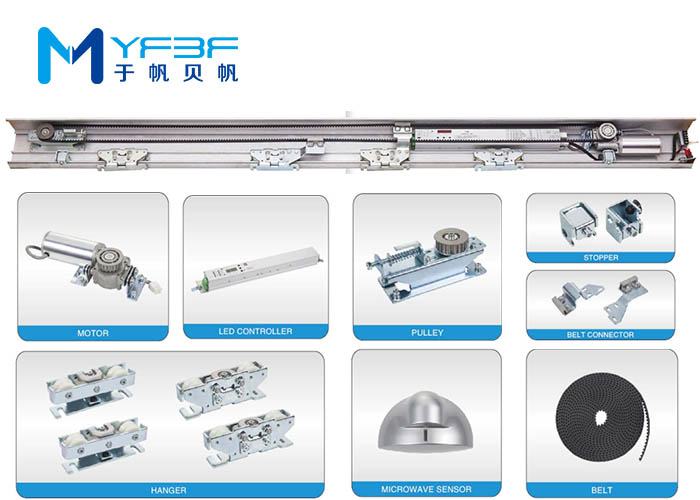
The right way to read the motor current draw is to measure the current draw at no-load and at rated load, and the right way to compare the measurements is to the published baseline. A 24V 60W brushless DC motor at no-load typically draws 0.3 to 0.5 A, and the motor at rated load (a 1×300 kg door) typically draws 0.8 to 1.2 A. The motor current draw above 1.2 A at rated load is the right indicator of a failing bearing, a failing belt, or a misaligned door leaf, and the right response to the elevated current draw is the right response that the quarterly mechanical check should have caught. For the motor test standards that the current-draw measurement has to follow, the ASTM standards catalogue is the right North American reference for the brushless DC motor test methods and the tolerance bands that the current-draw measurement has to respect.
The right way to read the motor’s service life is to match the operating duty cycle to the published service life. A 24V brushless DC motor running 1,000 open-close cycles per day (a typical commercial site) has a published service life of 8 to 12 years, and the motor running 5,000 open-close cycles per day (a typical public facility site) has a published service life of 4 to 6 years. The published service life is the right number to set the motor’s preventive replacement budget, and the published service life is the right number to set the motor’s annual factory recalibration budget. The right way to use the published service life is to schedule the motor’s preventive replacement at 80 percent of the published service life, and the right way to schedule the replacement is to put the replacement on the building’s 5-year capital plan rather than on the building’s annual maintenance budget.
What Are the Lubrication and Cleaning Tasks on a Sliding Door Operator?
The lubrication and cleaning tasks on a sliding door operator are the tasks that the building’s maintenance contractor can do, and the tasks are the right tasks to do on the quarterly mechanical check rather than on the daily visual inspection. The lubrication and cleaning tasks have six sub-tasks, and the six sub-tasks are the right sub-tasks to do on the quarterly maintenance visit. The six sub-tasks are: (1) clean the rail with a soft brush to remove debris and grit, (2) clean the safety sensor windows with a microfiber cloth and a non-ammonia glass cleaner, (3) clean the door leaf’s bottom guide with a soft brush, (4) lubricate the rail with a silicone-based dry lubricant (NOT a petroleum-based lubricant, which attacks the rubber belt and the rubber hangers), (5) lubricate the idler pulley bearing with a single drop of light machine oil, and (6) lubricate the hanger bolts’ threads with a single drop of light machine oil. The six sub-tasks take 10 to 15 minutes per door, and the six sub-tasks are the right sub-tasks to log in the quarterly maintenance log. Because the six sub-tasks are the right sub-tasks to do on the quarterly maintenance visit, the six sub-tasks are the right sub-tasks to assign to the building’s maintenance contractor, and the six sub-tasks are the right sub-tasks to verify on the quarterly maintenance audit.
The right way to think about the lubrication and cleaning tasks is that the tasks are the right tasks to prevent the small drift, and the small drift is the right indicator of the larger failure. A rail that has not been cleaned in 6 months starts to add 0.5 to 1 second to the open time, and the open time drift is the right indicator that the motor is working harder, and the motor working harder is the right indicator that the motor current draw is rising, and the motor current draw rising is the right indicator that the motor is on a path to the failure threshold. The right way to read the lubrication and cleaning tasks is as a chain of small drifts that add up to a failure, and the right way to break the chain is to do the six sub-tasks on the quarterly maintenance visit. For the maintenance-side reference on the lubrication and cleaning tasks and the wear-pattern analysis that the tasks prevent, the maintenance article published by Machinery Lubrication on belt-drive maintenance is a useful practitioner reference even though its primary subject is industrial belt drives rather than sliding door operators.
The right way to think about the safety sensor cleaning is that the safety sensor is the right device to test, and the safety sensor is the right device to test on the quarterly maintenance visit, and the safety sensor is the right device to test against the published 50 mm obstruction detection threshold. A 24GHz microwave sensor that does not detect a 50 mm obstruction at the published detection range is the right sensor to recalibrate, and the right place to recalibrate the sensor is the OEM service centre. The right way to test the sensor on the quarterly maintenance visit is to place a 50 mm test object in the sensor’s detection zone, and the right way to verify the sensor is to confirm the door reverses on contact with the test object, and the right way to log the verification is on the quarterly maintenance log within 24 hours of the test. The safety sensor test is the right test to fail first, and the safety sensor test is the right test to catch the safety regression before the safety regression becomes a liability.
How Do You Build a Maintenance Log That Survives a Site Audit?
A maintenance log that survives a site audit is the one that names the date, the technician, the anomaly, the action taken, and the OEM service report reference, and the one that is filed within 24 hours of the inspection on a shared site folder rather than in a personal notebook. The maintenance log is the right document to defend the operator’s service life, and the maintenance log is the right document to defend the operator’s warranty claim, and the maintenance log is the right document to defend the building’s compliance with the fire code and the accessibility code. Because the maintenance log is the right document to defend three separate claims, the maintenance log is the right document to file on a shared site folder, and the shared site folder is the right place to make the log visible to the building’s facility team, the OEM service centre, and the site auditor.
The right way to build the maintenance log is to start with the OEM’s published log template, and the right way to adapt the log template to the building’s specific operator fleet is to add the per-door fields (door ID, location, installed date, last service date, next service date) and to keep the per-visit fields (date, technician, anomaly, action taken, OEM service report reference) on every visit. The log template has the right fields to be searchable, and the log template has the right fields to be filtered by door ID or by service date, and the log template has the right fields to be exported to a CSV file for the site auditor. The right way to make the log searchable is to use a spreadsheet with named columns, and the right way to make the log filterable is to use the named columns as the filter fields, and the right way to make the log exportable is to use the spreadsheet’s native CSV export.
The right way to use the maintenance log is to file the log on a shared site folder (a network drive, a shared cloud folder, or a building management system), and the right way to file the log is to file the log within 24 hours of the inspection. A log that is filed within 24 hours is a log that is right against the OEM warranty claim, and a log that is filed after 24 hours is a log that the OEM warranty team can dispute. The right way to discipline the 24-hour filing is to add the 24-hour filing to the building’s standard operating procedure, and the right way to verify the 24-hour filing is to audit the shared site folder at the end of each month. For the consumables, the test objects, and the small hardware that the maintenance contractor needs on the quarterly maintenance visit, the cross-industry inventory of maintenance consumables and test equipment maintained by McMaster-Carr is a useful North American reference for the right place to source the right consumable at the right time.
The right way to use the maintenance log in an emergency is to search the log for the per-door pattern, and the right pattern to look for is the recurring anomaly on the same door. A door that has three belt-fraying events in 12 months is a door that has a belt-tension problem, and the right response to the three events is to escalate the door to the OEM service centre for a belt-tension recalibration. The right way to use the log in the escalation is to include the log entries in the OEM service report, and the right way to file the OEM service report is in the same shared site folder as the maintenance log. The maintenance log and the OEM service report are the right documents to file in the same place, and the right place to file the two documents is the shared site folder.
What Are the Most Common Maintenance Mistakes on Automatic Sliding Doors?
After enough service contracts, the same five mistakes show up. They are not exotic. They are the predictable costs of treating the maintenance schedule as a single-line annual budget rather than as a four-tier schedule, and they show up most often on a building that has a single maintenance contractor for the whole building rather than a dedicated contractor for the automatic door operator.
- Skipping the daily visual inspection. The most common mistake is to fold the daily visual inspection into the quarterly mechanical check, and to assume the daily visual inspection is not worth the 2 to 3 minutes per day. The assumption is wrong. The daily visual inspection is the right tier to catch the small anomaly at a cost of 2 to 3 minutes per day, and the small anomaly is the right precursor to the failure that the quarterly mechanical check would catch at a cost of 30 to 45 minutes and a service call.
- Using the wrong lubricant on the rail. The second most common mistake is to use a petroleum-based lubricant (WD-40, white lithium grease) on the rail, and the petroleum-based lubricant attacks the rubber belt and the rubber hangers. The right lubricant is a silicone-based dry lubricant, and the right lubricant is the right lubricant to specify in the OEM service report.
- Skipping the safety sensor verification. The third most common mistake is to skip the 50 mm obstruction test on the quarterly maintenance visit, and to assume the safety sensor is working because the door has not had a safety-related incident. The assumption is wrong. The safety sensor is the right device to test on every quarterly maintenance visit, and the right test is the 50 mm obstruction test. For the air-system and cleanroom-side reference on the safety sensor verification and the operator’s overall cleanliness requirement, the Compressed Air Challenge programme is the right practitioner reference for the operator’s contamination control.
- Filing the maintenance log in a personal notebook. The fourth most common mistake is to file the maintenance log in the maintenance contractor’s personal notebook, and the personal notebook is the right place for the log to be lost when the contractor moves to a different building. The right place to file the log is the shared site folder, and the shared site folder is the right place to make the log visible to the building’s facility team, the OEM service centre, and the site auditor.
- Skipping the annual factory recalibration. The fifth most common mistake is to assume the annual factory recalibration is the same as the quarterly mechanical check, and to skip the OEM-authorised service centre visit. The annual factory recalibration is the right tier to measure the motor current draw, the belt tension, the closing force, and the safety sensor range against the OEM-published thresholds, and the OEM service centre is the right place to do the measurement, and the OEM service report is the right document to file the measurement in.
None of these mistakes are unique to automatic sliding door operators. They are the standard preventive-maintenance mistakes dressed up in 24V brushless DC motors, and the fix is the same four-tier maintenance schedule, applied on a per-door basis, with a per-visit log filed within 24 hours on the shared site folder. The right way to think about the four-tier maintenance schedule is that the schedule is the right tool to catch the small drift before the small drift becomes a failure, and the right way to file the schedule is the maintenance log, and the right way to defend the schedule is the OEM service report, and the right way to verify the schedule is the site audit.
Frequently Asked Questions
How often should an automatic sliding door be maintained?
On a four-tier schedule: daily visual inspection (2 to 3 minutes per door), quarterly mechanical check (30 to 45 minutes per door), annual factory recalibration at an OEM-authorised service centre (60 to 90 minutes per door), and emergency escalation when the open time exceeds 9 seconds, the safety sensor fails to detect a 50 mm obstruction, or the motor current draw exceeds the published threshold.
What is the right lubricant for an automatic sliding door rail?
A silicone-based dry lubricant, applied to the rail with a soft brush. Do not use a petroleum-based lubricant (WD-40, white lithium grease) on the rail, because the petroleum-based lubricant attacks the rubber belt and the rubber hangers. The right lubricant is the right lubricant to specify in the OEM service report.
What is the typical service life of a sliding door belt?
A belt drive on a sliding door operator running 1,000 open-close cycles per day (a typical commercial site) has a typical service life of 18 to 24 months. The service life is the right variable to set the belt’s preventive replacement budget, and the right way to schedule the replacement is to put the replacement on the building’s 5-year capital plan.
What is the typical service life of a 24GHz microwave safety sensor?
A 24GHz microwave sensor on a sliding door operator has a typical service life of 5 to 7 years before the relay contacts need replacement. The right test on the quarterly maintenance visit is the 50 mm obstruction test, and the right response to a failed test is to escalate to the OEM service centre for a sensor recalibration.
How do you test a sliding door safety sensor?
Place a 50 mm test object in the sensor’s detection zone, and confirm the door reverses on contact with the test object. The right test is the 50 mm obstruction test, and the right cadence is on the quarterly maintenance visit. The right way to log the test is on the quarterly maintenance log within 24 hours, and the right way to escalate a failed test is to the OEM service centre.
Post time: Oct-14-2026