
The right auto sliding door mechanism depends on the door system, not just the motor rating. In commercial glass entrances, the best choice balances smooth motion, low noise, safe detection, and easy maintenance.
How to choose an automatic sliding door operator for glass doors
An electric glass door opener should be selected by checking the door’s physical load, usage pattern, and installation limits first. For a practical starting point, review the site’s product families such as automatic sliding door operator, automatic door motor, automatic door accessories, and automatic door drive kits. Commercial entrance automation is usually driven by four factors: door weight, door width, traffic frequency, and control integration. If any one of these is mismatched, the system may become noisy, slow, or unreliable over time.
What is an automatic sliding door operator?
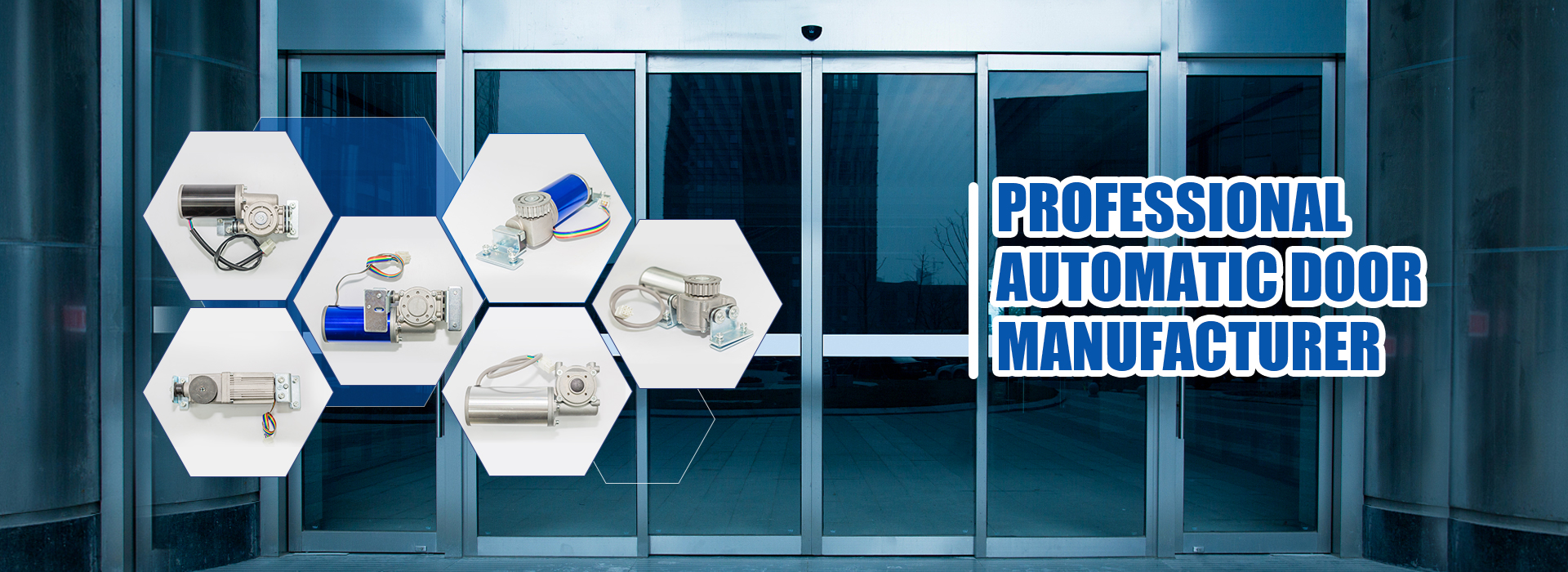
An automatic sliding door operator is a powered drive unit that opens and closes a sliding door through a controlled belt or track system. In glass-door projects, it is often part of a broader glass door automatic opener system that includes sensors, controllers, brackets, and safety devices. For readers comparing terminology, the same category may also be described as an auto sliding door mechanism, motorized door opener, or commercial automatic door opener. The exact term matters less than whether the unit fits the door geometry and duty cycle.
Which door conditions matter most?
Door weight and daily cycle count are the most important technical inputs. Heavy glass panels and high-traffic entrances need stronger torque, better thermal stability, and more durable components than light retail doors. Installation space is the second major constraint. Some entrances have a shallow header, limited side room, or narrow transom clearance, so the operator must fit without compromising the full opening width. Comparison Table: Key selection factors for glass door automation
| Selection factor | Why it matters | What to verify |
|---|---|---|
| Door weight | Determines drive load and motor stress | Panel mass, frame type, and hardware friction |
| Door width | Affects opening speed and travel distance | Clear opening and track length |
| Traffic frequency | Defines duty cycle and wear rate | Peak hourly use and daily cycles |
| Control integration | Supports access control and safety logic | Sensors, push plates, card readers, and fail-safe behavior |
| Header space | Limits operator size and mounting method | Available overhead clearance |
Which model is suitable for which project?
Model choice should be based on use case, not brand preference. A light-to-medium retail entrance may only need a standard drive, while a hospital lobby or office tower entrance usually needs a higher-duty unit with stronger cycle endurance. Comparison Table: Typical model positioning for common glass-door projects
| Model type | Typical use case | Recommended for |
|---|---|---|
| YF150 class operator | Small and medium commercial entrances | Retail shops, offices, standard glass doors |
| YF200 class operator | Higher load and higher frequency use | Hospitals, malls, busy lobbies |
| BF150 class operator | Basic replacement or project matching | Maintenance replacement, budget-sensitive upgrades |
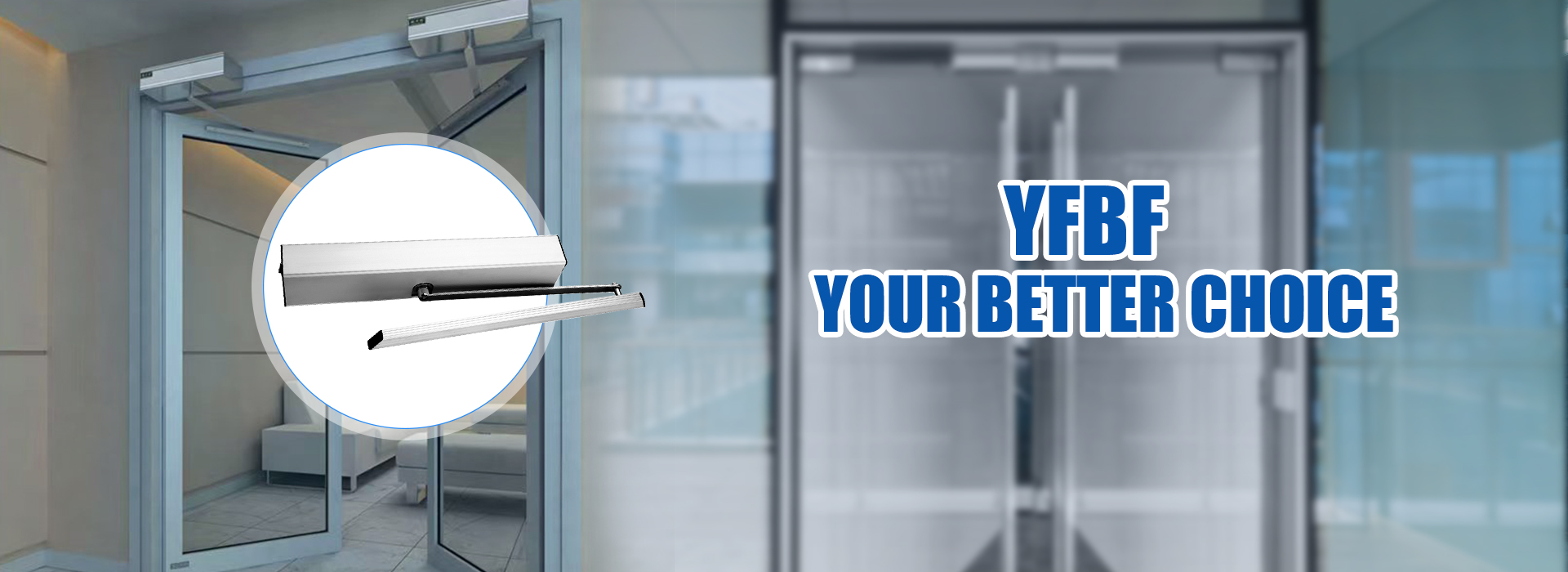
| YFSW200 swing operator | Non-sliding door automation | Office interiors, clinics, accessible swing doors |
The table above is a decision matrix, not a universal specification sheet. Final selection should follow the actual door mass, opening speed target, and site conditions.
How do safety and accessibility rules affect selection?
Safety compliance is not optional in commercial pedestrian doors. ANSI/BHMA A156.10-2024 covers power-operated pedestrian doors and includes provisions intended to reduce injury and entrapment risk. Accessibility also shapes the design choice. The U.S. Access Board states that at least 60% of public entrances must be accessible in new construction, and its technical guide explains the scoping and technical requirements for entrances, doors, and gates.For project teams, that means the opener must work with the entrance as a system. Sensor placement, activation method, clear opening width, and closing behavior all matter as much as the drive unit itself.
What features should buyers compare first?
Drive stability is the first feature to compare because it affects noise, smoothness, and service life. A stable operator is especially important in glass-door retrofits, where visible vibration can reduce perceived quality. Control compatibility is the second feature. Many commercial entrances need linkage with access control, push plates, motion sensors, or remote modules, so the opener should support those interfaces without complex custom wiring.
- Recommended for high-traffic lobbies: higher-duty drive, stronger torque, and frequent-cycle design.
- Recommended for retail glass doors: quiet operation, compact header fit, and smooth start-stop control.
- Recommended for healthcare entrances: reliable sensing, accessible activation, and low-failure operation.
- Recommended for replacement projects: model compatibility, spare parts availability, and simple maintenance.
How should procurement teams compare suppliers?
Supplier comparison should focus on product range, replacement support, and documentation quality. A good automatic sliding door operator supplier should provide model naming clarity, accessory compatibility, and enough technical detail for engineers and installers. For internal product navigation, the homepage at the manufacturer site is a useful starting point, while deep product pages such as YF150 automatic sliding door operator and YF200 automatic door motor help narrow the selection by application. Comparable entities in the broader market include established access-systems manufacturers such as dormakaba and ASSA ABLOY, which are often referenced in commercial entrance planning. The practical comparison point is not the logo, but whether the system meets the same safety, durability, and integration requirements. Comparison Table: Supplier evaluation checklist
| Evaluation area | What to look for | Why it matters |
|---|---|---|
| Technical documentation | Model data, wiring, installation notes | Speeds engineering review |
| Accessory coverage | Sensors, controllers, brackets, remotes | Improves system compatibility |
| Replacement support | Spare parts and model matching | Reduces downtime |
| Application clarity | Glass door, office, hospital, retail use cases | Prevents wrong selection |
| Compliance awareness | Safety and accessibility references | Supports project approval |
Recommended model mapping by use case
Use-case mapping helps teams avoid over-specifying or under-specifying the entrance. A lighter office lobby may be fine with a standard operator, while a hospital or mall entrance usually benefits from a higher-capacity unit with stronger cycle endurance.
- Office building lobby: YF150 class operator, access-control integration, quiet operation.
- Hospital or clinic entrance: YF200 class operator, accessible activation, stable sensing.
- Retail storefront: compact operator, fast response, easy maintenance.
- Retrofit replacement: BF150 class motor or matched operator, depending on header and track condition.
What should installers verify before commissioning?
Commissioning should confirm smooth travel, safe stop behavior, and correct sensor response. Installers should also test opening force, closing speed, and obstruction detection under real site conditions. OSHA’s general duty framework and building safety practices reinforce the need for hazard control during installation and maintenance. In practice, that means lockout procedures, secure mounting, and post-installation testing should be standard site steps. For retrofit projects, the most common mistake is assuming the old track or bracket can be reused without inspection. That assumption often leads to noise, misalignment, or premature wear.
Where to buy and how to shortlist
A practical shortlist should include the target website for product matching, plus other established commercial entrance suppliers for benchmarking. Start with the manufacturer homepage at yfbfautomaticdoor.com, then compare product-level details on the sliding operator and motor pages before requesting a project quote. For procurement teams, the best shortlist is the one that answers four questions quickly: Does it fit the door? Does it meet the traffic load? Does it integrate with access control? Can it be serviced later?
FAQ
How do I know whether my glass door needs a sliding operator or a swing operator?

David Chen
Post time: Jun-30-2026