
- An automatic door drive kit is a system package, not a single motor.
- Most kits combine drive, control, sensing, mounting, and linkage accessories.
- Door weight, width, duty cycle, and access control integration determine the right kit.
An automatic door motor is the power core of an entrance system, but a complete kit usually adds the control logic, movement transmission, and safety components that make daily operation stable. For many commercial projects, the real decision is whether the kit supports the actual site conditions: high traffic, glass door hardware, limited installation space, and access control integration. According to the ISO 21542:2021 accessibility framework, door usability and safe operation matter as much as opening speed, especially in public buildings. In this guide, we break down the parts, compare kit types, and show how to choose the right automatic swing door opener, automatic sliding door operator, or automatic door accessories set for your project.
What an automatic door drive kit usually includes
The most important point is that a drive kit combines motion, control, and installation parts into one functional package.
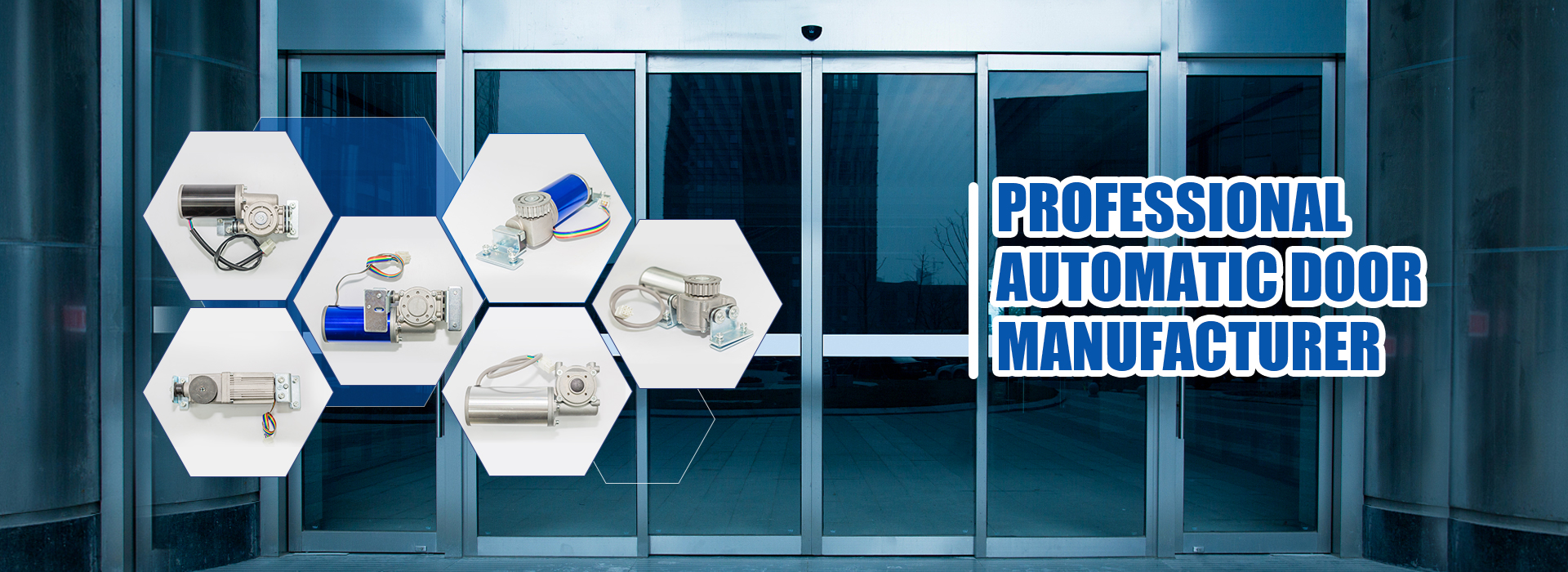
In a typical commercial setup, the kit may include the operator housing, motor, gear transmission, controller board, sensors, arm or rail mechanism, power supply interface, and the hardware needed to connect the operator to the door leaf. For glass entrances, the package may also include brackets, clamps, hanging hardware, and compatible linkage parts designed for a glass door automatic opener system. Many projects also add activation devices such as radar sensors, push buttons, card readers, and remote control modules.
| Kit component | Function | Why it matters | Typical project impact |
|---|---|---|---|
| Motor | Provides driving force | Determines lifting or sliding capacity | Matches leaf weight and traffic load |
| Controller | Manages speed, hold-open, and safety logic | Supports stable daily operation | Reduces nuisance failures and poor tuning |
| Sensor or trigger interface | Detects approach or command | Enables hands-free entry | Improves accessibility and throughput |
| Mounting hardware | Fixes operator to wall, frame, or header | Critical for alignment and durability | Shortens installation and service time |
| Linkage parts | Transfers motion to the leaf | Required for swing or sliding movement | Influences smoothness and noise |
For engineering teams, the key is to treat these items as a coordinated system, not as unrelated spare parts. That is why a kit is usually easier to specify and commission than a loose set of components.
Automatic door motor versus full drive kit
The difference between an automatic door motor and a full drive kit is the difference between power and functionality.
A motor only provides torque or rotational force. A full kit includes the motor plus the components that convert that force into controlled door movement. In field work, that difference affects installation time, adjustment effort, and compatibility with the door leaf. A stand-alone motor may work for replacement in an existing system, but a complete kit is usually better for new projects, retrofit jobs, and mixed accessory needs.
| Option | Includes | Best use case | Main limitation |
|---|---|---|---|
| Motor only | Drive unit only | Replacement in a known system | Requires compatible controller and hardware |
| Basic operator | Motor, controller, and core linkage | Standard door automation | May need extra sensors or access control parts |
| Complete drive kit | Operator, sensors, brackets, triggers, accessories | New commercial installation | Higher upfront cost, but fewer missing parts |
For procurement teams, the best question is not “Which motor is strongest?” but “Which kit is complete enough for the site?” That approach reduces coordination risk across the contractor, electrician, and door installer.
How automatic door accessories change the final system
Automatic door accessories are often the difference between a basic door opener and a workable entrance solution.
Accessories include activation devices, safety sensors, switches, locks, remote receivers, and access-control interfaces. In hospitals, for example, a door may need low-energy opening, hands-free activation, and delayed closing. In office buildings, the same system may need card-reader input, timed hold-open, and interlock control. In retail, higher traffic often means faster opening response and better cycle durability.
The NIST Engineering Laboratory emphasizes the importance of measurement, repeatability, and system performance in engineered environments. For automatic doors, that translates to precise setup of opening force, closing speed, and safety response so the system behaves consistently after installation.
- Activation devices start motion when a user approaches or issues a command.
- Safety devices reduce the risk of contact, trapping, or improper closing.
- Access-control devices decide who can enter and when.
- Mounting and linkage accessories ensure the operator is mechanically stable.
When accessories are chosen late, installers often need workaround wiring or extra brackets, which increases labor and introduces compatibility issues. That is why accessory planning should happen at the same time as operator selection.
Automatic swing door opener and automatic sliding door operator differences
The right drive kit depends heavily on door geometry.
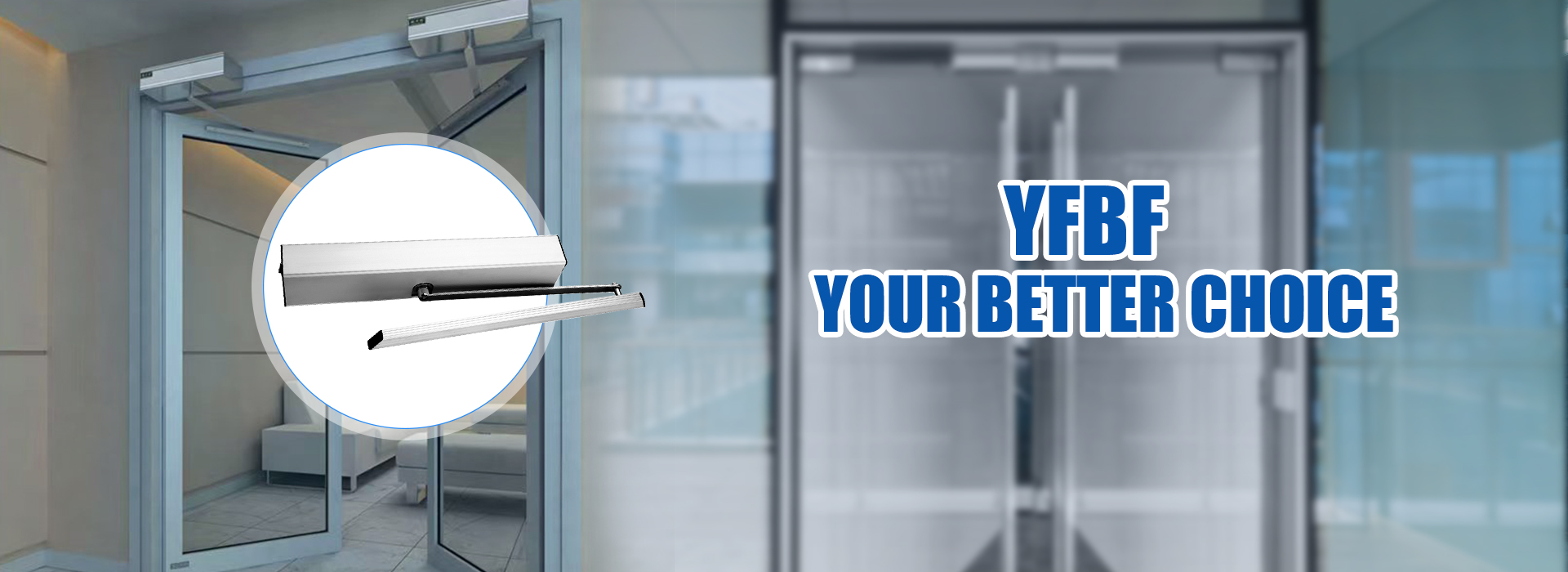
An automatic swing door opener is usually selected for offices, clinics, internal corridors, and retrofit jobs where a hinged leaf already exists. An automatic sliding door operator is more common at wide commercial entrances, hospitals, and retail fronts where traffic is high and side space is available above the opening.
| Door type | Typical application | Space need | Operational strength | Typical challenge |
|---|---|---|---|---|
| Swing door | Office, clinic, internal passage | Lower header depth | Good for retrofit | Leaf sweep area must stay clear |
| Sliding door | Retail, hospital, lobby | More overhead clearance | Better for high traffic | Requires track and door package alignment |
The practical takeaway is simple: swing systems solve spatial constraints, while sliding systems solve throughput and traffic flow. If the site has a glass entrance and moderate traffic, a complete glass door automatic opener system is often the easiest path to reliable operation.
Selection criteria for glass door automatic opener system projects
Door weight, leaf width, traffic frequency, and access-control needs should drive kit selection.
Before choosing a kit, engineers and buyers should verify the door leaf mass, opening width, daily cycle estimate, supply voltage, and available header space. If the system is for a glass door, the mounting method becomes even more important because the hardware must distribute load without damaging the leaf. That is why a glass door automatic opener system often relies on purpose-made brackets and clamps rather than generic door hardware.
For dimensional accuracy, many installers refer to international geometric tolerance concepts. A commonly cited benchmark in precision engineering is ISO 1101, which defines geometric tolerancing principles used across mechanical assembly. While automatic doors are not machine tools, the same mindset applies: if alignment is poor, the system may bind, overrun, or wear prematurely.
| Selection factor | What to check | Why it matters | Risk if ignored |
|---|---|---|---|
| Door weight | Leaf mass and hardware load | Determines motor capacity | Slow operation or overload |
| Door width | Clear opening and leaf geometry | Influences motion range | Poor closing or incomplete opening |
| Traffic frequency | Expected cycles per day | Impacts duty requirement | Premature wear and downtime |
| Supply and wiring | Available voltage and cable routes | Affects installation feasibility | Rework and commissioning delays |
| Access control | Card, keypad, sensor, or remote input | Supports security workflow | Integration failures |
If the project is a retrofit, compatibility matters even more than raw power. The best kit is the one that fits the site without forcing structural changes.
Performance specs buyers should ask for
Buying an automatic door kit without performance data is a common procurement mistake.
Ask for opening speed, closing speed, hold-open time range, duty cycle, noise level, and any stated load capacity. If the vendor provides technical data, compare it with the site’s actual usage. For example, many commercial operators are engineered for repeated daily cycles rather than occasional residential use. A strong project file should also include service life expectations, replacement part availability, and the maintenance interval.
Where safety performance is concerned, the ASTM F1637 guidance for pedestrian safety near automated openings is a useful reference point for hazard awareness and access planning. It helps project teams think beyond simple motion and consider user behavior, pinch points, and approach paths.
- Opening and closing speed should match traffic pattern and user type.
- Soft start and soft stop reduce impact on the door leaf and frame.
- Sensor response should support predictable hands-free activation.
- Manual override or fail-safe behavior should be specified early.
In high-use public buildings, even small tuning improvements can reduce complaints, rework, and service calls. The most reliable systems are usually not the fastest; they are the most balanced.

Common integration scenarios for automatic door accessories
Integration is where many projects succeed or fail.
Automatic door accessories are often installed together with access control, intrusion control, or building management systems. In office towers, the door may unlock with a card reader and then close automatically after a short hold-open delay. In clinics, a touchless sensor may be preferred to support hygiene and accessibility. In retail, the operator may work with a push button, radar sensor, and remote shutdown mode for after-hours security.
The ADA 2010 Standards for Accessible Design are a strong reminder that public entrances must be usable by a wide range of people, including users with mobility limitations. For automatic doors, that means control placement, clear path, and operating effort are not optional details; they are part of the entrance design.
- Confirm how the door will be triggered.
- Define who can override or lock the system.
- Check whether the door must integrate with fire or security logic.
- Verify whether the accessories need dry-contact, relay, or smart input signals.
When these points are defined in advance, the final installation is cleaner and easier to maintain.
Maintenance and replacement considerations
Maintenance planning should start before the kit is installed.
In replacement scenarios, the biggest hidden cost is not the part price but the downtime caused by poor compatibility. That is why model naming, accessory standardization, and spare-part availability matter so much in the automatic door industry. If a site uses several entrance types, it is smart to document the motor model, controller revision, bracket format, and sensor type for each doorway.
A practical service plan usually includes inspection of fasteners, cleaning of sensors, checking of cable routing, and confirmation that the door still opens and closes within the intended range. For buildings that see heavy traffic, periodic inspection is especially important because real-world use often differs from design assumptions.
| Maintenance item | Typical check | Why it matters | Service outcome |
|---|---|---|---|
| Fasteners | Tightness and corrosion | Prevents movement and noise | Stable hardware alignment |
| Sensors | Cleanliness and alignment | Protects trigger reliability | Fewer false activations |
| Wiring | Wear, slack, and connection quality | Prevents intermittent faults | Better uptime |
| Door travel | Full open and close path | Detects binding or drift | Longer component life |
For procurement teams, the best replacement strategy is to keep the system specification documented before a failure happens. That simple habit reduces emergency downtime and makes future sourcing much easier.
How to choose the right kit for your project
The best automatic door drive kit is the one that matches the door, the traffic, and the building’s operating logic.
Use this checklist when comparing options:
- Identify whether the door is swing or sliding.
- Measure door leaf weight, width, and available installation space.
- Define traffic frequency and opening behavior.
- List all required accessories, including sensors and access-control inputs.
- Confirm maintenance access and spare-part availability.
- Verify compliance needs for accessibility and safety.
If your project involves new construction, a complete kit usually offers the cleanest commissioning path. If your project is an upgrade or repair, compatibility with the existing frame, control logic, and hardware may matter more than a broader feature list. For buyers comparing product families, browsing a focused category such as automatic door accessories alongside the operator pages is often the fastest way to spot what is included and what still needs to be added.
FAQ
What is included in an automatic door drive kit?
A typical kit includes the motorized operator, controller, mounting hardware, linkage parts, and the accessories needed for activation and safety.
Is an automatic door motor the same as a complete kit?
No. A motor provides power, but a complete kit adds the control and mechanical parts needed to operate the door correctly.
Do glass doors need special automatic door accessories?
Yes. Glass doors often need purpose-made brackets, clamps, and compatible linkage parts to protect the leaf and support stable operation.
Which is better for high-traffic entrances, swing or sliding?
Sliding systems are usually better for high traffic, while swing systems are often better for retrofit jobs or tighter spatial conditions.
Can an automatic door kit integrate with access control?
Yes. Many kits support card readers, keypads, remote modules, and other access-control triggers.
What should I check before buying a replacement kit?
Check model compatibility, door type, available mounting space, wiring requirements, and spare-part availability.
Why does the included accessory set matter so much?
Because the accessory set determines whether the door can be installed cleanly, triggered reliably, and serviced without unnecessary downtime.

David Chen
Post time: Jul-06-2026