

- Door weight and door width determine whether the automatic door motor has enough torque and control margin.
- Traffic frequency matters as much as load rating because a motor that works in low-traffic offices may fail early in a hospital or retail entrance.
- Replacement projects should prioritize model compatibility, mounting geometry, and spare-part availability to reduce downtime.
- Safety integration with sensors, access control, and override functions is part of the spec, not an afterthought.
- Engineering buyers should compare complete automatic door opener systems, not just standalone motors, when the project needs faster commissioning.
An automatic door motor is the power core of the entrance system, and the right automatic door motor is chosen by load, cycle demand, installation constraints, and control logic rather than by brand claims alone. In real projects, the most useful benchmark is not a vague performance promise but a combination of measurable values: door clearance, operating speed, noise target, and service access. For example, high-traffic public entrances often need repeatable performance under frequent use, while accessible design guidance in the United States expects an unobstructed clear width of at least 32 inches and a door maneuvering space that supports compliant circulation. If you are comparing a automatic sliding door operator with a automatic swing door opener, the first question is not which one looks stronger; it is which one matches the door structure, opening frequency, and project environment.
What an automatic door motor actually does in a commercial entrance
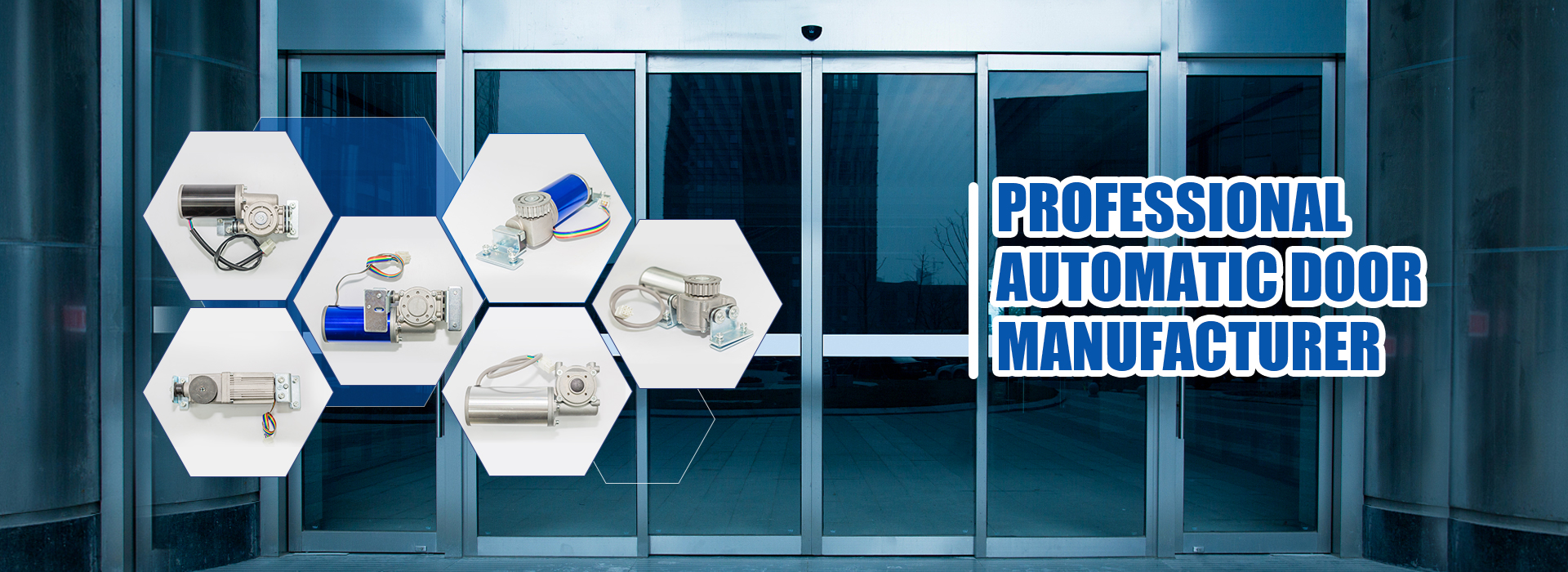
The automatic door motor converts electrical input into controlled mechanical motion that opens and closes the door safely and repeatedly. In a complete entrance system, the motor works with the controller, sensor set, transmission mechanism, and safety devices to manage acceleration, deceleration, stop position, and obstruction response.
That integration is why many engineers prefer a complete automatic door opener assembly instead of a bare motor for new projects. A full operator package reduces integration risk because the drive, controller, and motion logic are designed to work together. For retrofit or automatic door parts replacement, however, the decision often shifts toward compatibility, wiring reuse, and field serviceability.
In practical terms, an automatic door motor is not selected in isolation. The decision should account for the door’s mass, hinge or track geometry, daily open-close count, power supply, and the required interface with access control or emergency release functions. That is especially important in healthcare, office, and retail entrances, where uptime affects traffic flow and user experience.
Key automatic door motor specs that matter most
The best automatic door motor specification sheet starts with the door, not with the motor. A project that ignores leaf weight or duty cycle may look acceptable on paper and still fail during commissioning or after months of use.
| Spec | Why it matters | Typical project impact |
|---|---|---|
| Rated door weight | Defines torque margin and mechanical stress | Prevents slow movement, overload, and premature wear |
| Door width | Affects leverage, travel distance, and opening time | Impacts cycle time and operator sizing |
| Duty cycle | Shows how often the motor can run without overheating | Critical for hospitals, malls, and transit-adjacent entries |
| Opening speed | Controls user flow and accessibility balance | Too slow reduces throughput, too fast may raise safety concerns |
| Power supply | Determines installation fit and backup design | Influences wiring, UPS, and emergency operation strategy |
| Noise level | Affects user comfort and building quality perception | Important for offices, clinics, and premium retail |
Rated load is the first number to check because it sets the safe operating envelope. If a door leaf is near the upper edge of the motor’s rating, the system may still move, but acceleration, braking, and seasonal friction changes can shorten service life. That is why experienced installers leave a margin rather than selecting the smallest acceptable unit.
Door width matters for more than clearance. A wider leaf creates a longer sweep, greater wind loading on exterior entrances, and more torque demand at the start of movement. On swing applications, a wide leaf also increases hinge stress and makes control of opening and closing ramps more important.
Duty cycle is one of the most overlooked specs in automatic door motor replacement projects. A low-traffic office lobby may tolerate a light-duty operator, but a hospital entrance or retail storefront may need a system designed for repeated daily cycles without thermal overload. In that context, comparing only power in watts can be misleading because the controller, gearbox, and thermal management are equally important.
Automatic door motor manufacturer data that buyers should verify
Buyers should ask for test conditions, not only headline specs. A reliable automatic door motor manufacturer can explain the door weight used in the test, the number of cycles validated, the ambient temperature range, and the access control interfaces supported by the unit.
For electrical and quality expectations, technical credibility improves when the supplier references recognized standards instead of only marketing claims. The U.S. National Institute of Standards and Technology explains basic measurement traceability and calibration concepts in its resources on measurement uncertainty, while quality management systems are commonly structured around ISO 9001. Those references do not replace product testing, but they help buyers ask better questions about repeatability and documentation.
For doors in accessible entrances, the U.S. Access Board states that a minimum clear opening width of 32 inches is a common baseline in ADA guidance, and accessible maneuvering spaces must be planned carefully for real-world use. That is a useful reminder that motor selection affects more than motion; it affects building compliance and user comfort.
| Buyer check | What to request | Why it reduces risk |
|---|---|---|
| Test load | Rated door mass and test door geometry | Shows whether published values are realistic |
| Cycle data | Validated cycles under stated conditions | Improves confidence in high-use applications |
| Interface list | Sensor, access control, and alarm inputs | Prevents integration delays on site |
| Service parts | Availability of boards, arms, belts, and gears | Shortens downtime during repair or replacement |
| Warranty terms | Coverage scope and response process | Helps compare total lifecycle cost |
If a supplier cannot explain these items clearly, the risk shifts to the installer and building owner. In project work, unclear documentation often causes the most expensive delays because the door is already on site, labor is scheduled, and the entrance must open on time.
How to match an automatic door motor to door type and traffic pattern
The right automatic door motor depends on door type because sliding and swing systems place different demands on the drive mechanism.
For automatic sliding door operators, the key concerns are track friction, panel mass, opening speed, and repeated cycle stability. These systems suit wider commercial entrances, especially where the door must move many times per hour. Sliding operators are often preferred in shopping centers, office towers, and healthcare facilities because they keep the opening path efficient and predictable.
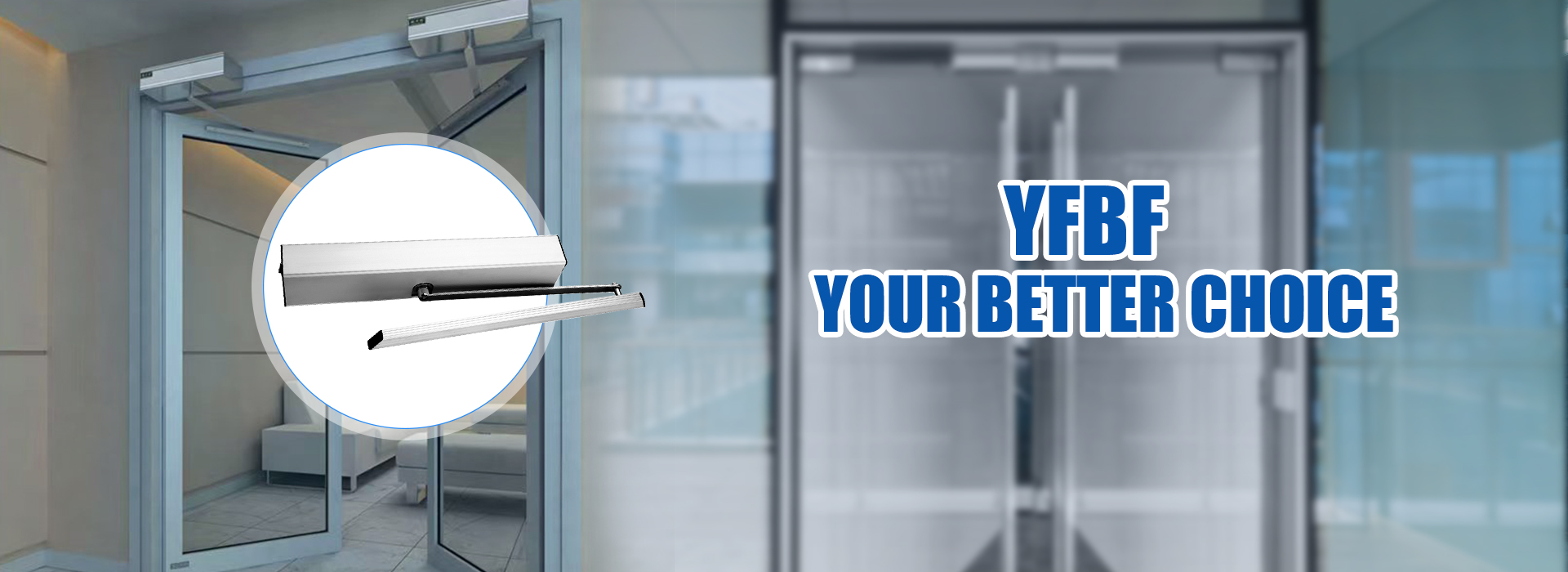
For automatic swing door openers, the focus shifts to hinge load, arm geometry, obstruction sensing, and close-control behavior. Swing doors are often easier to retrofit where the architecture already uses a hinged leaf and floor space is limited.
For glass door operators, the motor choice must also account for visual integration, clamp compatibility, and the need to preserve a clean storefront appearance. That matters in commercial renovation projects where the entrance is part of brand presentation as much as circulation.
| Door type | Best fit | Typical strength | Selection caution |
|---|---|---|---|
| Sliding door | High-traffic commercial entry | Efficient throughput | Needs accurate track and panel alignment |
| Swing door | Retrofit and space-limited interiors | Simple structural fit | Requires hinge and arm clearance |
| Glass door | Retail and office frontage | Visual transparency | Hardware compatibility must be verified |
Traffic pattern is the second decisive factor. A clinic entrance with steady but moderate use may need reliability and quiet motion more than maximum speed. A retail store may care more about quick opening and closing to support customer flow and HVAC control. A hospital may prioritize low failure rates, easy manual override, and access-control integration because entry behavior changes across day and night shifts.
In other words, the same automatic door motor can be excellent in one building and wrong in another. The best spec sheet is the one that reflects the building’s actual use pattern rather than a generic catalog assumption.
Automatic door motor replacement: what compatibility means in the field
Automatic door motor replacement succeeds when the new unit matches the old system’s geometry, controls, and service constraints. The most common failure in replacement work is assuming that a motor with a similar appearance will also fit the same way.
Before replacement, technicians should check mounting points, arm length, travel limits, voltage, board connectors, and safety sensor logic. Even small mismatches can force extra fabrication, extend downtime, or create unstable door behavior after handover.
Replacement projects are also where spare-part availability becomes a real business metric. A door that is still mechanically sound can remain out of service for days if the board, drive belt, or control module is obsolete. That is why many facility teams prefer products with clear service maps and a stable parts catalog.
- Confirm the existing door weight and width before ordering any replacement unit.
- Record the original voltage, wiring layout, and controller model during the site survey.
- Check whether the replacement must support access control, sensors, or fire-alarm release.
- Verify that the operator can be maintained without removing the entire frame assembly.
- Request the service manual and parts list before final procurement.
From an operations standpoint, the replacement goal is not simply to restore motion. It is to restore reliable motion with less risk than before. That means choosing a unit that reduces future maintenance effort, not one that only matches the old footprint.
Performance metrics that matter more than watts
Watts alone do not tell the whole story of automatic door motor performance. Real project evaluation should include speed stability, thermal behavior, stopping accuracy, and environmental tolerance.

In many commercial entrances, the user experiences the door through three moments: the delay before opening, the smoothness of the motion, and the certainty that the door will close safely. A motor with high rated power can still feel poor if it starts abruptly or stops inconsistently.
For safety and accessibility, the broader building context matters too. The ADA guidance from the U.S. Access Board is often used as a practical reference point for circulation and access planning, while the NIST materials on measurement uncertainty remind engineers that test values always sit within defined tolerances. In procurement language, that means every performance number should be read together with its test condition.
| Metric | Why it affects users | Good procurement question |
|---|---|---|
| Opening speed | Controls convenience and traffic flow | What is the speed under rated load? |
| Closing force profile | Impacts safety and comfort | How is the closing curve controlled? |
| Thermal protection | Prevents shutdown in heavy use | What happens after repeated cycles? |
| Manual override | Supports emergencies and service work | How is the door operated during power loss? |
| Noise output | Affects building experience | What is the acoustic level in real installation? |
When evaluating suppliers, ask for the complete motion profile, not just the maximum speed. A smooth, predictable curve often matters more than a fast but abrupt movement, especially in clinics, offices, and premium retail locations.
How to choose between complete operators and individual parts
The choice between a complete automatic door opener and individual components depends on project scope, skill level, and service expectations.
A complete operator is usually better for new installations because it reduces risk and shortens commissioning time. It also makes specification clearer for contractors because drive, control, and motion logic arrive as a matched system. For projects that require a wider solution set, an integrated page such as product catalog helps teams compare door types before ordering.
Individual parts make more sense when the existing structure is intact and only one component has failed. In that case, the main objective is to restore function with minimal disruption. The tradeoff is that repair work needs better diagnosis and tighter compatibility control.
- Start with the door type and traffic level.
- Confirm the load and geometry.
- Decide whether the project is new build or replacement.
- Check control integration needs for sensors and access control.
- Choose the simplest solution that meets the actual use case.
For many buyers, this decision is really a lifecycle question. A complete system may cost more at purchase, but it can save time in commissioning and maintenance. A part-based repair may be cheaper upfront, but it can raise risk if the remaining components are near end of life.
Common mistakes in automatic door motor selection
Most automatic door motor problems start with an incomplete site survey. If the door weight is estimated visually or the traffic pattern is guessed, the resulting spec will often be wrong.
The second mistake is ignoring integration requirements. A door that must work with card readers, motion sensors, push plates, emergency release, or fire alarm contacts needs a controller that supports those functions cleanly. Otherwise the motor may be mechanically fine but operationally unusable.
The third mistake is buying for today instead of the next three years. Buildings change use, traffic grows, and maintenance windows shrink. A motor selected with no spare-capacity margin may become a recurring service issue sooner than expected.
- Do not choose by price alone.
- Do not ignore traffic frequency.
- Do not treat sensor and control compatibility as optional.
- Do not assume replacement equals plug-and-play.
- Do not skip documentation review before shipment.
These mistakes are avoidable because they are process failures, not engineering mysteries. A structured specification review almost always produces a better result than a last-minute “closest match” order.
Practical checklist for buying an automatic door motor
A good automatic door motor buying process is short, repeatable, and evidence-based.
- Measure door weight, width, and opening geometry.
- Define daily cycle count and peak traffic periods.
- Confirm power supply and backup requirements.
- List all connected devices: sensors, access control, alarms, and locks.
- Check replacement part availability and service documentation.
- Request test conditions for all published performance claims.
If you are sourcing for a commercial renovation, also confirm whether the entrance needs a access control system interface. That single detail often determines whether the door operates as a standalone unit or as part of a larger building workflow.
For project managers, the best outcome is not the most powerful motor. It is the one that operates safely, fits the structure, supports the building’s traffic pattern, and can be serviced without long downtime.
FAQ
What is the most important spec for an automatic door motor?
Rated door load is usually the first and most important spec because it determines whether the operator can move the door safely with enough margin for wear, friction, and seasonal changes.
Should I choose an automatic door motor based on watts?
Not by watts alone. Power matters, but load rating, duty cycle, control logic, and installation geometry often matter more in real projects.
How do I know if I need automatic door motor replacement?
Frequent stopping, slow movement, unusual noise, overheating, or repeated controller faults are common signs that replacement or major service should be evaluated.
What is the difference between a door motor and a complete automatic door opener?
A motor is the drive element, while a complete automatic door opener includes the controller and motion system needed for easier integration and commissioning.
Can a swing door motor be used on a sliding door?
No. Swing and sliding systems use different mechanics, so the operator must match the door type and movement path.
What should I verify before ordering a replacement unit?
Check voltage, mounting dimensions, door weight, control interfaces, sensor compatibility, and spare-part availability before purchase.
Why do hospitals and clinics need special attention in door motor selection?
Because they need reliable cycle performance, quiet operation, safe access, and low downtime, all of which depend on proper sizing and integration.

David Chen
Post time: Jul-15-2026