
- Door weight and door type determine whether the motor can start, stop, and reverse safely.
- Cycle rating and duty cycle matter more than nominal power in high-traffic entrances.
- Compatibility with sensors, access control, and emergency release is essential for real-world use.
- Replacement projects should prioritize model compatibility, spare-part availability, and wiring layout.
- For glass-door retrofits, low-noise motion, compact installation, and stable closing force are often decisive.
The right automatic door motor is the one that fits the door load, traffic pattern, and control environment, not simply the one with the highest power rating. In building entrances, automated access systems must also align with accessibility and safety expectations; for example, the U.S. Access Board ADA door guidance emphasizes usable opening forces and clear maneuvering space, while ADA guidance on door hardware reinforces how hardware choices affect ease of use. For engineering teams, the key question is whether the motor can repeatedly move the door smoothly at the required speed, typically in the range of 0.1 to 0.7 m/s for commercial operators according to manufacturer-class specifications, while preserving safety, noise control, and long-term reliability.
What an automatic door motor actually does in a commercial entrance
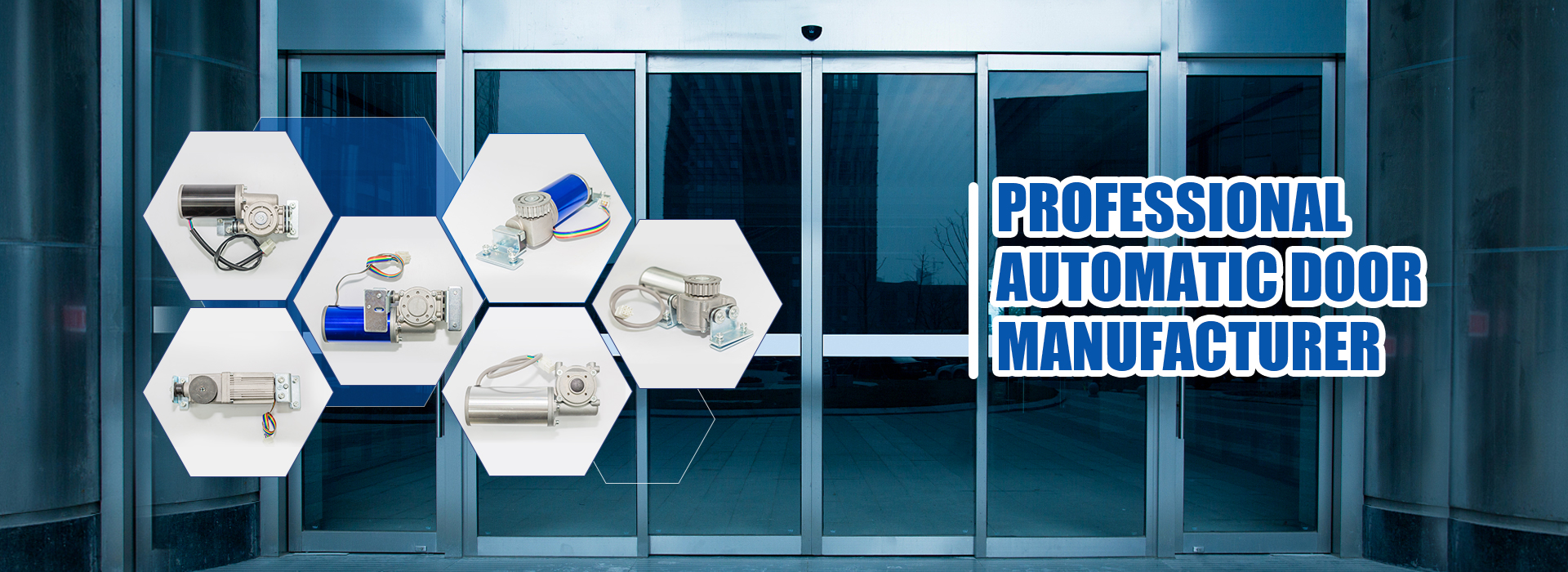
An automatic door motor is the drive unit that turns a door system from a passive opening into a controlled movement sequence. In a complete entrance assembly, the motor works with the controller, sensors, tracks or hinges, and safety accessories to open, hold, close, and reverse when needed.
That distinction matters because buyers often search for an automatic door motor when they really need a full door operator, especially for project integration. A motor-only replacement may solve a mechanical failure, but an operator package is usually the better fit when the site needs coordinated motion, access-control integration, and consistent installation geometry.
In a high-use retail entrance, the practical value is not just motion. It is the ability to maintain a stable opening cycle under repeated use, limit noise in public areas, and coordinate with detectors and access-control devices without nuisance stops.
For engineering procurement, that means the real specification set should include mechanical load, cycle endurance, control interfaces, and environmental limits, not just voltage and wattage.
Key automatic door motor specs that matter most
Door load capacity is the first spec to check because it determines whether the motor can safely move the leaf without overheating or stalling. The heaviest expected door, including glazing, framing, hardware, and wind load effects, should be used for selection, not the nominal weight on the drawing.
Opening speed is the second critical spec because it affects user experience, accessibility, and traffic throughput. Commercial automatic doors commonly operate in a controlled speed range rather than at a fixed maximum speed, so the target is smooth motion without harsh acceleration or impact at the end of travel.
Cycle life and duty cycle are often more important than rated power in busy entrances. A motor that can move a heavy door once may fail early if it is not designed for repeated cycles, heat dissipation, and intermittent load changes.
Noise level is also a real decision factor in offices, clinics, and hotel lobbies. In those environments, low acoustic output improves perceived quality even when the mechanical specifications are otherwise similar.
Finally, control compatibility determines whether the motor can work with motion sensors, push plates, keypads, card readers, or remote modules. The most reliable installations are the ones where the motor, controller, and field devices are designed to communicate cleanly from the start.
| Spec | Why it matters | Typical selection question | What to verify |
|---|---|---|---|
| Door weight | Prevents overload and stall | What is the heaviest fully assembled leaf? | Leaf, glass, frame, fittings, and friction |
| Opening speed | Controls flow and comfort | Is the site high-traffic or low-traffic? | Target travel speed and soft-start/soft-stop |
| Cycle life | Predicts service interval | How many cycles per day? | Rated cycles and duty assumptions |
| Control interface | Enables system integration | Does it need access control? | Sensor, keypad, relay, and safety inputs |
| Noise | Impacts user experience | Is this a public or quiet interior space? | Acoustic behavior under load |
Automatic door motor manufacturer criteria for project-grade selection
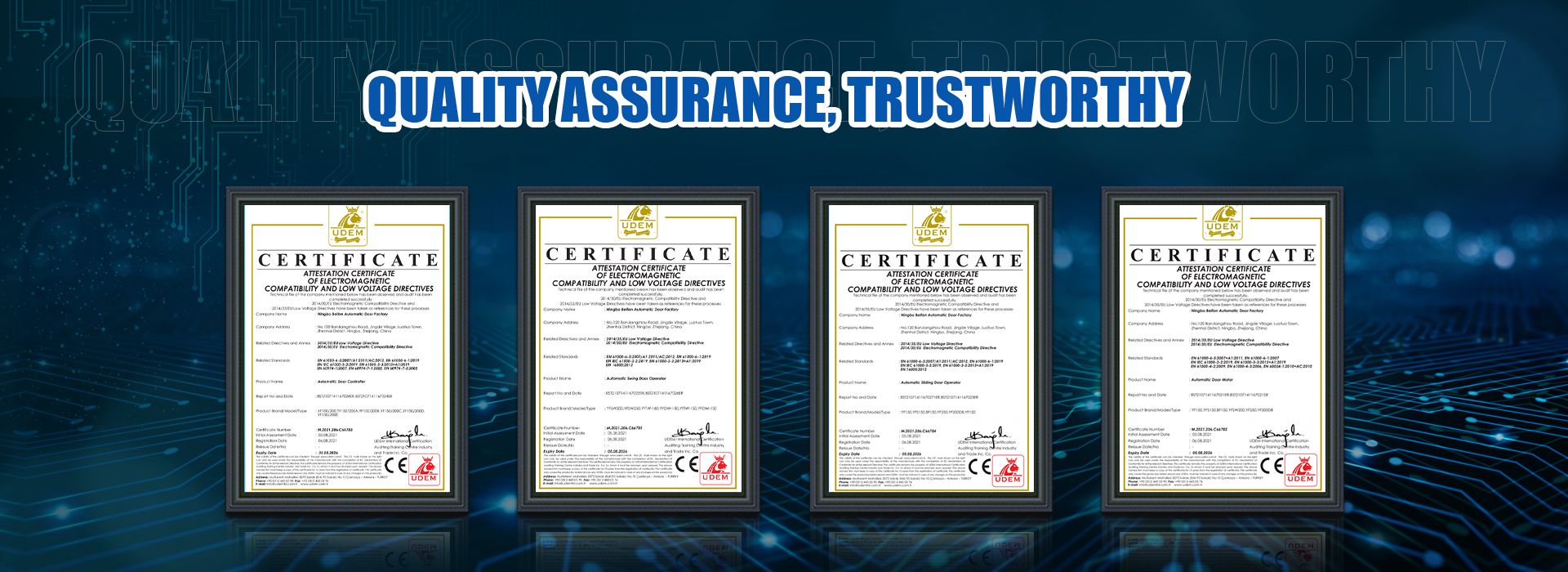
The best automatic door motor manufacturer is the one that can document compatibility, parts availability, and installation clarity, not just product variety. For project buyers, documentation quality is a major proxy for engineering maturity.
In practice, a strong supplier should provide load charts, installation drawings, wiring logic, accessory compatibility, and replacement part references. Those documents reduce commissioning time and lower the chance of mismatched hardware on site.
For larger projects, standardized product naming also matters because it speeds up model identification during procurement and maintenance. That is especially valuable when the same site mixes automatic sliding door systems, automatic swing door systems, and retrofit kits.
According to accessibility guidance from the U.S. Access Board, door usability is not just a convenience issue; it affects whether a building can be entered comfortably by a broad user base. For that reason, manufacturer documentation should also explain opening force, safety reversal, and emergency operation behavior in practical terms.
| Manufacturer criterion | Why it matters in the field | Evidence to request |
|---|---|---|
| Load documentation | Confirms real payload fit | Door weight chart and application limits |
| Accessory ecosystem | Supports access control and safety | Sensor, keypad, remote, and lock compatibility |
| Serviceability | Reduces downtime | Spare-part list and replacement procedure |
| Installation support | Improves commissioning success | Wiring guide and mounting dimensions |
| Replacement continuity | Helps long-term maintenance | Model naming structure and part availability |
Automatic door motor replacement: what to match before you order
Replacement success depends on compatibility more than on brand familiarity. When a failed unit is being swapped out, the fastest path is to match door type, mounting pattern, supply voltage, control logic, and accessory interfaces before choosing a new motor.
The first check is mechanical fit. Hole spacing, rail length, arm geometry, and output shaft configuration must align with the existing installation, or replacement time and cost rise quickly.
The second check is electrical behavior. If the original operator uses specific sensor logic, lock timing, or open-hold-close sequences, the new motor or controller must support the same signal flow.
The third check is service continuity. If the old model has limited spare-part support, replacing it with a more standardized unit can reduce downtime over the life of the entrance.
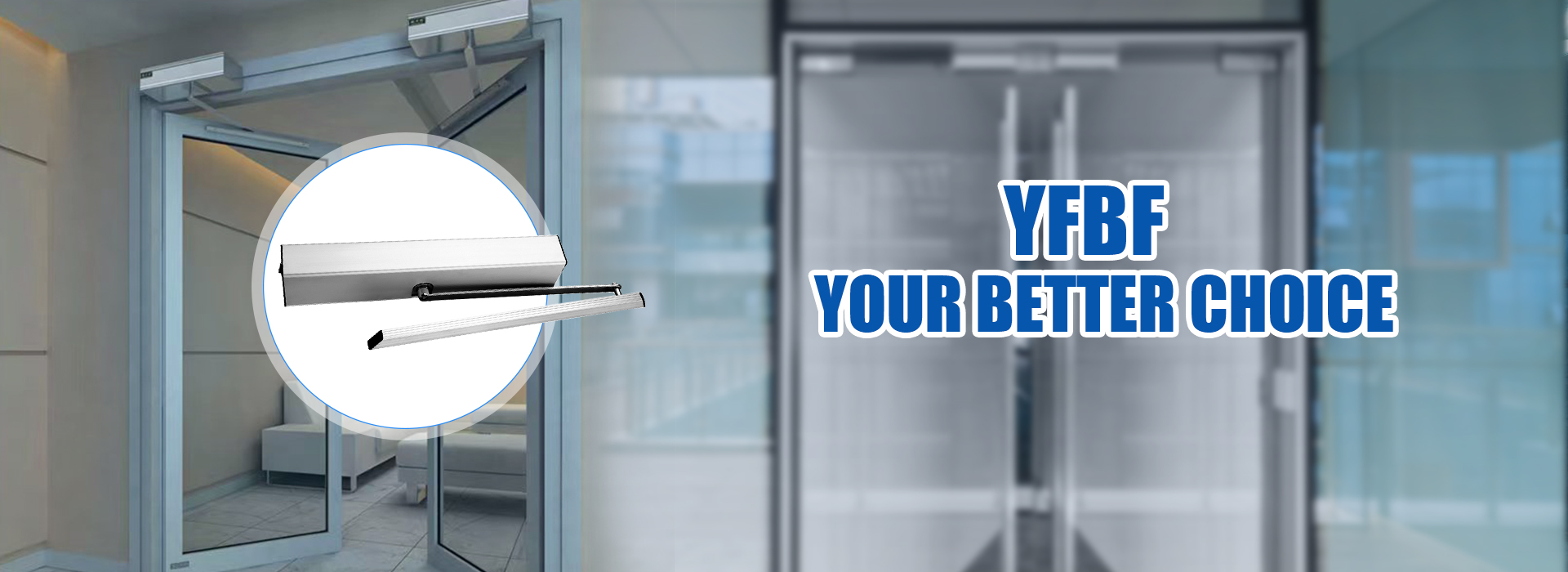
In retrofit projects, especially glass-door automation, the replacement decision should also consider vibration, aesthetics, and the available header space. For compact storefronts, a lower-profile operator can be more practical than a larger, higher-power unit that is harder to conceal and service.
- Record the existing model number and all accessory part numbers.
- Measure door width, leaf weight, and available mounting clearance.
- Verify power supply, wiring method, and control input logic.
- Check whether the site uses sensors, card readers, or lock relays.
- Confirm spare-parts availability before approving the replacement.
Automatic sliding door and automatic swing door motor differences
Sliding and swing systems solve different space and traffic problems, so they should not be selected using the same assumptions. Sliding doors are usually better for wider entrances and continuous traffic, while swing systems are often better when side clearance is limited or when the existing architecture already uses hinged leaves.
Sliding operators move the leaf along a guide path, which makes them well suited to commercial entrances with large opening widths and frequent bidirectional traffic. Swing operators rotate the leaf around hinges, which can be ideal in offices, clinics, and internal passageways where the door must fit a tighter footprint.
The motor choice should therefore follow the door motion, not the desired aesthetic alone. A powerful motor on the wrong door geometry may still deliver poor performance, higher wear, or awkward user experience.
For an automatic door opener project, the system-level question is how the entrance will behave at peak traffic, during emergency egress, and after several years of daily use.
| Door type | Best fit | Typical advantage | Main constraint |
|---|---|---|---|
| Sliding door | Retail, lobby, hospital entrance | Handles wider openings and frequent flow | Needs track/header space |
| Swing door | Office, clinic, corridor | Works in tighter structural layouts | Requires hinge-side clearance |
| Glass retrofit | Showrooms, storefronts | Improves access and appearance | Needs careful hardware alignment |
Performance data and standards that help you judge real quality
Standards are valuable because they turn marketing claims into testable requirements. For entrances, the most relevant references are often safety, usability, and dimensional compliance rather than only motor power.
The ISO 13849-1:2015 framework is widely used for safety-related control systems, helping engineers think about how sensors and controllers should reduce risk in machine motion. For door installations, that matters because a safe automatic entrance is a controlled system, not a standalone motor.
The ISO 21542:2021 accessibility standard is also useful when entrances must support inclusive access in public buildings. It helps decision-makers evaluate whether the entrance layout supports practical use, especially in healthcare and office environments.
From a building and field verification perspective, the National Institute of Standards and Technology remains a reliable reference point for measurement rigor, calibration thinking, and test discipline. Even when NIST is not specifying the door itself, its measurement culture is useful for commissioning teams checking alignment, force, and repeatability.
For project teams, the takeaway is simple: motor selection should be checked against measurable criteria such as travel smoothness, force behavior, and cycle reliability, then verified during installation with repeatable field tests.
| Reference | What it helps evaluate | Project value |
|---|---|---|
| ISO 13849-1:2015 | Safety-related control reliability | Better risk thinking for sensors and logic |
| ISO 21542:2021 | Accessible building use | More inclusive entrance planning |
| ADA guidance | Door usability and hardware behavior | Useful for public-facing facilities |
| NIST measurement resources | Calibration and test discipline | Supports commissioning accuracy |
How commercial entrance use cases change the spec priorities
The same motor can be right for one site and wrong for another because traffic profile changes the failure mode. A quiet office lobby and a busy hospital entrance do not stress the system in the same way.
In hospitals and clinics, reliability and low nuisance fault rates matter more than aggressive opening speed. Patients, staff, and mobility aid users need predictable, smooth operation, and that means the motor should be chosen for steady duty rather than burst performance.
In retail and shopping centers, fast cycle behavior and wear resistance become more important because the door may run continuously during business hours. A system that can manage frequent cycles without overheating is often the better long-term value even if the upfront price is higher.
In office buildings, the focus often shifts toward appearance, access-control integration, and visitor flow. The motor needs to cooperate with card readers, interlocks, and reception workflows without creating delays.
These site differences are why a good selection process starts with use case analysis, not product browsing.
Common automatic door motor selection mistakes
The most common mistake is undersizing the motor for the real door load. A door that looks light on paper may become much heavier once glass, hardware, weather seals, and repeated friction are included.
A second mistake is ignoring duty cycle. A motor that performs well in a low-traffic area may overheat or wear prematurely in a busy entrance.
A third mistake is buying for power alone and overlooking control logic. Without compatible sensors, lock timing, and safety reversal behavior, even a mechanically capable motor can feel unreliable in use.
A fourth mistake is treating replacement as a one-to-one swap without checking the existing installation. Wire routing, header space, and part availability can all affect downtime.
- Do not select from wattage alone.
- Do not ignore door geometry and hinge or track constraints.
- Do not omit safety and access-control compatibility.
- Do not skip spare-part planning for replacement projects.
Practical selection checklist for engineers and buyers
A disciplined checklist is the fastest way to avoid a poor match. It keeps the discussion focused on the door, the building, and the daily operating pattern.
Start with the heaviest door configuration, then define traffic level, installation space, power supply, and control integration. After that, compare motor options by cycle endurance, noise behavior, and serviceability.
If the project is a retrofit, verify whether the existing header can accept the new drive layout. If the project is new construction, coordinate the operator with the architect and access-control team before procurement.
- Confirm door type: sliding, swing, or retrofit glass door.
- Measure door weight, width, and available clearance.
- Define peak hourly traffic and daily cycle expectations.
- Verify power input, controller logic, and safety devices.
- Check replacement access and spare-part support.
FAQ about automatic door motor specs
What is the most important spec when choosing an automatic door motor?
Door weight and door type are the most important starting points because they determine whether the motor can move the leaf safely and repeatedly under real conditions.
How do I know if I need an automatic door motor replacement?
Frequent stalling, inconsistent opening speed, abnormal noise, overheating, or unreliable sensor response are common replacement triggers, especially when repair parts are limited.
Is a higher-power motor always better?
No. Higher power does not guarantee better performance if the controller, door geometry, or duty cycle is mismatched to the site.
What should I check before replacing a motor in a glass door system?
Check header space, mounting pattern, wiring, control logic, and the availability of matching accessories before approving the replacement.
How does traffic frequency affect selection?
More traffic increases thermal and mechanical stress, so cycle life, duty cycle, and cooling behavior become more important than in low-use spaces.
Should automatic door motor manufacturer documentation matter?
Yes. Good documentation reduces installation risk, shortens commissioning time, and makes future maintenance easier.
Can one motor work for both sliding and swing doors?
Usually not as a direct fit, because the motion path, hardware layout, and load behavior are different for each door type.

David Chen
Post time: Jul-09-2026