
TL;DR — Key Takeaways
- 24V brushless DC motors: safer, longer life (10,000–20,000h), precise speed control, and 85–92% efficiency vs. brushed DC.
- Spec torque, not just Wattage: available torque = motor power ÷ motor speed × gear ratio × belt efficiency; always verify against door weight.
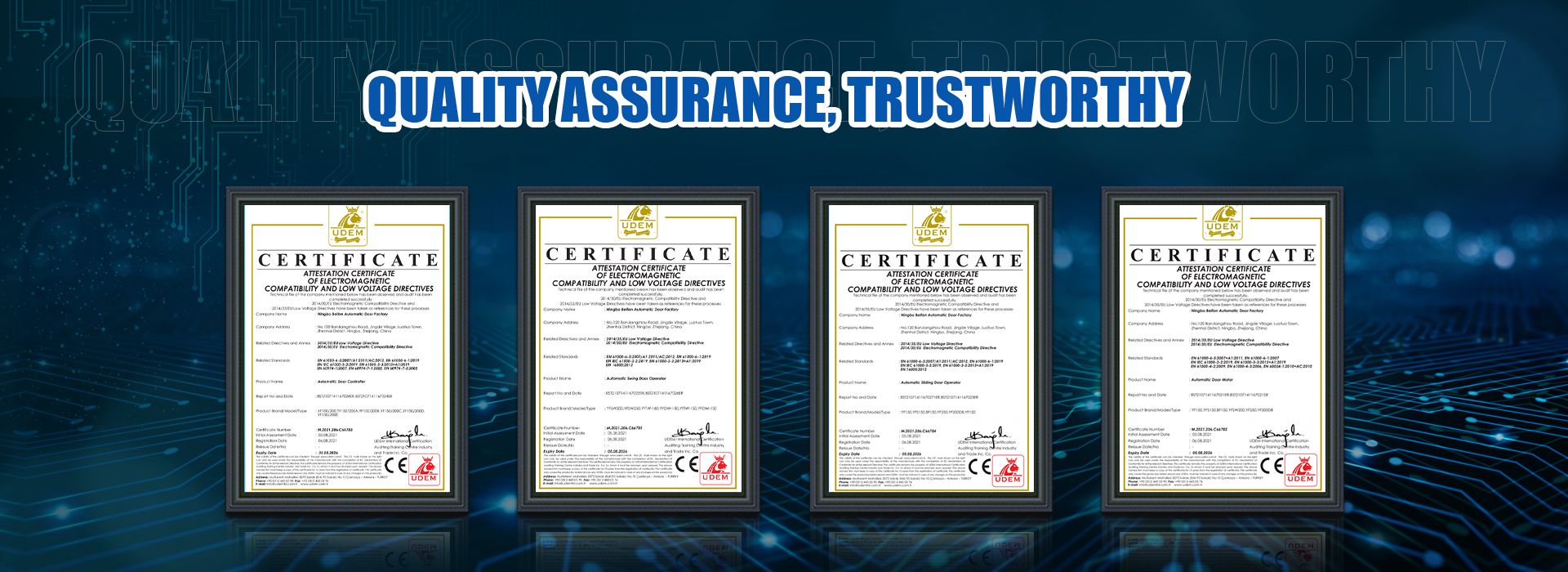
- CE certification must cover LVD, EMC, and Machinery Directive — request model-specific certificates, not generic company certificates.
- Volume pricing: 25–99 units = 8–15% off; 100–499 = 15–25% off; 500+ = 25–35% off; lead times extend at higher volumes.
- After-sales: demand 5-year spare parts availability, pre-sales engineering support, and a written defect resolution SLA before signing a distribution agreement.
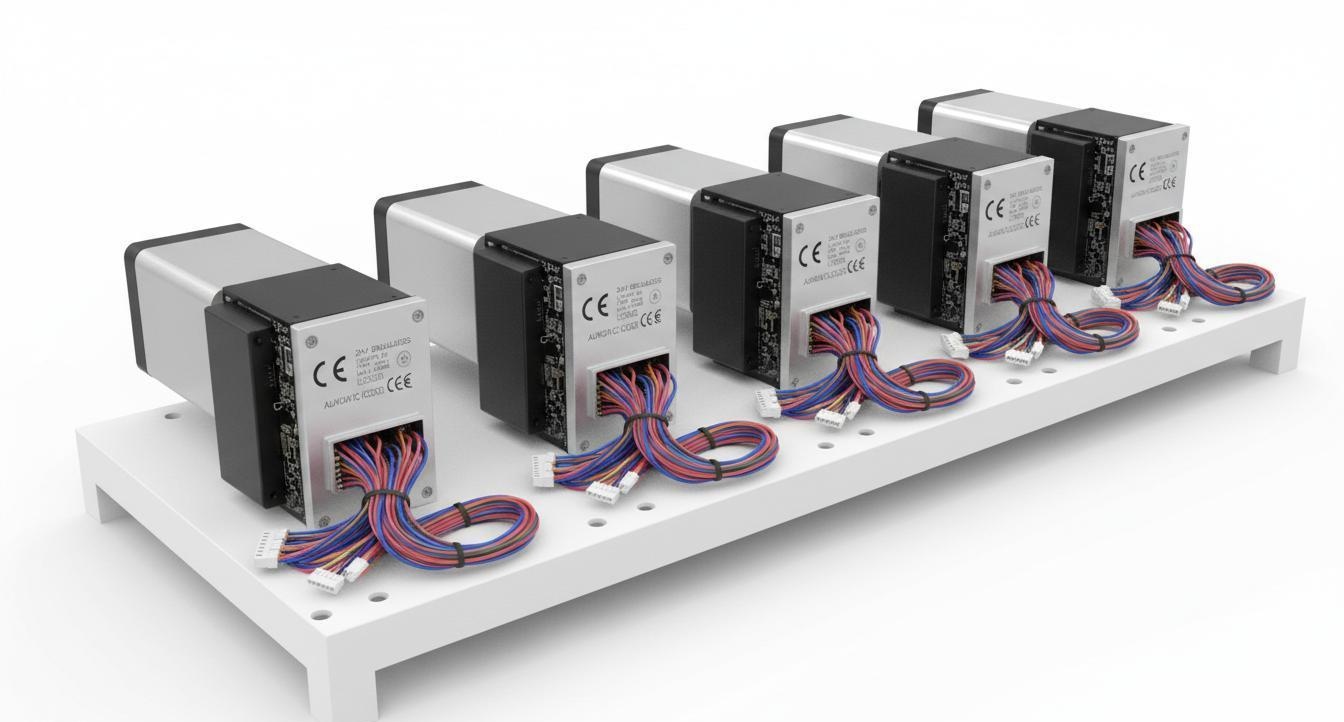
When I speak with distributors who are new to sourcing automatic door motors from China, the most common question is not about the motor specifications — it is about how to evaluate whether the motor they are being offered will actually perform as represented. The automatic door motor market has a wide quality spectrum: motors that look identical on a datasheet can have significantly different service lives, thermal performances, and torque curves depending on the bearing quality, the magnet grade, the winding consistency, and the quality of the inverter drive electronics. In this article, I explain how to evaluate 24V brushless DC automatic door motors for wholesale procurement, what certifications are required for the European and international markets, how to calculate realistic bulk pricing, and what after-sales support agreements should be in place before signing a distribution contract.
Why 24V Brushless DC Is the Universal Standard
The automatic door motor market converged on 24V brushless DC technology for three converging reasons that make it genuinely superior to the alternatives.
Safety and Installation Simplicity
24V is below the voltage threshold that requires professional electrical installation certification in most jurisdictions. This means a door operator using 24V motors can be installed by a general contractor or a trained door technician without the involvement of a licensed electrician. For the European market, this is a significant cost advantage: a licensed electrician in Germany costs EUR 70–100 per hour, while a door technician costs EUR 35–55 per hour. Eliminating the electrician from the installation reduces total installed cost by 15–25% on a typical commercial door installation. This cost advantage is why virtually all modern commercial automatic sliding door operators use 24V brushless DC motors as the power train.
Brushless Design: Service Life and Contamination
Brushed DC motors have commutator brushes that wear against the commutator surface during operation. Brush wear generates carbon dust inside the motor housing, contaminating the magnetic air gap and the bearing lubricant. In an automatic door operator — which is mounted in the overhead track above the door, exposed to the air stream from the building’s HVAC system — brushed motor contamination is a genuine reliability problem. Brush dust accumulates on the magnet surfaces, reducing magnetic flux and motor efficiency until the motor fails to produce rated torque. The typical service life of a brushed DC motor in a door application is 3,000–5,000 hours. A brushless DC motor has no commutator, no brushes, and no internal contamination source. Service life extends to 10,000–20,000 hours — a 3–4× improvement that translates directly to lower warranty costs for distributors and lower call-back rates for installers.
Electronic Speed Control
Brushless DC motors use an electronic controller (inverter drive) that varies the motor’s speed and torque by modulating the pulse width of the current waveform (Pulse Width Modulation, or PWM). This electronic control allows the door operator to implement smooth acceleration profiles, programmable opening speeds, and soft-start behavior that reduces mechanical stress on the gear train, belt, and door hangers during every cycle. Per IEC 60034-1 (Rotating electrical machines — Rating and performance), BLDC motors achieve 85–92% efficiency across their operating range, compared to 60–75% for brushed DC motors. The efficiency difference is most pronounced at partial load — exactly the condition an automatic door motor operates in most of the time, since the motor is sized for the maximum door weight but typically operates on doors well below that maximum.
The Key Specifications: What the Datasheet Actually Tells You
Motor Power (W) — The Misleading Number
Motor power (Wattage) is the most commonly quoted and the most misleading motor specification. Two motors with the same wattage can have completely different performance characteristics if they have different speed-torque curves. A 60W motor spinning at 3,000 RPM produces different torque than a 60W motor spinning at 1,000 RPM. The lower-speed motor produces 3× more torque for the same power.
For automatic door applications, torque is the specification that actually matters. The door operator’s gear reduction ratio converts motor speed to the linear force that moves the door. If you specify a 60W motor with the wrong speed-torque curve for the operator’s gear ratio, the door may open at the rated speed under no-load conditions but stall or run extremely slowly under full door load. Always request the motor’s speed-torque curve from the supplier — a reputable manufacturer will provide this without hesitation.
Voltage (24V) — Verify the Operating Range
Automatic door operators typically operate from a wide AC input range (AC 90–250V, 50/60Hz), with the 24V BLDC motor driven by an internal DC power supply within the operator. The 24V motor itself is the DC brushless motor inside the operator. When specifying motors for OEM integration (building your own door operator), verify that the motor’s voltage range is specified at the actual system voltage including any voltage drop in the wiring between the power supply and the motor. A 24V motor operating at 22V due to wiring voltage drop produces 8% less power than rated — which can push an otherwise marginal specification into failure.
Thermal Class: F-Class (155°C) Minimum for Commercial Use
The motor’s thermal class defines its maximum permissible winding temperature. Per IEC 60034-1, thermal class B allows 130°C maximum winding temperature; class F allows 155°C; class H allows 180°C. For commercial automatic door applications with moderate to high traffic, specify thermal class F minimum. The winding temperature in a 60W motor operating in a sealed operator housing in a warm climate can reach 80–100°C above ambient — a thermal class B motor (rated 130°C) will approach its limit in a 35°C summer environment, while a thermal class F motor (rated 155°C) has 55°C of thermal margin remaining.
Bearing Quality: A Specification That Determines Service Life
The motor’s rotor bearings are the mechanical component most likely to determine the motor’s actual service life. Deep groove ball bearings (sealed on both sides) are the standard for automatic door BLDC motors. The critical specification is the bearing’s load rating and the grease specification. Motors specified with commercial-grade (C0) bearings are prone to early bearing failure in high-cycle door applications. Motors specified with precision-grade (C3 or C4) bearings and high-temperature-rated grease (Polyureaurea or di-urea based) last significantly longer. When requesting a motor datasheet, ask specifically for the bearing specification — a quality supplier will include it. If they do not know the bearing specification, that is a quality signal to be cautious about.
The CE Certification Requirements for the European Market
For distributors selling into the European market, CE marking is mandatory. The automatic door motor itself must carry a CE declaration of conformity that references three relevant EU Directives:
- Low Voltage Directive (LVD) 2014/35/EU: applies to electrical equipment with a voltage rating between 50V and 1000V AC (or 75V and 1500V DC). At 24V DC, the motor itself is below the LVD threshold — but the motor is part of an operator assembly that includes AC mains electronics, so the complete operator carries the LVD declaration.
- Electromagnetic Compatibility (EMC) Directive 2014/30/EU: covers the motor’s inverter drive electronics, which generate switching frequencies that could cause radio frequency interference. The motor/inverter assembly must pass EMC testing for conducted and radiated emissions and immunity. Request the EMC test report, not just a declaration.
- Machinery Directive 2006/42/EC: for the door operator’s safety-related control system, including the motor drive’s safety functions (obstacle detection response, emergency stop). Per ISO 13849-1 (Safety of machinery — Safety-related parts of control systems), the safety function’s Performance Level must be PLb minimum. The motor drive’s safety functions are part of this assessment.
When evaluating a supplier’s CE documentation, the critical question is: does the CE declaration cover the specific motor model you are ordering, or is it a generic company-level CE registration that covers any product the company makes? A model-specific declaration means the specific motor has been tested. A generic declaration means the manufacturer has registered with a notified body but has not necessarily tested this specific product. Request the test report with the declaration.
Bulk Pricing Strategy and MOQ Negotiation
Typical Wholesale MOQ and Volume Break Structure
Most Chinese manufacturers of 24V automatic door motors set their MOQ between 10 and 50 units, with the pricing structure below representing industry norms:
| Order Volume | Typical Discount | Lead Time | Shipping Terms |
|---|---|---|---|
| 10–24 units (MOQ) | None (catalog price) | 15–20 working days | EXW or FOB |
| 25–99 units | 8–15% off catalog | 20–25 working days | FOB or CIF |
| 100–499 units | 15–25% off catalog | 25–35 working days | CIF or DAP |
| 500+ units | 25–35% off catalog | 30–45 working days | DAP or DDP |
The per-unit price differential between catalog (10-unit) pricing and 500-unit pricing typically represents 30–40% of catalog price. For distributors purchasing 500+ motors per year, consolidating volume across multiple project orders into one or two annual production runs is the single most effective way to improve margins. The trade-off is lead time: a 500-unit production run takes 30–45 working days from order confirmation to shipment, versus 15–20 days for a small stock order.
Incoterms: Who Pays Freight and Insurance
For small orders (10–24 units), EXW (Ex Works) or FOB (Free on Board) are standard — the buyer manages the freight from the factory. As order volume increases, CIF (Cost, Insurance, and Freight) or DAP (Delivered at Place) become more favorable for the buyer because the supplier coordinates the freight, often at better rates due to their established logistics relationships. DDP (Delivered Duty Paid) is the most buyer-friendly incoterm: the supplier delivers to the buyer’s door, duty and taxes paid. At 500+ unit volumes, request DDP or DAP pricing as a negotiating point — the supplier’s cost to arrange consolidated shipping is typically lower than the buyer arranging fragmented shipments, making DDP viable for both parties.
The Price-Quality Signal: How to Avoid the Trap
The automatic door motor market has a significant price-quality gap between manufacturers. Motors that appear equivalent on a specification sheet (same 24V, same 60W, same physical dimensions) can vary by 25–40% in price. The price difference typically reflects: bearing quality (precision vs. commercial grade), magnet grade (sintered NdFeB N-grade vs. lower-grade), winding consistency (automated vs. manual winding), and inverter drive quality (MOSFET vs. IGBT switching, protection features, thermal shutdown). When a supplier offers pricing 30%+ below the market range, ask specifically for the bearing specification, magnet grade documentation, and inverter drive protection features. If they cannot provide these, the price reflects component corner-cutting that will show up in the field as early failures.
After-Sales Support: The Distributor’s Risk Management Checklist
- ☐ Spare motor availability: written commitment that spare motors for the purchased model will be available for a minimum of 5 years after the last unit shipped — not just until the current batch is sold
- ☐ Technical documentation package: torque-speed curves, dimensional drawings (STEP format for OEM integration), wiring diagrams, and inverter drive parameter settings must be available before the first order ships
- ☐ Defect resolution SLA: written defect handling process with target timelines — 5 working days for defect diagnosis, 15 working days for replacement or credit note for the first year of warranty
- ☐ Pre-sales application engineering: supplier willingness to verify torque and thermal calculations for the specific door weight and usage profile is the most reliable indicator of post-sales technical support quality
- ☐ Warranty scope: minimum 12 months from installation or 18 months from shipment (whichever is earlier) covering motor windings, bearings, and inverter drive electronics
- ☐ Sample evaluation policy: for first-time orders, request 2–4 sample units for physical and electrical testing before committing to volume — a reputable supplier will support this
- ☐ OEM branding and labeling: verify the supplier can remove their brand marking and apply the distributor’s brand (or no brand) on motors sold under the distribution agreement
- ☐ Production capacity verification: request the supplier’s monthly production capacity for the motor model you are sourcing — a 500-unit monthly order should not be placed with a manufacturer whose capacity is 200 units per month
Conclusion: Due Diligence Before Commitment
The wholesale procurement of 24V brushless DC automatic door motors rewards the same due diligence discipline as any technical product purchase. The datasheet specifications — voltage, power, thermal class — are the starting point, not the complete evaluation. The torque-speed curve, bearing specification, CE test report, and the supplier’s after-sales support commitments are the data points that determine whether the procurement delivers profitable results or expensive field failures.
For distributors establishing long-term supply relationships, the supplier’s willingness to provide pre-sales engineering support, model-specific CE documentation, and a written warranty with defined defect resolution timelines is the best available signal of their commitment to the relationship. A supplier who is reluctant to provide torque curves or model-specific test reports is not a reliable wholesale partner — no matter how competitive their pricing appears.
Ningbo Yufan Beifan Automatic Door Co., Ltd. manufactures 24V brushless DC automatic door motors including the YF150 (60W) and YF200 (100W) models with CE and ISO certification. Edison manages global distributor inquiries and OEM/ODM custom solutions — contact edison@bf-automaticdoor.com for technical specifications, volume pricing, and distribution agreement discussions.
Disclaimer: This article provides general industry guidance for distributors and procurement professionals sourcing 24V brushless DC automatic door motors wholesale. Technical specifications (IEC 60034-1, ISO 13849-1), EU Directive requirements (LVD 2014/35/EU, EMC 2014/30/EU, Machinery Directive 2006/42/EC), and pricing structures described are based on general industry knowledge and typical market observations. All technical and commercial requirements must be verified with the specific supplier before entering into purchase or distribution agreements. CE certification requirements and applicable market regulations must be verified for the specific target market and application. The distributor is responsible for ensuring that products sourced comply with all applicable safety, labeling, and certification requirements in the markets where they are sold.
Post time: May-26-2026