
- Match the operator to your door type first — sliding, swing, telescopic, and revolving each require different drive logic and mounting hardware.
- Calculate leaf weight accurately and select an operator with at least 20% load headroom above your measured weight.
- Choose brushless DC motors for commercial applications exceeding 3,000 daily passages — they eliminate brush wear and support smoother electronic control.
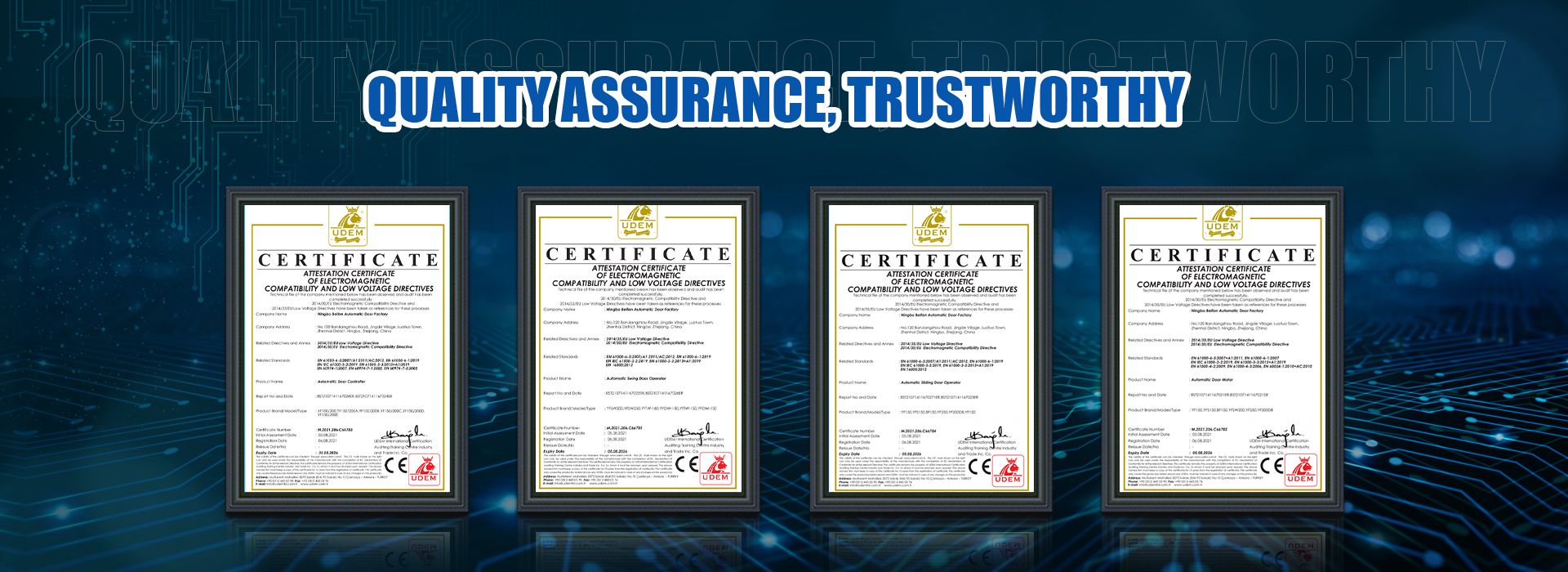
- Verify safety compliance against your target market standards (EN 16005 for Europe, ADA for US, CE marking for international trade) before placing orders.
- Request complete documentation from suppliers — dimensional drawings, wiring diagrams, spare parts catalogs, and warranty terms — before committing to any purchase.
We’ve processed thousands of automatic door inquiries over the past decade, and I can tell you that the same buying mistakes keep surfacing. A project manager selects an operator based on price alone, only to discover during installation that the rail length doesn’t fit the headroom. A facility manager orders replacement motors without checking voltage compatibility, creating weeks of downtime. A contractor spec’s a brushed motor for a hotel entrance cycling 8,000 times daily, guaranteeing an expensive service call within months.
This guide exists because I’m tired of watching preventable errors waste time and money. It’s structured as a working checklist — use it phase by phase, from pre-purchase assessment through post-order planning. Every checkpoint comes from real project experience, not theoretical best practices.
Phase 1: Pre-Purchase Assessment
Phase 1Door Profile & Site Conditions
Before browsing any product catalog, document your door and site conditions. This eliminates approximately 70% of procurement errors — because we see it constantly: buyers who skip this step end up comparing incompatible products.
Phase 2: Technical Specification Verification
Phase 2Motor & Electrical Requirements
With your door profile documented, evaluate the technical specifications of candidate operators. This phase separates products that “look right” from products that will actually perform in your conditions.
| Specification | Standard-Duty Range | Heavy-Duty Range | Why It Matters |
|---|---|---|---|
| Max leaf weight (single) | 150-200 kg | 200-300 kg | Prevents overload and premature wear |
| Opening speed | 100-350 mm/s | 150-500 mm/s | Balances throughput with safety |
| Motor type | Brushed DC or BLDC | BLDC preferred | Affects maintenance frequency and lifespan |
| Voltage input | Narrow (single region) | Wide (AC 90-250V) | Ensures compatibility with site supply |
| Operating temperature | 0°C to 50°C | -20°C to 70°C | Determines installation environment limits |
| Battery backup | Optional | Recommended | Maintains operation during power failure |
Phase 3: Safety, Compliance & Supplier Evaluation
Phase 3Standards, Supplier & Integration
This is where many buyers rush through — and it’s the phase that creates the most expensive problems post-installation. Safety compliance isn’t optional. Supplier documentation quality predicts installation success.
The Complete Buyer Checklist (Printable Summary)
| # | Checkpoint | Action | Decision Gate |
|---|---|---|---|
| 1 | Door type | Identify sliding / swing / telescopic / revolving | Operator family selected |
| 2 | Leaf weight | Measure actual weight + 20% headroom | Operator load rating confirmed |
| 3 | Traffic volume | Estimate daily passage count | Duty class matched |
| 4 | Space constraints | Measure headroom, side clearance, rail length | Physical fit verified |
| 5 | Motor type | BLDC for >3,000 cycles/day | Maintenance lifecycle acceptable |
| 6 | Voltage | Match site supply (AC 90-250V ideal) | Electrical compatibility confirmed |
| 7 | Speed adjustability | Confirm opening/closing speed ranges | User experience + safety balanced |
| 8 | Temperature range | Verify covers site conditions | Environmental suitability confirmed |
| 9 | Safety compliance | Check EN 16005 / ADA / CE as needed | Market compliance met |
| 10 | Sensor compatibility | Map required sensors to controller inputs | Integration path clear |
| 11 | Documentation | Request drawings, wiring diagrams, manuals | Supplier quality confirmed |
| 12 | Spare parts & warranty | Verify parts availability and warranty terms | Long-term support secured |
Common Buying Mistakes We See Every Month
After handling inquiries from distributors and project buyers across dozens of countries, these are the errors that keep coming back:
- Ordering without measuring leaf weight. The operator arrives, gets installed, and immediately shows strain because the motor is rated for a lighter door. Solution: always weigh the actual door panel, including all hardware, before selecting an operator.
- Ordering without measuring leaf weight. The operator arrives, gets installed, and immediately shows strain because the motor is rated for a lighter door. Solution: always weigh the actual door panel, including all hardware, before selecting an operator.
- Ignoring voltage variations. A motor rated for 220V 50Hz only works in markets with that exact standard. When sites experience voltage drops or use different standards, the motor stalls or burns out. Solution: choose operators with wide input ranges (AC 90-250V) that tolerate real-world supply fluctuations.
- Skipping documentation review before purchase. The motor arrives without wiring diagrams, or the spare parts catalog is missing critical components. By the time this surfaces, the installation timeline has slipped. Solution: request all technical documents during the quotation stage — before placing any order.
- Choosing the lowest unit price without scope alignment. One quote includes sensors, mounting hardware, and commissioning support; another quotes the bare motor only. The bare motor looks cheaper but creates a false comparison. Solution: standardize the bill of materials across all quotes before comparing prices.
- Forgetting spare parts lifecycle. The operator performs well on day one, but three years later the original supplier has discontinued the controller board. Now you’re sourcing third-party replacements or replacing the entire unit. Solution: confirm spare parts availability and estimated discontinuation timelines before purchasing.
What Does a Complete Operator Kit Include?
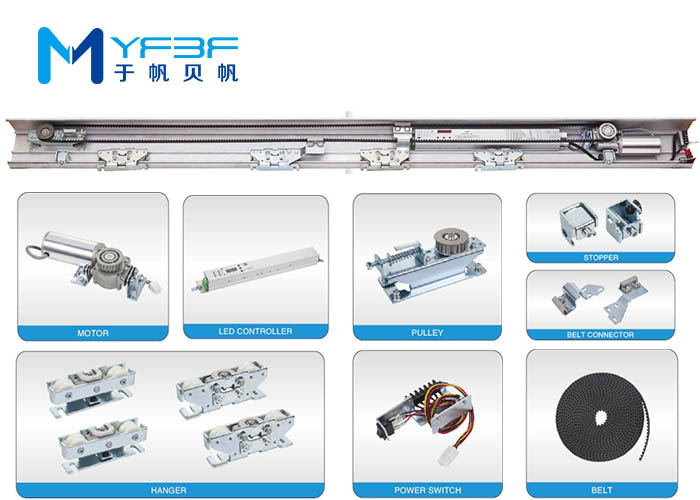
A common source of confusion during procurement is whether the quoted price covers a motor-only unit or a complete operating system. For reference, here’s what our YF200 heavy-duty operator includes as standard:
- 1× Motor (24V 60W brushless DC)
- 1× Control unit with microprocessor
- 1× Power switch
- 1× Idler pulley
- 4× Hangers
- 2× Belt tooth clips
- 2× Stoppers
- 1× 7-meter belt
- 2× 24GHz microwave motion sensors
- 1× 4.2-meter rail set
When you receive a quote from any supplier, confirm whether accessories like sensors, rails, and mounting hardware are included or quoted separately. This single step eliminates the most common quote-comparison error we see in project procurement. For complete specifications on the YF200 system, check the YF200 sliding door operator specifications page.
Lead Times, MOQ, and Order Planning
Project timelines often determine which supplier wins the contract — regardless of product quality. Here’s what typical procurement timelines look like for commercial automatic door operators:
- Sample orders: Approximately 7 days for preparation and dispatch.
- Standard production orders: 15-30 workdays after receiving deposit payment and final product approval.
- Shipping: Typically 2-4 weeks by sea for full container orders; express shipping available for urgent small orders.
Our standard minimum order quantity is 10 sets, with a supply capacity of 3,000 sets per month. For larger project orders or recurring distribution agreements, discuss specific terms through our contact page. We accept T/T (30% deposit, 70% balance against B/L copy), Western Union, and PayPal for flexible payment arrangements.
Final Decision Framework: When to Buy
The right time to place an automatic door order is when all twelve checkpoints on this guide are confirmed — not when the project deadline pressures you into rushing. Here’s a simple decision matrix:
- All 12 checks green: Proceed with order. You’ve minimized procurement risk.
- Checks 1-4 unresolved: Do not order. Door type and load data are the foundation — everything built on wrong assumptions will fail.
- Checks 5-8 unclear: Request technical clarification from the supplier before committing. Motor specifications should never be guessed.
- Checks 9-12 incomplete: You can place a conditional order, but hold final commitment until safety compliance, documentation, and spare parts availability are confirmed.
From our factory floor in Ningbo to installation sites across the Middle East, Southeast Asia, Europe, and the Americas, we’ve learned that disciplined buying processes produce better outcomes than rushed decisions. The automatic door operator is the mechanical heart of an entrance system — choosing it well means fewer service calls, longer equipment life, and smoother daily operation for the building’s occupants.
Ready to Evaluate Your Next Automatic Door Order?
Send us your project specifications — door type, leaf weight, traffic estimate, and target market — and we’ll provide a detailed quotation with complete technical documentation, CAD drawings, and spare parts pricing. No obligations, just the information you need to make a confident decision.
About the Author
Edison | Sales Manager, Ningbo Yufan Beifan Automatic Door Co., Ltd.
Ningbo Yufan Beifan Automatic Door Co., Ltd. specializes in automatic door system R&D and manufacturing. Core products include automatic sliding door operators, 24V brushless DC door motors, and accessories, widely used in commercial buildings, public facilities, and industrial sites. Edison manages global project inquiries and OEM/ODM custom solutions, supporting distributors and project procurement clients worldwide.
Connect: Contact Edison for project inquiries and custom solutions
Frequently Asked Questions
How do I determine the right automatic door operator size for my building?
Measure your door leaf weight and width first. Standard sliding door operators handle single leaf loads from 150-300 kg. For a 1200mm-wide glass panel weighing around 180 kg, a 300 kg-rated operator provides sufficient headroom. Then factor in your daily cycle count — entrances exceeding 5,000 passages per day need heavy-duty models with enhanced thermal endurance and brushless DC motors for consistent performance under repeated cycling.
What safety standards should automatic doors comply with?
In Europe, EN 16005 is the primary safety standard for power-operated pedestrian doors, covering force limits, sensor requirements, and emergency operation. In the US, the ADA 2010 Standards for Accessible Design specify minimum clear widths (typically 32 inches for wheelchair passage) and operating force limits. For international projects, CE certification indicates compliance with European Machinery Directive requirements. Always verify the specific standards applicable to your target market before purchase.
Should I choose a brushless DC motor or brushed motor?
For commercial and high-traffic applications, brushless DC motors are the clear choice. They eliminate brush wear, require less maintenance, and support smoother electronic control for soft start/stop functions. Brushed motors are less expensive upfront but need periodic brush replacement and show higher failure rates in environments with frequent cycling. For entrances handling over 3,000 daily passages, the lifecycle cost advantage of brushless DC typically justifies the initial premium.
What documentation should I request from a supplier?
A reliable supplier should provide dimensional drawings with mounting hole patterns, rated voltage and current specifications, wiring diagrams, compatible sensor and accessory lists, spare part catalogs with ordering codes, installation manuals, and warranty terms. For project procurement, also request Certificates of Analysis or Conformance, insurance documentation, and certificates of origin. If any of these documents are unavailable, treat it as a procurement risk signal.
How do I compare automatic door quotes from different suppliers?
Ensure each quote covers the same scope: motor unit, controller, mounting hardware, sensors, wiring accessories, and commissioning support. Compare warranty coverage terms rather than just warranty duration. Factor in spare parts availability and lead times. A lower initial price may hide higher lifecycle costs if the supplier has poor documentation, limited spare parts, or unreliable delivery performance.
What is the typical lead time for commercial automatic door orders?
Standard automatic sliding door operators typically ship within 15-30 workdays after deposit payment and final product approval. Sample orders can be ready in about 7 days. Custom configurations, non-standard rail lengths, or specialized accessories may extend lead times. Factor in shipping time (typically 2-4 weeks by sea) when planning your project timeline.
Post time: Aug-28-2026