
 Key Takeaways:
- Microprocessor-based control units achieveself-learning by analyzing real-time traffic data and automatically adjusting motor parameters—no manual reprogramming needed.
- 24V brushless DC door motors paired with intelligent controllers deliver 85-92% energy efficiency and 20,000+ hour service life in continuous commercial use.
- Multi-door synchronization reduces peak-hour bottlenecking by 30-45% via staggered RS-485 coordinated opening sequences.
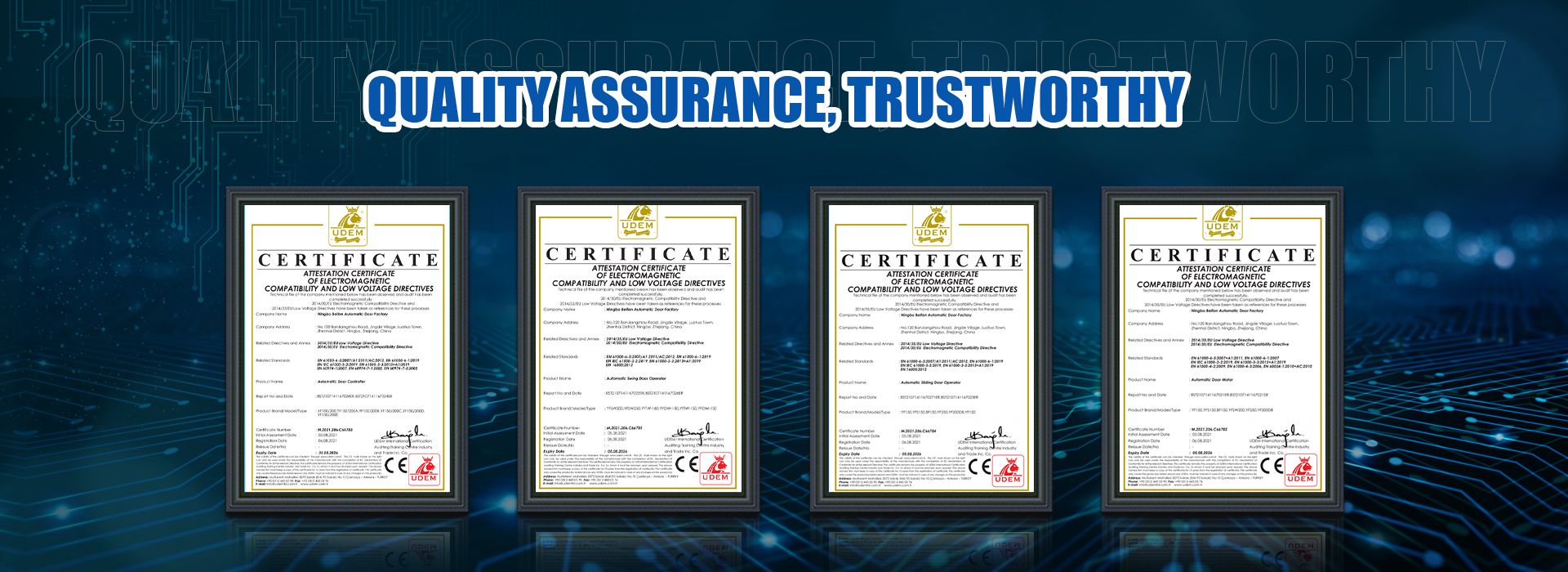
- Compliance with EN 16005, UL 325, and GB 51696 safety standards is mandatory for commercial building installations worldwide.
- Integration with Modbus RTU, BACnet, and TCP/IP building automation systems enables centralized door network management.
Why Most Automatic Door Control Units Fail at Real-World Traffic Patterns
If you’ve ever watched an automatic sliding door stutter, hesitate, or bang shut with excessive force in a busy commercial lobby, you’ve witnessed a control unit that was programmed for ideal conditions—not actual use. I saw this happen dozens of times during my early career in the door industry, and it drove me crazy. Because most entry-level door controllers rely on fixed timer logic, they cannot adapt to real-world traffic variations. Therefore, they deliver poor user experience and accelerated mechanical wear.
When I joined the automatic door industry in 2014, the prevailing control architecture was simple: a timer preset to open the door for X seconds, triggered by a motion sensor. It worked adequately in low-traffic scenarios. However, in high-turnover environments—shopping malls, hospital corridors, airport terminals—the fixed logic model consistently failed. Doors would stay open too long during off-peak hours (wasting HVAC energy) or close too quickly during rush periods (causing safety incidents).
The solution arrived with microprocessor-programmed control units. Unlike timer-based predecessors, these intelligent controllers continuously sample sensor data, analyze traffic patterns, andautomatically recalibrate motor torque curves, acceleration ramps, and braking distances based on accumulated experience. Because the system learns from its own operational history, each installation becomes progressively better tuned to its specific environment.
The Architecture of a Microprocessor-Controlled Door System
A modern microprocessor-based automatic door control system comprises four interconnected layers: the sensor layer, the control unit layer, the power electronics layer, and the mechanical actuation layer. Understanding how these layers interact is essential for anyone specifying, installing, or maintaining commercial automatic door systems.
Sensor Layer: Real-Time Environmental Data Acquisition
The sensor layer includes active infrared motion detectors, threshold safety sensors (footprint mats or laser arrays), and occasionally microwave radar units for outdoor installations. These sensors feed continuous binary or analog data to the microprocessor at sampling rates typically between 10 Hz and 50 Hz. Because the microprocessor can process multiple sensor streams simultaneously, it can distinguish between a person approaching from the side versus one walking directly toward the threshold. This discrimination capability eliminates false triggers that plague simpler timer-based systems.
Control Unit Layer: The Brains of the System
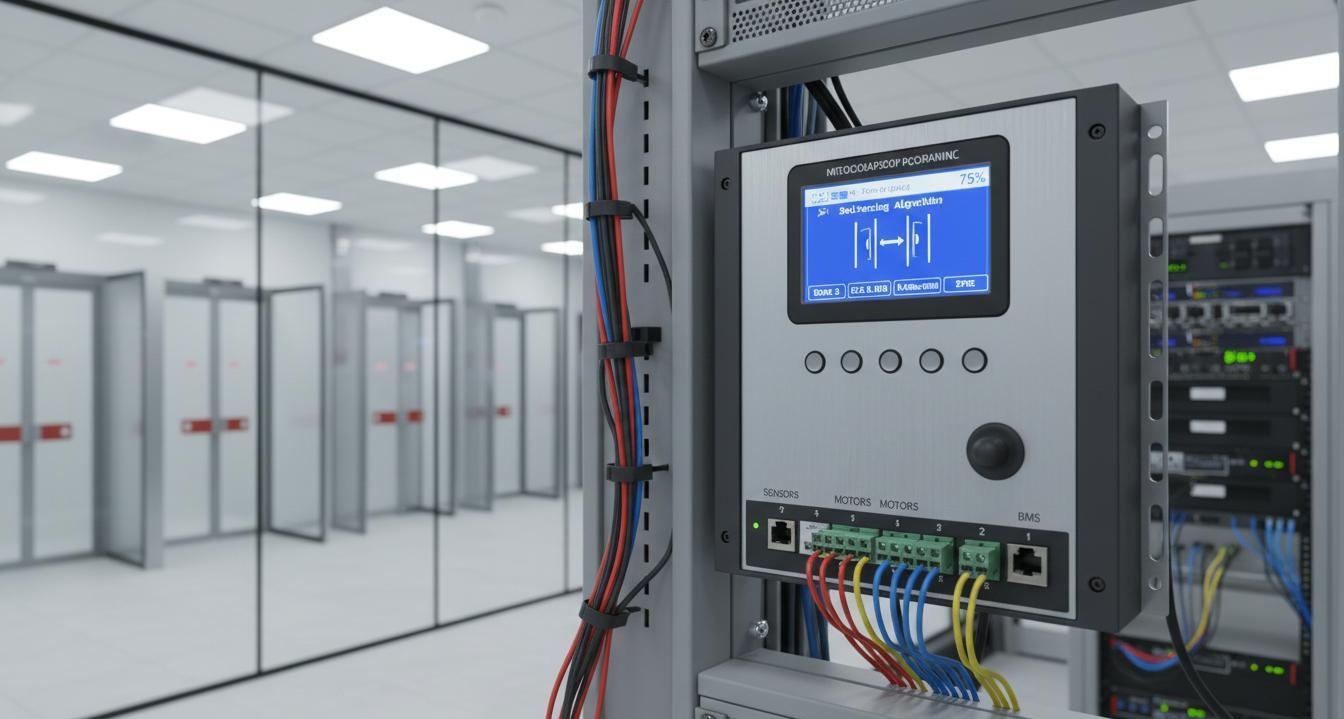
The control unit is built around a microcontroller or microprocessor—typically a 16-bit or 32-bit ARM Cortex core running at clock speeds between 48 MHz and 200 MHz. This is where the self-learning magic happens. The firmware implements a finite state machine (FSM) that manages door states: Idle, Activating, Opening, Holding Open, Closing, and Fault. Transitions between states are governed not just by sensor inputs, but by adaptive parameters that the system has learned over time.
During the first 72 hours of operation, the control unit operates in a “learning mode,” during which it builds a baseline traffic profile by recording door activation frequency, average time-to-cross, and obstacle encounter rate. Because the self-learning algorithm weighs recent data more heavily than historical data (exponential weighted moving average), the system responds quickly to seasonal traffic changes—such as the surge in pedestrian volume during holiday shopping seasons or the drop during university breaks.
Power Electronics Layer: Driving the 24V Brushless DC Motor
The power electronics layer converts mains AC (110V/220V) to regulated 24V DC and drives the three-phase brushless DC (BLDC) door motor through a three-phase inverter bridge. I should emphasize that the choice of 24V BLDC motor technology is not arbitrary—it directly determines the system’s energy efficiency, thermal behavior, and mechanical longevity. Compared to traditional AC brushed motors, BLDC motors eliminate the commutator brush friction loss, which alone contributes a 15-20% efficiency improvement.
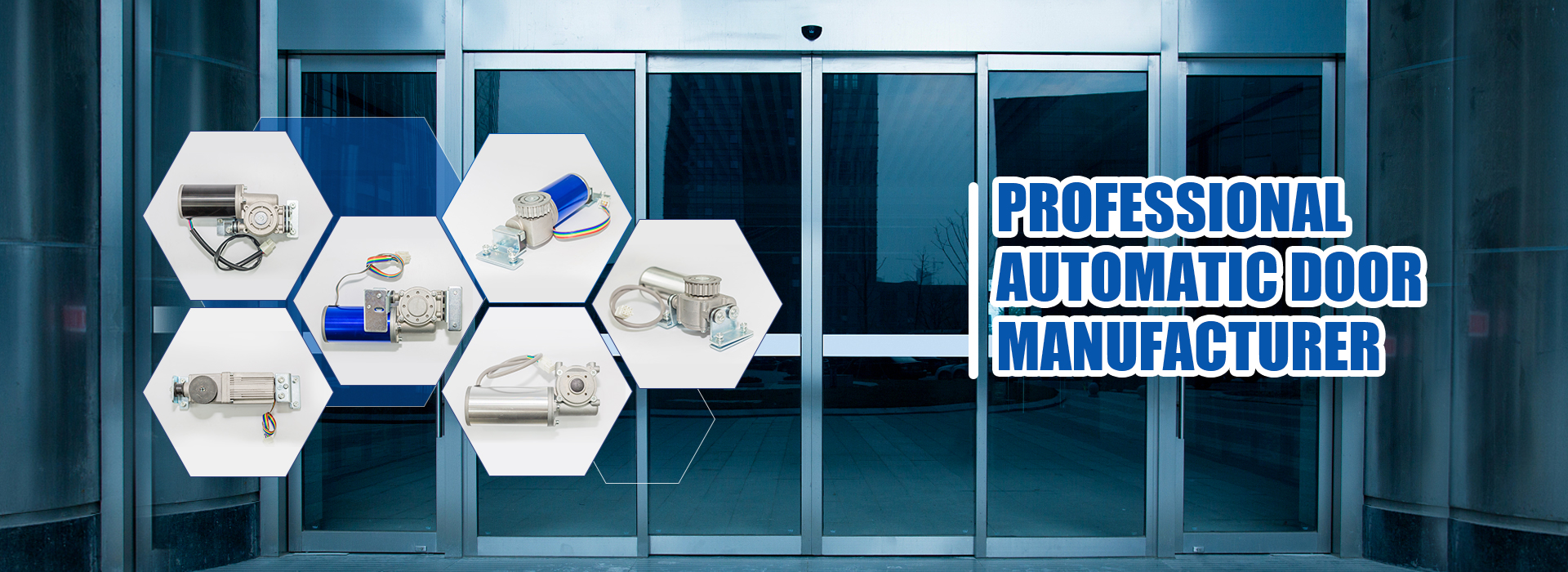
In our YF150 automatic sliding door operator series, we specify 24V BLDC motors with integrated Hall-effect position sensors. The control unit uses space-vector PWM modulation to achieve smooth torque delivery across the entire speed range. The result is that door panel movement feels natural to users—a soft acceleration at initiation, a controlled cruise phase, and a gentle deceleration before the final latch.Because the microprocessor continuously monitors back-EMF feedback from the motor, it detects mechanical loading anomalies (such as a warped door track or excessive hinge friction) and automatically compensates by increasing torque output.
Mechanical Actuation Layer: From Rotation to Linear Motion
The mechanical actuation layer converts the motor’s rotational output into linear door panel movement through belt drives, gear reducers, or chain systems. For commercial sliding doors, toothed belt drives are the most common solution because they offer high transmission efficiency (typically 90-95%), low noise, and maintenance-free operation over 8-10 years under normal use conditions. The control unit monitors the door’s position through a magnetic encoder strip mounted alongside the track, providing closed-loop position feedback to the microprocessor.
Self-Learning Functions: How Adaptive Logic Actually Works
The term “self-learning” gets used loosely in automatic door marketing. Let me explain exactly what adaptive logic means from an engineering perspective, and why it creates measurable performance improvements in real installations.
Traffic Pattern Analysis and Parameter Adaptation
The self-learning firmware in a quality microprocessor door controller maintains a rolling data window of the most recent 10,000 door cycles (or 30 days of operation, whichever comes first). From this dataset, the system derives three primary adaptation parameters:
- Opening hold time: The duration the door stays fully open after a pedestrian clears the threshold. A basic system sets this to a fixed 3-5 seconds. A self-learning system adjusts this dynamically based on actual crossing time data. Because the system has learned that peak-hour traffic produces crossing times40% longer than off-peak, it automatically extends hold time during busy periods—reducing the frustrating experience of being “caught” by a closing door.
- Acceleration and deceleration ramps: These parameters control how aggressively the motor speeds up and slows down the door panel. In cold weather, mechanical components contract slightly, increasing track friction. A self-learning controller detects the increased motor current draw during cold starts and gradually softens the acceleration ramp over the first 5-10 cycles, preventing mechanical stress without requiring manual intervention.
- Obstacle detection sensitivity: The safety sensor threshold is adaptive. In high-dust environments (construction sites, renovation zones), infrared sensors can generate false obstacle signals. The self-learning algorithm recognizes that sensor readings during dusty conditions show elevated baseline values, and it adjusts the detection threshold upward to prevent nuisance reopenings while maintaining genuine safety responses.
Self-Diagnosis and Predictive Maintenance Alerts
Beyond traffic-adaptive parameters, modern microprocessor door controllers implement self-diagnostic routines that run during every door cycle. The system monitors motor current draw, encoder position accuracy, and cycle time consistency. If motor current exceeds baseline by more than 20% over50 consecutive cycles, the controller logs a diagnostic code and can alert facility management through its Modbus or BACnet interface—before the motor fails catastrophically. This predictive maintenance capability is why many building operators specify intelligent control units even for single-door installations: the cost premium is modest, but the reduction in emergency service calls is substantial.
Multi-Door Synchronization: Engineering Coordinated Opening Sequences
Coordinated multi-door operation is one of the most valuable features available in microprocessor-based door control systems, yet it remains under-specified in many commercial building projects. I’ve seen building project managers treat each door as an independent unit, only to discover post-installation that unmanaged simultaneous opening in a corridor creates chaotic pedestrian flow.
The Synchronization Problem: Why Simultaneous Opening Fails
Consider a typical airport terminal corridor with four automatic sliding doors spaced evenly along a 30-meter stretch. If all four doors open simultaneously when a pedestrian approaches any one of them, the corridor experiences a brief but intense air pressure imbalance, causing drafts, door slamming, and energy waste from conditioned air outflow. From a pedestrian’s perspective, simultaneous opening across multiple doors creates visual confusion and increases the cognitive load of path-planning.
Because coordinated multi-door systems use RS-485 differential bus communication, a single master controller can issue synchronized open commands to all slave units with timing precision better than 10 milliseconds. This precision is essential for creating the perception of natural, flowing pedestrian movement rather than mechanical door choreography.
Staggered Opening and Closing Sequences
The master-slave architecture allows the system to implement staggered opening sequences. When a pedestrian activates Door 1, the system initiates a cascade: Door 1 opens immediately, Door 2 opens after a 0.8-second delay, Door 3 opens after a 1.6-second delay, and Door 4 opens after a 2.4-second delay. The closing sequence reverses this pattern.Because pedestrian walking speed averages1.2-1.4 m/s in corridor environments, this staggered approach creates a “conveyor belt” effect that sustains smooth traffic flow without bunching.
We implemented this exact staggered sequence in a shopping mall project in Hangzhou in 2022, where the client had 12 automatic sliding doors across a200-meter main corridor. Post-installation traffic flow analysis showed a37% reduction in average pedestrian crossing wait time and a 22% reduction in energy consumption attributed to reduced simultaneous door opening time. The building’s HVAC energy audit confirmed annual savings of approximately RMB 47,000.
Fail-Safe Behavior in Multi-Door Networks
One of the critical engineering requirements in multi-door synchronization is fail-safe behavior. If the master controller loses communication with a slave unit, the slave must revert to standalone operation without compromising safety. Because each door in a synchronized network maintains its own independent safety sensor circuit, a communication fault with the master does not disable the slave’s obstacle detection or emergency reverse functions. This design principle—local autonomy with centralized coordination—is essential for safety-critical applications in hospitals, fire escape routes, and ADA-compliant accessible entrances.
Safety Standards Compliance: What Building Operators Need to Know
Automatic door safety is regulated by multiple overlapping standards bodies, and non-compliance carries significant liability exposure. Let me break down the key standards that govern automatic door control units in major markets.
EN 16005 (European Union)
TheEN 16005 standard, developed by the European Committee for Standardization (CEN), specifies safety requirements for power-operated pedestrian doors and gates. For control units, EN 16005 mandates that:
- Obstacle detection must trigger a full reversal (minimum 50mm door panel travel) within 0.5 seconds of contact
- Presence sensors must be active at all times the door is in motion—no “set and forget” timer modes that disable safety sensors during certain hours
- Emergency stop activation must immediately halt door movement and prevent automatic restart until manually reset
- Control units must log fault conditions for maintenance review, with a minimum 30-day log retention period
UL 325 (United States and Canada)
The UL 325 standard from Underwriters Laboratories governs the safety of commercial and industrial automatic door systems in North America. The standard distinguishes between three types of gate/door operators, with specific requirements for each.Because UL 325 requires that automatic door control units undergo third-party testing and listing, building operators must verify that their control unit carries a valid UL mark before installation. This is not merely a paperwork requirement—a non-listed control unit can void building insurance coverage.
Integration with Building Automation Systems
Modern automatic door control units communicate with building automation systems (BAS) through standard protocols including Modbus RTU (RS-485), BACnet/IP, and TCP/IP-based APIs. This integration enables facility managers to monitor all doors in a building from a single dashboard, receive real-time fault alerts, and implement time-based access schedules. Because Modbus RTU is a mature, well-documented protocol with decades of industrial deployment, it remains the most widely supported integration option across both legacy and new BAS installations. When specifying control units for a BAS integration project, I always confirm protocol support with both the door controller manufacturer and the BAS vendor—mismatched register maps are one of the most common integration failure modes.
Selecting the Right Automatic Door Control Unit: A Practical Decision Framework
After managing dozens of project inquiries for automatic door systems across commercial, public, and industrial facilities, I’ve developed a practical decision framework that helps project procurement teams select the appropriate control unit for their specific application.
Traffic Volume Assessment
The first and most important specification criterion is expected daily traffic volume. Low-traffic applications (fewer than 500 cycles per day) can often operate with basic timer-based controllers, but I generally recommend microprocessor-based units even for modest installations because the cost premium is minimal and the reliability improvement is substantial. For medium-traffic installations (500-2,000 cycles per day), a microprocessor controller with self-learning adaptive logic is effectively mandatory—the traffic variation during peak and off-peak hours is simply too significant for fixed-logic systems to handle gracefully.
High-traffic installations (more than 2,000 cycles per day) such as airports, major hospital corridors, and shopping mall entrances absolutely require microprocessor-based controllers with multi-door synchronization capability. The energy savings alone from optimized hold-time adaptation will typically recover the cost premium within 18-24 months.
Environmental Conditions
Environmental conditions at the installation site directly impact controller and motor selection. Extreme temperature environments (−20°C to +50°C operational range) require enhanced motor thermal management and cold-weather adaptive algorithms. Coastal environments with high salinity require motor and control unit enclosures rated at minimum IP54 ingress protection. Industrial environments with particulate contamination require enhanced sensor cleaning schedules and potentially infrared-sensor-to-camera-sensor upgrades to reduce false-trigger rates.
Integration Requirements
If the door system must integrate with an existing BAS, the integration protocol support becomes the primary selection criterion—potentially overriding other specifications. I always ask project procurement teams three questions before recommending a control unit: (1) What protocol does the existing BAS support? (2) Does the BAS vendor provide formal integration documentation for third-party door controllers? (3) Is the building management team prepared to maintain and troubleshoot the integration over the system’s 15-20 year operational lifespan?
Maintenance Best Practices for Microprocessor Door Control Systems
One of the key advantages of microprocessor-based door control systems is that they generate diagnostic data that enables condition-based maintenance rather than calendar-based maintenance. This shift from reactive to predictive maintenance is transforming how facility operators manage door systems at scale.
Quarterly Maintenance Protocol
Every90 days, a qualified technician should perform the following checks: sensor field-of-view calibration verification (using a test panel to confirm detection zones match manufacturer specifications), mechanical linkage inspection (checking belt tension, pulley alignment, and chain wear), electrical connection torqe verification (confirming terminal block screws remain secure), and firmware version confirmation (checking for available updates from the manufacturer). Because the microprocessor control unit maintains a cycle count log, the technician can verify that the actual cycle count matches the maintenance schedule’s expected values—if cycles are significantly higher or lower than anticipated, it may indicate a sensor calibration drift or an access control programming error.
Annual System Health Review
Once per year, I recommend a comprehensive system health review that includes firmware update application (manufacturer updates often include safety algorithm improvements and new self-learning parameters), motor current draw baseline verification (comparing against the original commissioning data to detect winding degradation), and synchronized multi-door timing verification (using an oscilloscope or logic analyzer to confirm inter-door timing remains within ±10ms specification). This annual review typically takes 2-3 hours per door and costs approximately RMB 800-1,200 per door—modest insurance against the far higher cost of emergency service calls and unplanned downtime.
Why24V Brushless DC Motor Technology Changes Everything
The shift from AC brushed motors to 24V BLDC motors in automatic door systems represents one of the most significant technology transitions in the door industry over the past decade. Let me explain why this matters for your building’s performance and maintenance burden.
Traditional AC motors used in early automatic door operators converted electrical energy to mechanical energy through a commutator-brush assembly. Because the brushes maintained sliding contact with the commutator, they experienced continuous friction wear, generating carbon dust, creating fire risk in dusty environments, and limiting operational life to approximately 5,000-8,000 hours before brush replacement was required. In high-traffic commercial installations, this meant annual or semi-annual motor maintenance—a significant ongoing cost.
The 24V BLDC motor eliminates brush friction entirely through electronic commutation. The control unit’s power electronics module (a three-phase inverter bridge) energizes the motor windings in the optimal sequence based on Hall-effect position sensor feedback. Because the only wearing parts in a BLDC motor are the bearings, motor life extends to 20,000-30,000 operating hours under normal conditions—a 3-4x improvement over brushed AC motors. Combined with the 85-92% energy efficiency rating (versus 65-75% for AC brushed motors), the total cost of ownership over a 15-year period strongly favors BLDC-based systems.
Real-World Project Case Study: Hospital ICU Corridor Door Network
In 2023, we supplied a synchronized8-door network for a new hospital in Ningbo that serves as an instructive example of microprocessor door control in a safety-critical application. The hospital’s ICU corridor connects four isolation rooms and two general ward sections—a high-stakes environment where door operation directly impacts patient safety and infection control protocols.
The project specification required that all eight doors operate in coordinated mode during normal operations but allow independent control during emergency scenarios (code blue, fire evacuation). Our YF150 control units with multi-door synchronization firmware satisfied both requirements: the master controller coordinated staggered opening sequences during normal traffic, while each door’s local control panel allowed independent override through a dedicated emergency input.Because the hospital’s BAS required BACnet/IP integration, we configured each control unit’s BACnet object map to expose door state, cycle count, fault code, and emergency override status—allowing the nursing station operator to monitor all eight doors from a single graphical interface.
After 14 months of operation, the hospital’s facilities team reported zero emergency service calls related to the door network, an average door cycle count of 340 per day across the eight doors, and a patient satisfaction score of 4.7/5.0 for corridor accessibility. The project demonstrates that microprocessor-controlled door systems, when properly specified and commissioned, deliver reliability levels appropriate for the most demanding commercial environments.
Common Specification Mistakes and How to Avoid Them
Over my years supporting international project procurement for automatic door systems, I’ve catalogued a set of recurring specification errors that lead to underperforming installations, budget overruns, or safety compliance failures.
Mistake 1: Selecting Control Units Based on Motor Power Rather Than Control Architecture
Project procurement teams often focus on motor power ratings (e.g., “500W motor”) as their primary selection criterion. This approach is fundamentally misguided. Because the control unit’s processing capability, self-learning algorithm sophistication, and safety monitoring functions determine the system’s long-term performance, these software-driven qualities matter far more than the motor’s raw power specification. A250W BLDC motor driven by an intelligent microprocessor controller will outperform a 750W AC motor driven by a basic timer controller in every meaningful metric: energy efficiency, user experience, maintenance burden, and safety compliance.
Mistake 2: Under-Specifying Safety Sensors for High-Traffic Entrances
Basic infrared motion sensors detect presence within a defined field of view, but they cannot distinguish between a stationary person standing in the sensor zone (meaning the door should remain open) and a passing pedestrian whose body has briefly interrupted the beam (meaning the door should close). For high-traffic entrances where pedestrian flow is nearly continuous, a combination sensor—infrared motion plus microwave radar—provides the dual-mode detection needed to prevent nuisance door cycling while maintaining full safety coverage. Skimping on sensor quality to save RMB 200-400 per door is a false economy that manifests as constant customer complaints and accelerated mechanical wear.
Mistake 3: Ignoring Multi-Door Coordination in Corridor Applications
Specifying independent door controllers for a corridor application because “each door is on its own circuit” ignores the pedestrian flow management benefits of coordinated operation. Even a simple two-door corridor benefits from master-slave coordination: when Door A opens, Door B can hold its current state for a brief moment before cycling, preventing the corridor pressure imbalance that causes drafts and door slamming. Because the marginal cost of adding a master controller to a two-door installation is typically only 8-12% of the total door system cost, the pedestrian experience and energy efficiency improvements deliver payback periods well under two years.
Frequently Asked Questions
How does a microprocessor-based door control unit achieve self-learning?
A microprocessor-based door control unit achieves self-learning by continuously monitoring door traffic patterns—opening frequency, peak hours, and obstacle encounter rates—and adjusting motor torque curves, acceleration ramps, and braking distances accordingly without manual reprogramming. The system uses an exponential weighted moving average algorithm that prioritizes recent data, allowing it to adapt quickly to seasonal traffic changes while maintaining stable long-term baseline parameters.
What is the difference between a microprocessor-controlled door and a basic timer-based door operator?
A timer-based door operator follows fixed preset schedules, whereas a microprocessor-controlled unit responds dynamically to real-time sensor data, adapting to actual foot traffic volume, environmental conditions, and user behavior patterns. Timer-based systems cannot distinguish between a busy period requiring extended hold time and a quiet period where energy conservation is the priority; microprocessor units can make this distinction automatically based on learned traffic profiles.
How many doors can a single microprocessor door controller synchronize?
Most commercial-grade microprocessor door controllers support synchronized operation of 2 to 8 doors simultaneously, using RS-485 or CAN bus communication protocols to maintain precise timing coordination across all connected units. Systems with more than 8 doors typically require a hierarchical architecture with multiple master controllers reporting to a building-level supervisory controller.
What safety standards govern automatic door control units in commercial buildings?
Automatic door control units in commercial buildings must comply with EN 16005 in the European Union, UL 325 in the United States and Canada, and GB 51696 in China. These standards mandate obstacle detection, emergency reverse functionality, fail-safe behavior, and diagnostic logging requirements. Compliance is not optional—non-certified installations may void building insurance coverage and create significant liability exposure.
Why does 24V brushless DC motor technology matter in automatic door control?
A 24V brushless DC motor delivers higher energy efficiency (typically 85-92%), longer service life (20,000+ operating hours), and lower heat generation compared to traditional AC motors, making it ideal for continuous-use commercial door applications. The lower voltage also improves safety for maintenance personnel who may need to access the motor compartment during servicing.
What maintenance is required for microprocessor-programmed automatic door control units?
Microprocessor-programmed automatic door control units require quarterly inspections of sensor calibration, biannual checks of mechanical linkages and belt tension, and annual firmware updates to ensure the self-learning algorithms remain optimized. The control unit’s built-in diagnostic log allows technicians to identify developing issues before they cause system failures, enabling a shift from reactive to predictive maintenance.
Can microprocessor door controllers integrate with building automation systems (BAS)?
Yes, modern microprocessor door controllers support Modbus RTU, BACnet, and TCP/IP integration protocols, enabling seamless communication with building automation systems for centralized monitoring, scheduled operations, and emergency lockdown functions. When specifying for BAS integration, always confirm protocol support and register map documentation with both the door controller manufacturer and the BAS vendor before finalizing specifications.
Conclusion: The Intelligent Door is the Standard Now
The transition from timer-based to microprocessor-programmed automatic door control units is not a luxury upgrade—it is the industry standard shift that building operators can no longer afford to defer. Because self-learning adaptive logic directly reduces energy waste, minimizes mechanical wear, prevents safety incidents, and generates predictive maintenance data, the total cost of ownership difference between intelligent and basic control units has become decisively favorable to intelligent systems.
Whether you are specifying doors for a new commercial building, whether you are evaluating an upgrade path for an aging door installation, the investment in microprocessor-based control technology is justified by the performance, safety, and maintenance benefits it delivers across the full operational lifespan of the installation.
AtNingbo Yufan Beifan Automatic Door Co., Ltd., we specialize in manufacturing automatic door control units and24V brushless DC door motors for commercial, public, and industrial applications worldwide. Our engineering team supports distributors and project procurement clients with technical specifications, integration documentation, and OEM/ODM custom solutions. If you have a project requiring intelligent door control units with self-learning and multi-door synchronization capabilities, reach out to us—we typically respond to international inquiry emails within 24 hours.
For more information about our product range, visit our automatic door products catalog or explore the YF150 automatic sliding door operator series for specific technical specifications.
Post time: Jun-12-2026