
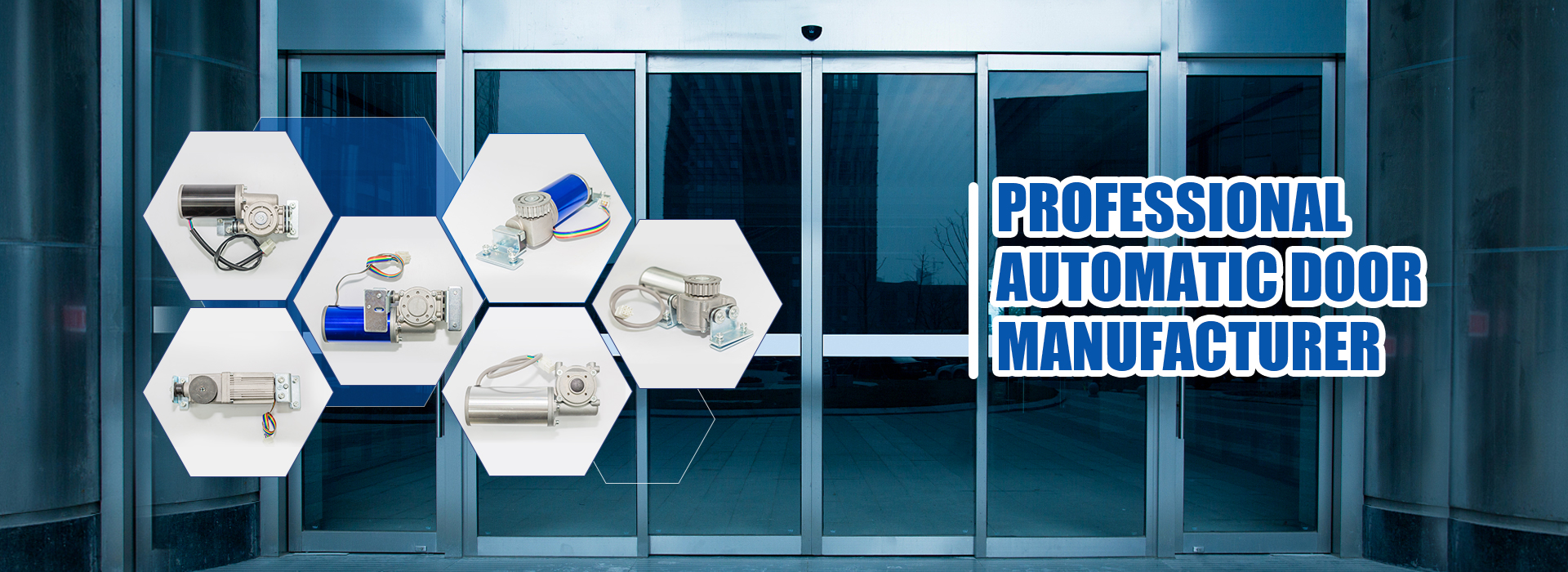
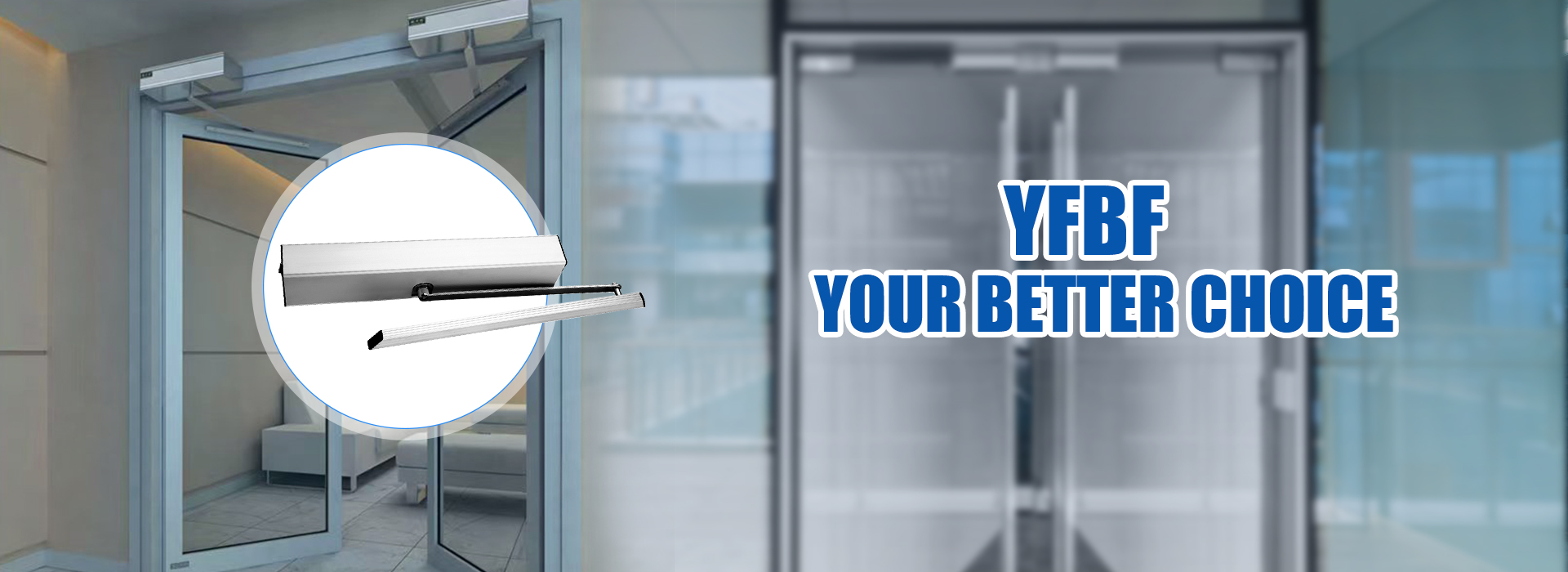
- Door type and load are the first filters: sliding, swinging, and glass retrofit projects need different motor and control logic.
- High-cycle applications benefit from brushless designs because they are better suited to repeated starts and stops.
- Documentation matters: installation dimensions, rated duty, and accessory compatibility reduce commissioning risk.
- Safety and accessibility compliance should be checked before purchase, not after installation.
- For project buyers, the supplier’s spare-parts ecosystem is as important as the motor specification.
The automatic door motor is the mechanical heart of an entrance system, but a reliable purchase decision depends on more than torque and speed; it must also align with door geometry, traffic profile, and control architecture, especially in projects that need a brushless door motor for frequent daily cycling. A practical benchmark comes from accessibility and safety standards such as the ADA 2010 Standards for Accessible Design, which specify a minimum clear width of 32 inches for a wheelchair passage in many circumstances, and from EN 16005, which addresses pedestrian door safety requirements; pairing those rules with the correct hardware helps avoid costly rework after commissioning. For product and application context, see automatic sliding door operators, automatic swing door operators, and glass door automation.
Automatic Door Motor Buying Guide: Start With Door Type, Load, and Traffic
The best automatic door motor purchase starts with the door, not the catalog.
Sliding doors, swing doors, and glass retrofit doors place very different demands on the drive unit, controller, and accessories. A commercial lobby with continuous foot traffic behaves differently from an office side entrance or a clinic corridor. If the motor is undersized, operators see jerky motion, thermal stress, and premature wear. If it is oversized, commissioning becomes harder and the installed cost rises without a meaningful return.
For a typical engineering workflow, the first questions are simple: How heavy is the leaf? How wide is the opening? How many cycles per day will the system see? Is the site using access control, radar, push buttons, or card readers? Those answers determine whether the project needs a basic drive, a complete operator package, or a more specialized automation module.
In commercial entry projects, the distinction between a motor-only product and a complete operator package matters. The motor is the drive source, but the operator usually includes control logic, transmission, mounting components, and accessory interfaces. If the site is a retrofit, that packaging can save time during installation and reduce compatibility issues.
| Door scenario | Typical usage pattern | Buying priority | Common risk if ignored |
|---|---|---|---|
| Retail entrance | High daily cycles | Duty stability | Overheating and frequent service calls |
| Office lobby | Moderate cycles | Access control integration | Poor credential handoff and delays |
| Hospital corridor | Frequent assisted passage | Low noise and fail-safe behavior | User discomfort and accessibility complaints |
| Glass retrofit | Existing frame constraints | Mounting compatibility | Installation delays and rework |
That table is why the automatic door motor supplier conversation should begin with application fit, not brand preference. A supplier who can explain load assumptions, accessory compatibility, and service procedures is usually more useful than one who only lists top speed.
Automatic Door Motor Supplier Evaluation: What Documentation Should You Ask For?
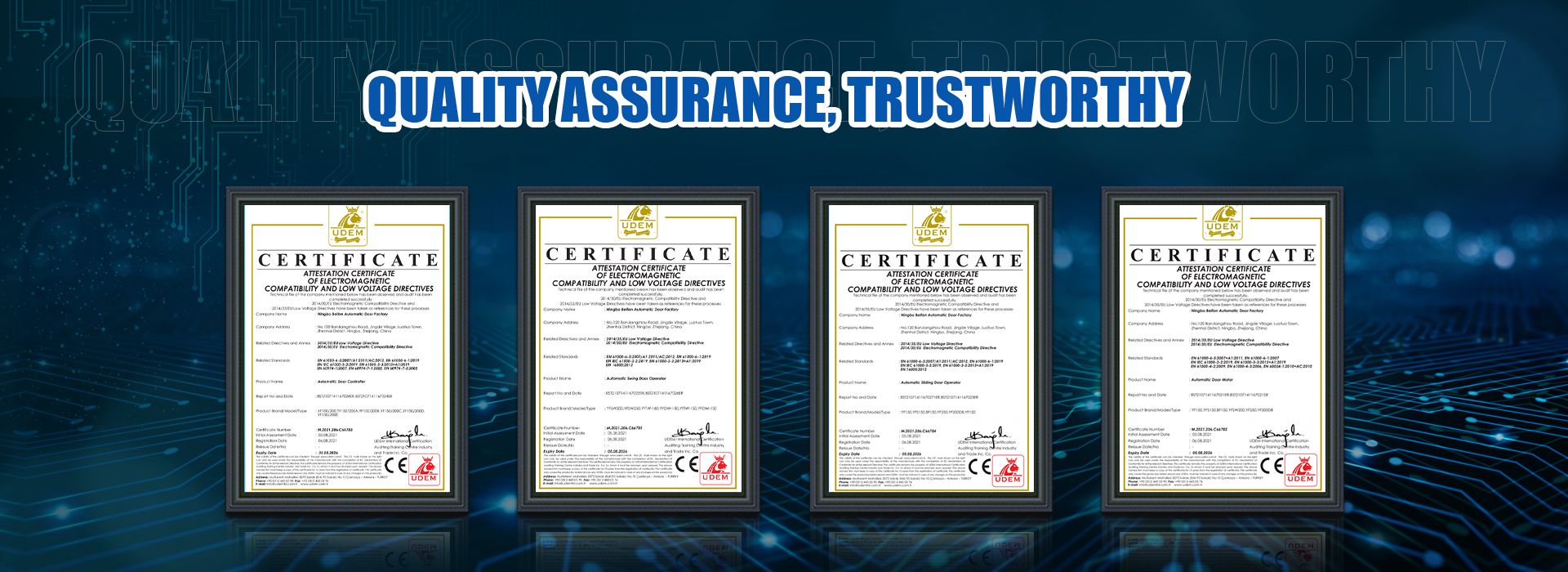
Supplier documentation is one of the fastest ways to judge product quality before purchase.
Serious buyers should ask for dimensional drawings, rated voltage, duty cycle information, wiring diagrams, accessory lists, and troubleshooting guidance. Those documents reduce risk because they let installers verify clearances, mounting points, and electrical compatibility before the motor arrives on site.
In the United States, OSHA’s lockout/tagout guidance is a practical reminder that installation and maintenance must be planned as controlled work, not improvised field activity. For entrance systems, that means the supplier should provide clear isolation, adjustment, and service instructions. When documentation is weak, commissioning time rises and the likelihood of repeated site visits increases.
A supplier evaluation checklist should also ask whether the motor or operator can support common accessory inputs such as radar sensors, push plates, access controllers, emergency battery backup, and fire alarm interfaces. In many projects, the motor itself is not the problem; the integration path is.
- Request full installation drawings before purchase.
- Confirm rated supply voltage and current requirements.
- Ask for compatible sensor and access-control lists.
- Verify spare-part availability and lead times.
- Check whether the supplier supports retrofit and new-build projects equally well.
For project teams comparing models, the internal product pages can be more useful than a generic brochure. See automatic door operators and door accessories for the kinds of compatibility details that reduce selection risk.
Brushless Door Motor vs Brushed Motor: Why It Changes Lifetime Cost
A brushless door motor usually lowers maintenance risk because it eliminates brush wear.
That does not automatically make it the right choice for every entrance, but it often becomes the preferred option in high-cycle commercial settings where stopping for service is expensive. The basic engineering reason is straightforward: brushless designs remove a wear item and typically support smoother electronic control, which helps with soft start, soft stop, and consistent opening behavior.
General industrial motor literature from the U.S. Department of Energy has long noted that motor efficiency and control quality can materially affect operating cost, especially in systems that run repeatedly. For door automation, the financial impact is usually smaller than in HVAC or pumping, but the uptime impact can be more visible because failures directly block entry.
When people compare a brushed unit to a brushless door motor, they should look at lifecycle cost, not only purchase price. The cheaper unit can be more expensive after repeated service calls, brush replacement, and downtime. That is especially true in retail, healthcare, and office lobbies where the door is part of the visitor experience.
| Attribute | Brushed motor | Brushless door motor |
|---|---|---|
| Wear parts | Brushes and commutation surfaces | No brushes |
| Maintenance frequency | Higher in frequent-use settings | Typically lower |
| Control smoothness | Basic | Better electronic control |
| Best fit | Light-duty or cost-sensitive projects | High-cycle commercial entrances |
If you are comparing motor architecture across different entrance products, the internal page for automatic swing door operator helps show how control and movement requirements differ from sliding systems.
Seven Factors to Consider Before Buying an Automatic Door Motor
The seven-factor model is the most practical way to reduce purchasing mistakes.
Each factor affects performance, installation risk, or lifetime cost. Treat them as a sequence, not a checklist you can skip randomly.
- Door type. Sliding, swing, and glass retrofit installations need different drive behavior and mounting logic.
- Leaf weight and width. Heavier and wider leaves place more demand on the drive and the transmission system.
- Cycle frequency. High-traffic entrances need better thermal endurance and more stable duty behavior.
- Installation space. Limited headroom or narrow frame depth can rule out certain operator designs.
- Power supply. Site voltage, backup power, and current capacity must match the selected unit.
- Integration. Sensors, access control, alarm input, and remote operation should be confirmed in advance.
- Maintenance access. Serviceability affects uptime as much as the original specification does.
These seven factors also explain why procurement teams and engineers often disagree when choosing a motor. Buyers may focus on the headline price, while installers focus on physical fit, and facility managers focus on downtime. The best choice balances all three.
| Factor | What to verify | Why it matters | Typical mistake |
|---|---|---|---|
| Door type | Sliding or swing geometry | Defines movement logic | Buying the wrong operator family |
| Traffic frequency | Daily cycle count | Supports duty selection | Ignoring peak-hour load |
| Installation space | Headroom and frame depth | Determines fit | Discovering interference during install |
| Controls | Sensors and access hardware | Ensures system integration | Using adapters for every accessory |
Automatic Sliding Door and Automatic Swing Door Use Cases: Which Motor Fits Which Scene?
Commercial scene drives product selection more than the catalog category does.
Automatic sliding doors are common in hospitals, shopping centers, airports, and office lobbies because they handle frequent traffic efficiently and preserve clear passage space. Automatic swing doors are often used where the existing architecture already favors a hinged leaf, or where the entrance must fit a tighter installation envelope.
In practice, sliding systems are better when the opening is wide and traffic is constant, while swing systems are often easier to retrofit into interior or semi-public spaces. Glass door automation adds another layer because the visible door structure must stay clean, safe, and stable while still supporting motorized movement.
The office building automatic door page and the hospital automatic doors page are good examples of why context matters: the same motor family is not ideal for every environment, even if the entrance looks similar from the outside.
For safety and accessibility, the U.S. Access Board’s ADA Standards remain a foundational reference for clear passage and maneuvering space, while EN 16005 addresses pedestrian door safety in automated systems. The buyer should verify that the system can be adjusted to meet the site’s movement pattern, opening speed, and detection behavior.
Key Technical Numbers That Matter in Automatic Door Motor Selection
Quantitative specs are useful only when they are tied to site conditions.
Engineers should look for rated voltage, opening speed, maximum leaf size, operating temperature range, and accessory compatibility rather than relying on a single headline number. For access and safety context, the ADA commonly references a 32-inch minimum clear width in many accessible route situations, and EN 16005 is designed to reduce collision risk in powered pedestrian doors. Those are not motor specs, but they shape the motor and control requirements.
Below is a practical comparison format that procurement teams can use when shortlisting models.
| Specification | Why it matters | What to confirm |
|---|---|---|
| Rated voltage | Electrical compatibility | Site supply matches product requirements |
| Opening speed | User experience and cycle time | Safety-adjusted speed is acceptable |
| Leaf weight limit | Load handling | Door mass does not exceed the operator range |
| Accessory inputs | Integration | Sensors, switches, and access control are supported |
| Service access | Downtime reduction | Technician can reach adjustment points easily |
For project teams, the smartest choice is often the one with the clearest spec sheet. An automatic door motor supplier that publishes installation dimensions and wiring logic makes it easier to predict commissioning time and avoid hidden cost.
Installation, Maintenance, and Replacement: How to Reduce Downtime
Serviceability is one of the most overlooked purchase factors.
A motor that is difficult to adjust, inspect, or replace can create far more cost over time than a slightly more expensive but better documented model. This is especially true in hospitals, retail entrances, and office lobbies where a failed door creates immediate operational disruption.
Replacement planning should include compatibility with existing tracks, frames, sensors, and control boards. In retrofit projects, the real challenge is often not motor power but the match between new hardware and old field conditions. That is why spare parts and accessory availability matter so much.
- Keep a record of model numbers and revision codes.
- Verify that replacement parts are still available before finalizing purchase.
- Check whether the motor can be serviced without full disassembly of the entrance.
- Confirm that the controller supports recalibration after replacement.
Those steps cut downtime and help the building team avoid emergency procurement. They also make it easier for an automatic door motor supplier to support the installation after handover.
How to Compare Quotes Without Choosing the Wrong Automatic Door Motor
The lowest price is rarely the lowest project cost.
A meaningful quote comparison should include the motor, controller, mounting kit, sensors, wiring accessories, commissioning support, warranty terms, and spare-parts policy. If one quote omits any of those items, it is not an apples-to-apples comparison.
Project buyers should also ask whether the supplier can support both new-build and retrofit scenarios. A model that works well in one case may fail in the other because of frame constraints or control integration issues. This is where a complete automatic door motor package can outperform a motor-only approach.
| Quote item | Included? | Decision impact |
|---|---|---|
| Motor and controller | Yes / No | Core system functionality |
| Mounting kit | Yes / No | Installation readiness |
| Sensors and triggers | Yes / No | User experience and safety |
| Service documents | Yes / No | Long-term maintenance |
| Replacement parts | Yes / No | Downtime control |
If your team needs to evaluate product breadth, the internal page for automatic door parts is useful because it shows the ecosystem that often determines lifecycle performance.
Practical Buying Checklist for Engineers, Contractors, and Facility Managers
A disciplined checklist prevents most procurement errors.
- Confirm door type, size, and leaf weight.
- Verify supply voltage and installation space.
- Check whether the site needs access control or fire alarm linkage.
- Ask for compatibility with sensors and safety devices.
- Review service access and spare-parts availability.
- Compare warranty scope, not just warranty length.
- Test commissioning support before committing to the order.
When those items are documented, procurement becomes much easier to defend internally. Facilities teams can justify the selection to leadership, while contractors can confirm that the system can actually be installed and maintained on schedule.
That is the real value of a well-chosen automatic door motor: fewer surprises, fewer callbacks, and a better experience for the people moving through the entrance every day.
FAQ
What is the difference between an automatic door motor and an automatic door operator?
An automatic door motor is the drive element, while an automatic door operator is usually a more complete system that may include the motor, controller, transmission, mounting hardware, and accessory interfaces.
Is a brushless door motor always better?
Not always, but it is often better for high-cycle commercial entrances because it reduces wear-related maintenance and can support smoother motion control.
How do I choose the right automatic door motor supplier?
Choose a supplier that provides drawings, wiring diagrams, compatibility data, spare parts, and clear commissioning support for the exact door type you are installing.
What should I check first before buying?
Start with door type, leaf weight, opening frequency, and installation space. Those four factors usually determine whether a motor is suitable.
Can one motor work for both sliding and swing doors?
No, the movement mechanics and control requirements are different, so sliding and swing systems generally require different operator designs.
Why does access control matter in door motor selection?
Because the motor must communicate correctly with sensors, card readers, buttons, and alarm interfaces if the entrance is part of a secure building system.
What causes most automatic door failures after installation?
Common causes include poor sizing, weak accessory integration, insufficient maintenance access, and using the wrong product family for the site conditions.

David Chen
Post time: Aug-02-2026