
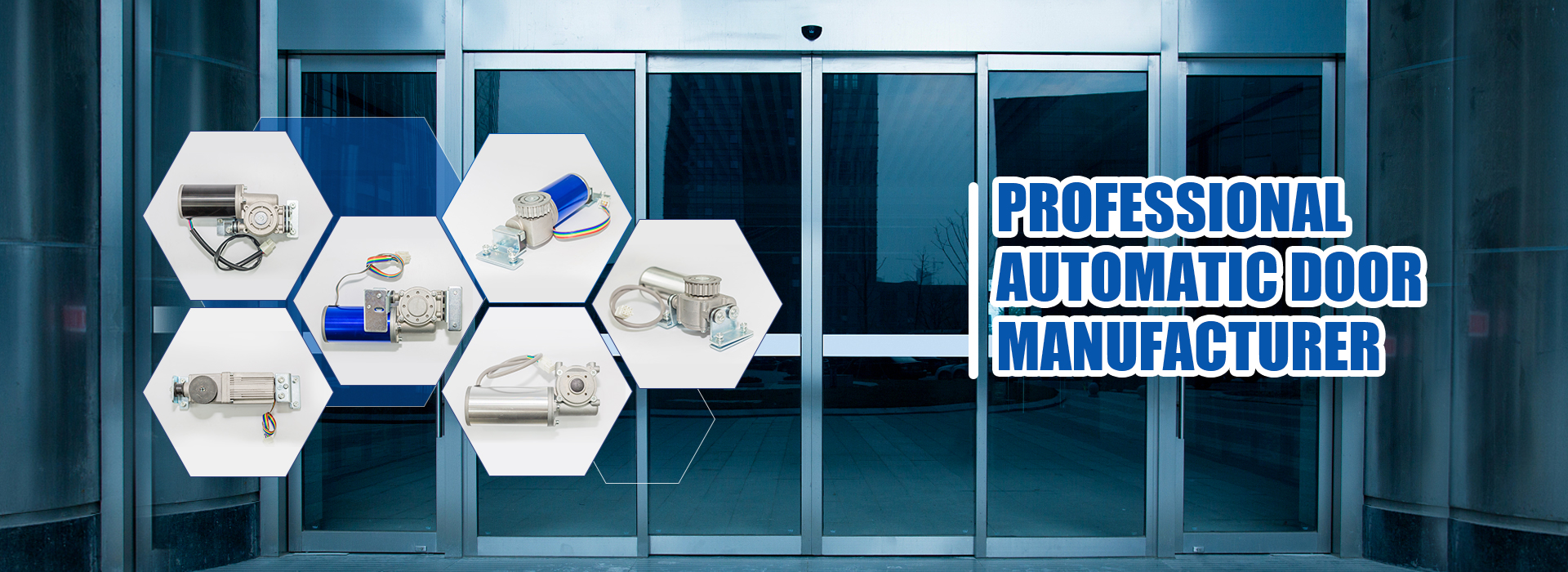
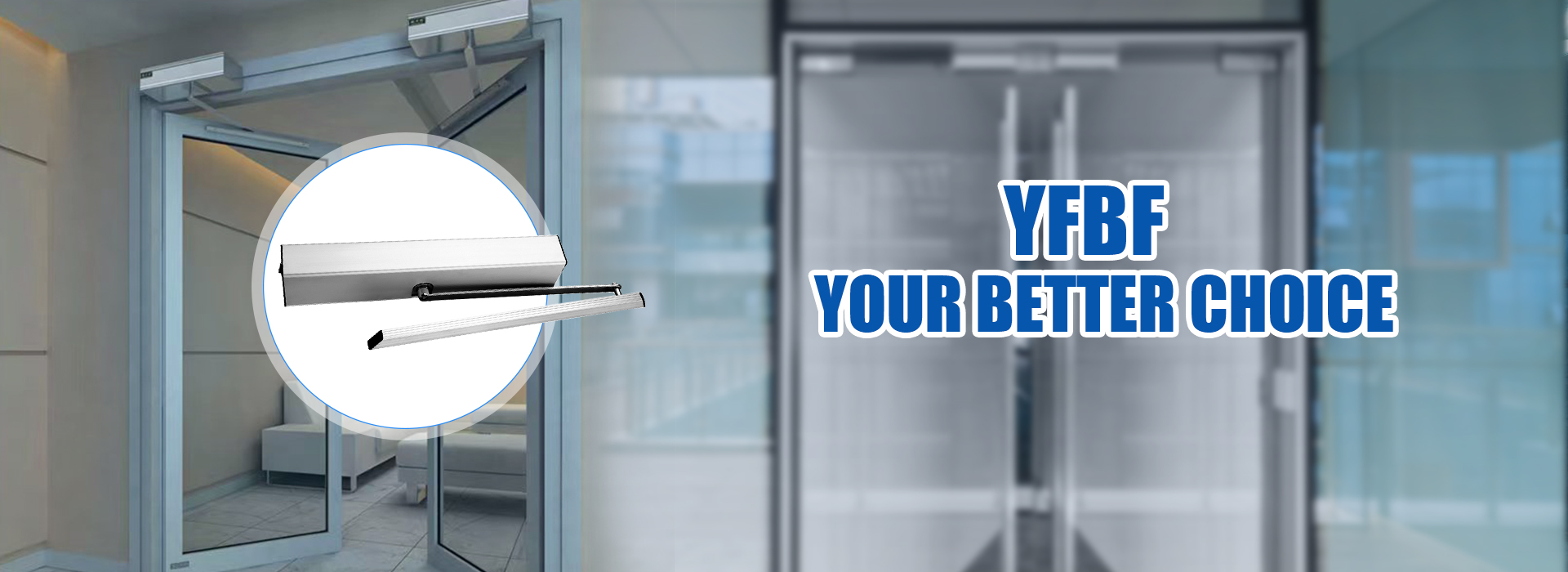

- Automatic door operator selection should start with door type, duty cycle, and available installation depth.
- Commercial entries need verified access widths, opening speeds, and safety sensing, not just a powerful motor.
- Retrofit projects succeed when operator compatibility, spare parts, and service access are planned early.
- Architects should treat the operator as part of the building envelope and circulation strategy, not a standalone device.
- Contractors reduce delays when they standardize model naming, wiring logic, and commissioning steps.
An automatic door operator is the power-and-control core that opens and closes an entrance, and the selection decision affects accessibility, reliability, and project coordination. For reference, accessible clear floor space and maneuvering requirements are addressed in ADA Standards guidance from the U.S. Access Board, while building doors and their hardware are covered by International Building Code egress provisions. In real projects, a commercial door operator must fit the leaf weight, opening geometry, traffic pattern, and system integration plan, which is why architects and contractors often compare sliding, swinging, and retrofit-ready operator families before they specify a final solution.
Automatic Door Operator Selection Starts With the Entrance, Not the Motor
The entrance condition determines the operator more than the catalog name does.
Before comparing a commercial door operator lineup, define the door type, width, mass, duty cycle, and available mounting zone. A sliding entrance in a hospital lobby behaves very differently from a swinging office door or a glass retail retrofit. The first mistake many teams make is choosing by “motor strength” alone, even though the system also depends on controller logic, track geometry, safety sensors, and the door leaf itself.
For accessibility planning, the U.S. Access Board ADA guidance is a useful reference point because clearances, approach paths, and maneuvering space shape whether a door operator will actually work in daily use. If the operator opens a door too slowly, intrudes into circulation, or conflicts with furniture and hardware placement, the entry may be compliant on paper but awkward in practice.
For most contractor door solution workflows, the selection order should be simple: use case, door geometry, traffic volume, operator type, then accessory stack. That sequence reduces redesigns later.
Automatic Door Operator Types for Commercial Door Operator Projects
Sliding operators dominate high-traffic public entrances, while swinging operators fit space-constrained and retrofit applications.
The most common automatic door operator families are sliding and swinging systems. Sliding units are typically used where wide openings and smooth pedestrian flow matter, such as office towers, retail frontages, hospitals, and transit-linked buildings. Swing operators are often chosen for interior corridors, accessible entrances, and retrofits where the existing door leaf must remain in place.
For architects, the main question is not which type is “better,” but which type matches the building’s circulation logic. For contractors, the question is whether the mounting, wiring, and commissioning steps can be completed without structural change.
| Operator Type | Best Fit | Typical Advantage | Main Constraint |
|---|---|---|---|
| Sliding automatic door operator | Hospitals, malls, office towers | High throughput and wide opening capability | Needs overhead or header space |
| Swing automatic door operator | Offices, clinics, internal passages | Easier retrofit on existing swing leaves | Requires clearance for leaf travel |
| Glass door automation kit | Showrooms, storefronts, lobbies | Preserves visual transparency | Requires careful glass hardware coordination |
When you evaluate a sliding automatic door operator, look at entry width, expected cycles per day, and how the door will interact with adjacent glazing, partitions, and security hardware. For retrofit work, a swing automatic door operator can be a practical contractor door solution because it usually demands less reconfiguration of the opening.
Commercial Door Operator Specs That Actually Matter on Site
Door mass, opening speed, and duty cycle determine whether the operator will survive the project in real conditions.
One of the most useful reference points for architects and contractors is the door hardware performance framework in ASTM E330, which addresses structural performance under uniform static air pressure differences. While E330 is not an operator standard, it reminds specifiers that envelope loads, wind exposure, and door assembly behavior matter. In the field, these forces can change how smoothly a powered door opens and closes, especially on large exterior entrances.
Operator selection should include the maximum leaf weight, recommended leaf width, opening/closing speed range, hold-open time, and expected daily cycle count. Many commercial entrance teams also plan for manual override and maintenance access so the system can be serviced without taking the building offline.
| Selection Parameter | Why It Matters | Common Spec Range | Site Risk If Missed |
|---|---|---|---|
| Door leaf weight | Defines drive load and gearbox stress | Project-specific, often 40-200 kg for common commercial leaves | Premature wear or failed opening |
| Opening speed | Affects flow and user experience | Typically adjustable by controller | Congestion or safety complaints |
| Cycle frequency | Predicts wear and service interval | Low, medium, or high duty applications | Shortened life and downtime |
| Mounting depth | Determines whether the operator fits the header | Project-specific | Field modification and delays |
For projects that involve a commercial door operator, the best practice is to verify the door schedule, hardware list, and control sequence before ordering. That is especially important when the operator must coordinate with locking devices, access readers, and motion sensors.
Automatic Door Operator Sizing for Architects and Contractors
Correct sizing depends on geometry, usage intensity, and the building’s operational expectations.
Architects often think in terms of circulation, while contractors think in terms of installation feasibility. The correct automatic door operator must satisfy both. A lobby entrance with long opening hours, such as a hospital or retail store, needs a different duty profile than a back-of-house staff entrance. If the opening is too narrow, a sliding system may not deliver enough clear width. If the swing arc is obstructed, a swing operator may create conflicts with furniture, signage, or code-required clear space.
In practice, the selection workflow should include these steps:
- Measure the clear opening width and available header or jamb space.
- Confirm leaf material, mass, and hinge or track condition.
- Estimate daily cycles and peak-hour traffic.
- Check access-control and safety-device integration needs.
- Review maintenance access, spare parts, and commissioning time.
That workflow is especially useful in a glass door automation project, where visual design, safety, and operator placement all matter at once. On glazed storefronts, even small hardware conflicts can become visible to end users immediately.
Why Door Automation Retrofit Projects Need a Different Contractor Door Solution
Retrofit work is more constrained than new construction because the existing frame, finishes, and utilities limit your options.
Glass door automation retrofits are a major market segment because owners want better accessibility and a more modern entrance without rebuilding the facade. In a retrofit, the contractor must work around existing structural openings, ceiling finishes, electrical routing, and occupied-space constraints. The operator choice therefore needs to be conservative, modular, and easy to commission.
Unlike new construction, retrofit projects rarely offer ideal header depth or perfectly aligned leaves. That means a field team may need to prioritize compact hardware, standard mounting patterns, and readily available spare parts. For this reason, a contractor door solution should always include installation accessories, brackets, and a service plan.
When the project includes an automatic door accessory package, troubleshooting becomes easier because sensors, brackets, and control interface parts can be swapped without rebuilding the full entrance. That reduces downtime for retail and healthcare clients.
Access Control, Sensors, and Safety Are Part of the Operator Decision
A commercial door operator is only as good as its sensing and control logic.
Modern entrances often connect with card readers, push plates, motion sensors, key switches, remote controls, and building management logic. The operator must support these inputs without creating unsafe or confusing behavior. If the access-control logic is too complex, users may approach the door and encounter delayed opening, repeated cycling, or lock conflicts.
For fire and egress coordination, architects and contractors should align door behavior with the authority having jurisdiction and the project’s life-safety strategy. The IBC chapter on means of egress is a useful starting point because it frames door operation as part of safe occupant movement, not a decorative feature.
| Integration Item | Typical Function | Installer Priority | Common Failure Mode |
|---|---|---|---|
| Motion sensor | Triggers opening on approach | High | False triggering or missed detection |
| Access reader | Restricts entry to authorized users | High | Timing conflict with lock release |
| Safety beam | Prevents closing on pedestrians | Very high | Misalignment after commissioning |
| Remote switch | Allows staff override | Medium | Poorly labeled operation modes |
If your project includes a access-control ready door operator, validate the relay logic early. A door that opens at the wrong time or fails to relock cleanly can create both safety and security problems.
Commercial Door Operator Performance Data Architects Can Trust
Reference standards help turn subjective preferences into measurable design criteria.
For door hardware durability and repeatability, many teams review test methods and standards rather than relying on brochure language alone. For example, ISO 13849-1 provides a framework for the safety-related parts of control systems, and it is useful when the operator is integrated with protective devices and control logic. Although the specific performance category is project-dependent, the standard gives teams a common language for safety planning.
In accessibility design, a common practical benchmark is a clear maneuvering path that allows the user to approach, activate, and pass through the opening without awkward repositioning. The exact dimensions depend on door type and swing direction, but the accessibility principle is consistent: the operator must work for real users, including people with mobility devices, luggage, carts, or strollers.
| Reference | What It Helps Define | Why It Matters in Selection |
|---|---|---|
| ADA guidance | Clearances and approach paths | Prevents nonfunctional accessible entries |
| IBC means of egress | Door use in evacuation | Aligns operator behavior with life safety |
| ISO 13849-1 | Safety-related control system design | Supports sensor and controller validation |
| ASTM E330 | Structural response to pressure load | Helps contextualize exterior door loads |
For teams comparing different entrances, a automatic door sensor is not a minor accessory; it is part of the performance envelope. In busy commercial buildings, detection quality can be the difference between smooth circulation and recurring service calls.
How to Choose Between a Sliding and Swinging Automatic Door Operator
The right choice depends on traffic, space, and whether the project is new build or retrofit.
Sliding systems usually win in high-traffic public settings because they preserve circulation and avoid door-swing conflicts. Swing systems often win where the opening is narrower, the architecture is constrained, or the existing door type should remain unchanged. A contractor should also consider service access: if technicians cannot reach the drive assembly and controller safely, the long-term cost of ownership rises.
Here is a practical decision matrix for architects and contractors:
- Choose sliding when throughput and wide clear opening are priorities.
- Choose swinging when the existing leaf must be retained or header space is limited.
- Choose a glass retrofit kit when visual transparency is part of the design brief.
- Choose a heavier-duty package when daily cycles are high or the entrance is public-facing.
- Choose an integrated accessory package when access control and safety logic are complex.
For procurement teams, internal product consistency also matters. A swing operator family, a sliding operator family, and a parts category create a cleaner replacement path than one-off hardware choices scattered across multiple vendors.
Installation and Commissioning Checklist for Contractor Door Solution Work
Successful commissioning depends on repeatable field checks, not just installation speed.
Even the best automatic door operator can fail if it is commissioned without a structured checklist. Contractors should confirm power supply, bracket alignment, sensor positioning, opening force, closing timing, obstruction response, manual release, and final signage. For public buildings, it is also wise to train the owner’s maintenance staff on basic troubleshooting and cleaning intervals.
- Verify door leaf movement by hand before powering the operator.
- Check clearances at full open and full close positions.
- Test safety sensor response with a real obstruction.
- Confirm access-control release timing with the lock.
- Document controller settings for future service calls.
When a project uses a automatic door motor, the motor itself should be treated as one part of the system, not the whole specification. Many service problems come from misalignment, wiring conflicts, or incorrect controller settings rather than a defective drive.
Maintenance Planning and Replacement Strategy for Commercial Door Operator Systems
Maintenance planning is what turns a good installation into a dependable building asset.
Hospitals, offices, and retail centers all benefit from preventive maintenance because door downtime quickly affects user experience and operational flow. Replacement strategy matters just as much as the initial model choice. If the operator family has stable part numbering and good accessory availability, service teams can shorten outages and reduce risk during repairs.
A practical maintenance program should track cycle frequency, sensor cleanliness, abnormal noise, opening delay, and lock synchronization. For high-traffic sites, contractors often recommend a documented inspection interval and a stock of critical spare parts. That is especially important where the entrance is the primary public access point.
If the building owner anticipates future service needs, a modular commercial door operator platform with compatible accessories usually delivers better lifecycle value than a custom one-off system. In procurement terms, replacement speed often matters more than a small difference in initial hardware cost.
Architectural Spec Writing Tips for Automatic Door Operator Projects
Good specification language reduces ambiguity and protects the project schedule.
When writing the spec, avoid vague statements like “provide high-quality automatic door opener.” Instead, define the door type, mounting constraints, traffic expectations, sensor logic, and required accessories. The spec should state who is responsible for power, wiring, finish trim, commissioning, and owner training.
For better project control, include these items:
- Door type and opening direction
- Leaf material, weight, and dimensions
- Target access-control integration points
- Required safety devices and relays
- Maintenance and spare-parts obligations
That level of detail helps both architects and contractors. It also reduces disputes when the site conditions differ from the preliminary drawings.
FAQ About Automatic Door Operator Selection
1. What is the best automatic door operator for a commercial entrance?
The best commercial door operator is the one that matches the door type, traffic load, installation space, and integration requirements. Sliding systems usually fit high-traffic public entrances, while swinging systems are often better for constrained or retrofit projects.
2. How do I choose between a sliding and swinging operator?
Choose sliding when you need wide, continuous pedestrian flow. Choose swinging when the existing leaf must remain or when the header space is limited. The building layout usually decides the answer before the product catalog does.
3. What should contractors check before ordering an operator?
Contractors should verify door weight, door width, mounting depth, power supply, traffic frequency, and sensor or access-control integration. These details prevent field changes and reduce commissioning delays.
4. Are automatic door operators suitable for glass door retrofits?
Yes. Glass door automation is one of the most common retrofit applications, especially for retail stores, showrooms, and office lobbies. The key is to confirm hardware compatibility and structural support before installation.
5. Why does door maintenance matter so much?
Maintenance protects reliability, safety, and uptime. A well-selected operator can still fail early if sensors drift, fasteners loosen, or the controller is misconfigured.
6. Do automatic door systems need access-control integration?
Not always, but many commercial projects benefit from it. Access control improves security, manages visitor flow, and helps coordinate opening, locking, and alarm logic.
7. What is the most common mistake in operator selection?
The most common mistake is choosing by motor power alone and ignoring door geometry, duty cycle, and installation constraints. A complete system view produces better long-term results.

David Chen
Post time: Aug-04-2026