
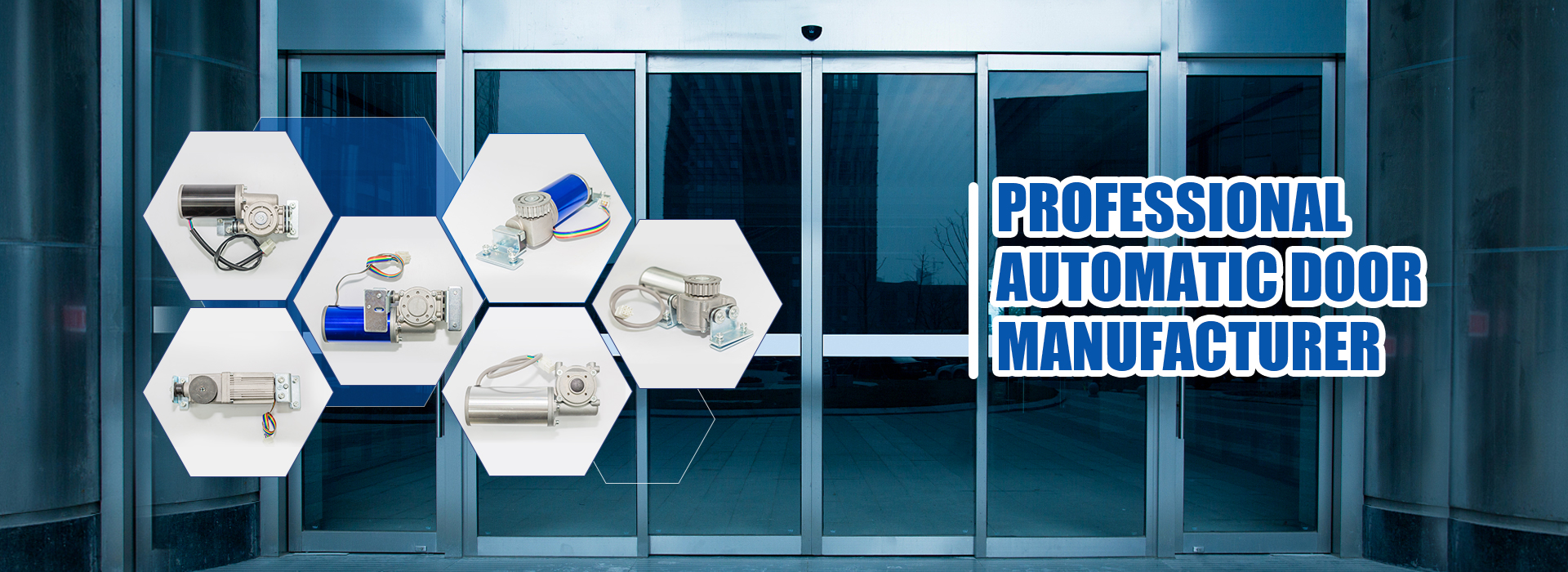
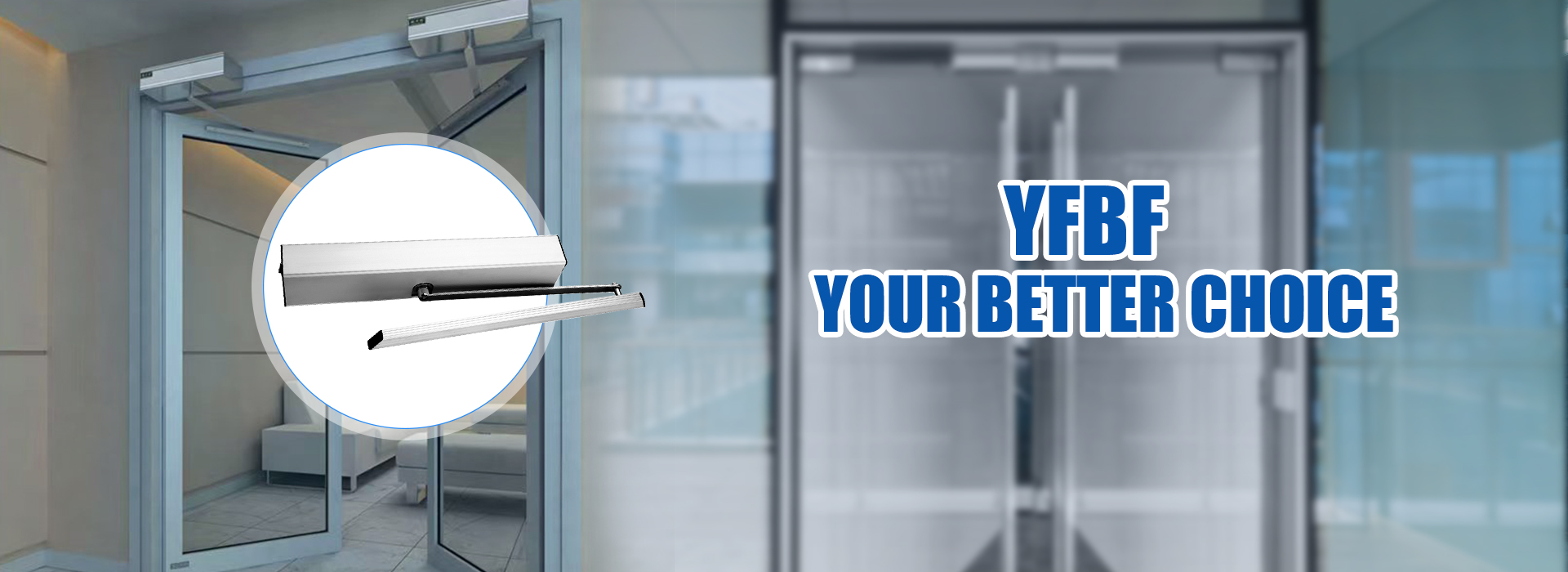

- Automatic glass door systems are most effective when motor, controller, sensor, and door structure are selected together.
- Commercial entrances usually need a sliding or swing solution based on traffic volume and available side clearance.
- Glass entrance door automation is often justified by accessibility, image, and reduced touchpoints, not only convenience.
- Compatibility with access control and replacement parts can matter more than raw opening speed in real projects.
- Standards-based planning reduces risk during installation, commissioning, and long-term maintenance.
Automatic glass door systems are now a core part of modern commercial entrances, especially in offices, retail storefronts, clinics, hospitals, and public buildings. When specified correctly, a commercial glass door system can support accessibility goals, reduce congestion, and improve the visitor experience while maintaining security. For context, ADA door opening requirements commonly drive design decisions in accessible entrances, and automated operator performance is often evaluated alongside safety and reliability expectations defined in standards such as ISO 21542:2011. In practice, the best outcome comes from choosing the right operator for the door type, then confirming the door weight, opening cycle, and integration points before installation.
Why automatic glass door systems matter in commercial entrances
Automatic glass door systems solve a practical business problem: they make a high-traffic entrance easier to use without sacrificing the visual openness that glass doors provide.
In commercial buildings, the entrance is not only a passageway; it is also a traffic filter, a security interface, and part of the brand experience. A glass entrance door that opens automatically reduces hand contact, helps with wheelchair access, and keeps movement smoother during peak hours. That is one reason automated entries are common in healthcare, office lobbies, and retail frontages where visitors arrive in bursts rather than evenly throughout the day.
The technical value comes from the full system, not the visible door alone. A door operator, sensor package, safety device, controller logic, and mounting hardware must work together. In many retrofit projects, the most important decision is whether the entrance needs a sliding operator or a swing operator. Sliding systems are usually preferred where throughput is high and side space is available, while swing systems are a better fit when the entrance must preserve a conventional hinged appearance or where lateral clearance is limited.
For product exploration, it helps to compare category-level options such as automatic sliding door operator, automatic swing door operator, and automatic door motor before finalizing a specification.
Automatic glass door system selection: the key variables that actually decide performance
Door weight and traffic frequency are the two variables that most often determine whether a commercial glass door system will succeed or fail over time.
A common specification mistake is to start with brand preference instead of load and usage. A commercial entrance with frequent traffic needs a system that can repeatedly open and close without overheating, drifting out of calibration, or increasing maintenance intervals. For glass doors, the structural layout also matters because frameless or semi-framed panels create different loads and attachment constraints than standard framed entrances.
| Selection factor | Why it matters | Typical decision impact |
|---|---|---|
| Door weight | Defines the drive force and gearing required | Heavy panels need higher-capacity operators |
| Door width | Controls opening travel and clearance | Wide openings favor sliding systems |
| Traffic frequency | Determines duty cycle and wear rate | High traffic increases the need for robust components |
| Installation space | Limits operator size and mounting options | Low headroom may narrow product choices |
| Access control | Connects the door to security workflows | May require card readers, keypads, or remote modules |
In project planning, the safest approach is to define the entrance as a complete operating environment. That means identifying the opening type, expected cycle count, available power, safety accessories, and service access before the order is placed. This is especially important for a glass entrance door because glass projects usually have tighter tolerances in alignment and a greater need for clean-looking hardware integration.
For facility teams, the biggest hidden cost is often not the initial hardware but the maintenance burden created by incompatible parts or poor specification choices. If a replacement motor, belt, sensor, or controller cannot be sourced quickly, the entrance may remain offline longer than expected. That is why serviceability should be treated as a primary selection criterion, not an afterthought.
Automatic glass door systems for sliding vs swing entrances
The right operator type depends on traffic pattern, space constraints, and the visual goals of the building.
Automatic sliding door systems are the default choice for many commercial entrances because they move laterally, preserve clear passage, and handle frequent opening cycles efficiently. This makes them suitable for office lobbies, shopping centers, hospitals, and transport-adjacent entrances where people enter in groups. Automatic swing door systems are more appropriate where the architecture already uses hinged doors or where the opening path must remain compact and controlled.
| System type | Best use case | Main advantage | Main limitation |
|---|---|---|---|
| Sliding door operator | High-traffic commercial entrances | Efficient flow and strong accessibility | Needs side travel space |
| Swing door operator | Offices, clinics, internal passages | Works in tighter layouts | Consumes swing clearance |
| Heavy-duty operator | Large or frequently used glass doors | Better durability under load | Higher installation and service demands |
The practical difference is not just motion direction. Sliding doors are usually easier to standardize across large commercial portfolios because the operating envelope is predictable, while swing doors can offer a more familiar feel for users who expect a conventional hinged entrance. In either case, the operator should be matched to the real duty cycle rather than the nominal appearance of the doorway.
For related application pages, see automatic sliding door and automatic swing door.
Commercial glass door system safety, access, and compliance expectations
Safety and accessibility are not optional features in a commercial glass door system; they are part of the basic specification.
Accessible entrances are shaped by code, but good design goes beyond minimum compliance. For example, the U.S. Access Board guidance on door openings explains key accessibility considerations for clear width and maneuverability, while 2010 ADA Standards for Accessible Design are often used as a reference framework in public-facing projects. Internationally, ISO 21542:2011 covers accessibility and usability of the built environment, and it is highly relevant when commercial entrances are expected to serve diverse users, including wheelchair users, older adults, and people carrying items.
In practical terms, the door must open predictably, stop safely, and avoid trapping hazards. That requires properly placed motion sensors, presence detection, obstruction response logic, and a commissioning process that verifies real-world behavior. When doors are used by patients, visitors, or shoppers with limited mobility, safety tuning matters as much as speed.
Commercial teams should also think about emergency behavior and fail-safe design. For example, power loss scenarios, alarm integration, and manual override procedures should be discussed during procurement, not after installation. If the door is connected to a building access system, the interface logic should be tested before handover so that security events do not interfere with normal entry flow.
What the standards and technical references say about modern entrance design
Standards help translate subjective expectations into measurable design criteria.
For accessible routes, the U.S. Access Board and ADA guidance provide clear references for doorway usability, while building-wide accessibility expectations are summarized in ISO accessibility standards. For automated doors, the more important lesson is that compliance is not one dimension. A door can meet opening width goals and still perform poorly if the operator is undersized, the sensing field is misaligned, or the access control timing creates bottlenecks.
The practical takeaway is simple: standards should guide the design, but site conditions should decide the final specification. A glass entrance door in a clinic may need low-noise operation and gentle opening behavior, while a retail entrance may prioritize rapid cycle response and durability under constant use. An office tower may need better integration with badge access, visitor management, and after-hours locking.
For engineering teams, the most useful workflow is to map code requirements, expected traffic, and maintenance assumptions into one procurement document. That document should name the door type, control method, sensor logic, and service parts approach clearly enough that installers and facility managers can work from the same assumptions.
Installation and commissioning: where automatic glass door projects succeed or fail
Installation quality is often more important than the catalog specification in determining long-term performance.
A well-chosen operator can still underperform if the rail is misaligned, the glass interface is poorly fastened, or the sensor coverage leaves blind spots. Conversely, a modest operator can perform reliably if the door geometry is correct and the commissioning process is disciplined. This is why many project teams separate product selection from field setup rather than treating them as one task.
- Confirm the door type, weight, and opening width before ordering hardware.
- Verify mounting space, power supply, and cable routing conditions on site.
- Define sensor coverage and access control integration requirements early.
- Test opening speed, closing force, and obstacle response during commissioning.
- Document spare parts and service intervals for the facility team.

Commercial glass doors also benefit from a clean maintenance plan. Regular inspection of rollers, belts, tracks, fasteners, and control wiring can prevent the slow drift that often appears before major failures. In high-use environments, those small checks can reduce nuisance shutdowns and improve the perception of reliability for front-of-house staff.
When project teams search for a direct-fit solution, a complete operator page such as automatic door operator can be more useful than a motor-only component page because the controller, drive, and linkage are already considered as one system.
Commercial glass door system maintenance and replacement strategy
Maintenance strategy should be built around uptime, not just repair cost.
In the field, the most expensive failures are often the ones that shut down the entrance during business hours. That is why compatibility, spare part availability, and diagnostic simplicity matter so much in automatic glass door systems. A model with standardized accessories and clear replacement pathways is easier to support across multiple sites than a niche setup with limited documentation.
| Maintenance item | Typical check interval | What to look for |
|---|---|---|
| Sensor alignment | Monthly | False triggers, missed detection, dead zones |
| Drive components | Quarterly | Belt wear, roller noise, loosened fasteners |
| Control logic | Quarterly | Timing drift, fault history, access settings |
| Emergency function | Biannually | Manual override and safety response |
Replacement planning is especially important for older entrances or retrofit projects. If the existing door frame, glass panel, or mounting condition is nonstandard, the service team should confirm part compatibility before any decommissioning begins. In many cases, the fastest path to restoring service is not a full rebuild but a targeted replacement of the operator or control component that has failed.
Facilities that manage multiple entrances should standardize parts where possible. Standardization reduces training burden, simplifies inventory, and makes emergency service faster. That is one reason a product portfolio with distinct but related categories, rather than scattered one-off models, is easier for procurement teams to adopt.
How to choose the right automatic glass door system for your project
The best commercial glass door system is the one that matches the building use case, not the one with the longest feature list.
Project teams should start by defining the entrance role. Is the doorway meant to move high volumes of visitors, provide a premium first impression, support accessibility, or secure a controlled zone? Once that role is clear, the operator type, sensor package, and access control integration usually become easier to specify.
- Choose sliding for higher throughput and broad commercial use.
- Choose swing for tighter layouts or conventional hinged entrances.
- Choose a complete operator package when integration and service simplicity matter.
- Choose models with replacement parts if downtime is costly.
- Choose access-control-ready systems if the door is part of a security workflow.
For many buyers, the real question is not whether to automate the entrance, but how to keep it reliable after the first year. That is where documentation, spare parts, and installation quality become decisive. A project that looks impressive on day one can become expensive if the operator is undersized or the maintenance plan is vague.
If you are comparing product families, it can help to review the broader portfolio structure through pages such as products and about, then narrow down by door type and project requirement.
Automatic glass door systems in offices, retail, healthcare, and public buildings
Different commercial settings value different performance priorities.
Office lobbies usually want a balance of appearance, access control, and smooth visitor entry. Retail entrances focus on durability, quick response, and comfort during peak periods. Healthcare facilities place greater weight on accessibility, low failure rates, and predictable behavior. Public buildings often need a combination of all three, plus stronger attention to code compliance and maintenance visibility.
These differences matter because they change how the same door technology should be specified. A glass entrance door in a clinic may need quieter operation and softer closing behavior, while a mall entrance may need a faster cycle rate and more frequent service access. In other words, the use case should shape the configuration, not the other way around.
That is also why a strong content strategy for this topic should connect product pages, application pages, and technical guidance. Searchers rarely want only a definition. They usually want to know which operator fits their doorway, what standards affect the project, how the system is maintained, and what to do when a component needs replacement.
FAQ about automatic glass door systems
What is the difference between an automatic glass door and a glass entrance door?
An automatic glass door is a glass entrance door equipped with an operator, sensors, and control logic that open and close the door without manual force.
Is a sliding or swing system better for commercial glass entrances?
Sliding systems are usually better for higher traffic and wider openings, while swing systems are better for tighter layouts or conventional hinged entrances.
What should be checked before ordering a commercial glass door system?
Door weight, opening width, installation space, traffic frequency, power supply, and access control requirements should all be confirmed before purchase.
Can automatic glass doors be integrated with access control?
Yes, many commercial systems can connect with card readers, keypads, remote modules, and other security devices.
Why does serviceability matter so much in automatic door projects?
Because compatible spare parts and clear documentation reduce downtime when a component needs to be replaced.
Are standards important for automatic entrance design?
Yes, accessibility and safety references such as U.S. Access Board guidance, 2010 ADA Standards, and ISO 21542:2011 help define usable and compliant entrances.
What is the most common reason automatic glass doors fail in the field?
Field failures often come from poor installation, mismatched loading, sensor misalignment, or inadequate maintenance rather than from the concept of automation itself.

David Chen
Post time: Aug-09-2026