
TL;DR — Key Takeaways
- Match motor torque to door weight: 20% safety margin over actual door weight is non-negotiable for reliable operation and longevity.
- Motor power: 60W for single doors ≤300kg; 100W+ for heavy-duty or double-door configurations.
- Traffic volume drives duty cycle: 100–300 cycles/day (standard), 500–1,000+ cycles/day (high-traffic: spec 100W+ with F-class insulation).
- Safety per EN 16005: obstacle detection (≤0.5s reverse), emergency stop, fail-safe on power loss, adjustable speeds.
- Most common failure: belt wear (replace every 18–36 months) + motor thermal overload from underspec.
In 2023, a shopping mall in Southern Europe replaced 12 automatic sliding doors with operators selected on purchase price alone — a well-known procurement failure pattern in the automatic door industry. Eighteen months later, six of the twelve operators had failed: not the sensors, not the control boards, not the tracks — the motors. The motors had run continuously at thermal limit because the specification had matched motor power to the door weight in still-air conditions without accounting for the wind pressure dynamics of a large glass entrance, the thermal accumulation from 600+ daily cycles, or the 15% power reduction that occurs when a 24V motor operates continuously at elevated ambient temperatures. The replacement cost exceeded the original procurement savings by 3.4×.
This failure pattern is entirely preventable. The specification methodology for matching an automatic sliding door operator to an application is well-established — it requires matching motor torque to door weight, selecting motor power for traffic volume, and verifying safety standard compliance. In this article, I explain the complete specification process from a manufacturer’s perspective, covering the technical details that distinguish a correctly specified installation from one that will fail prematurely in the field.
Understanding the Automatic Sliding Door Operator Mechanism
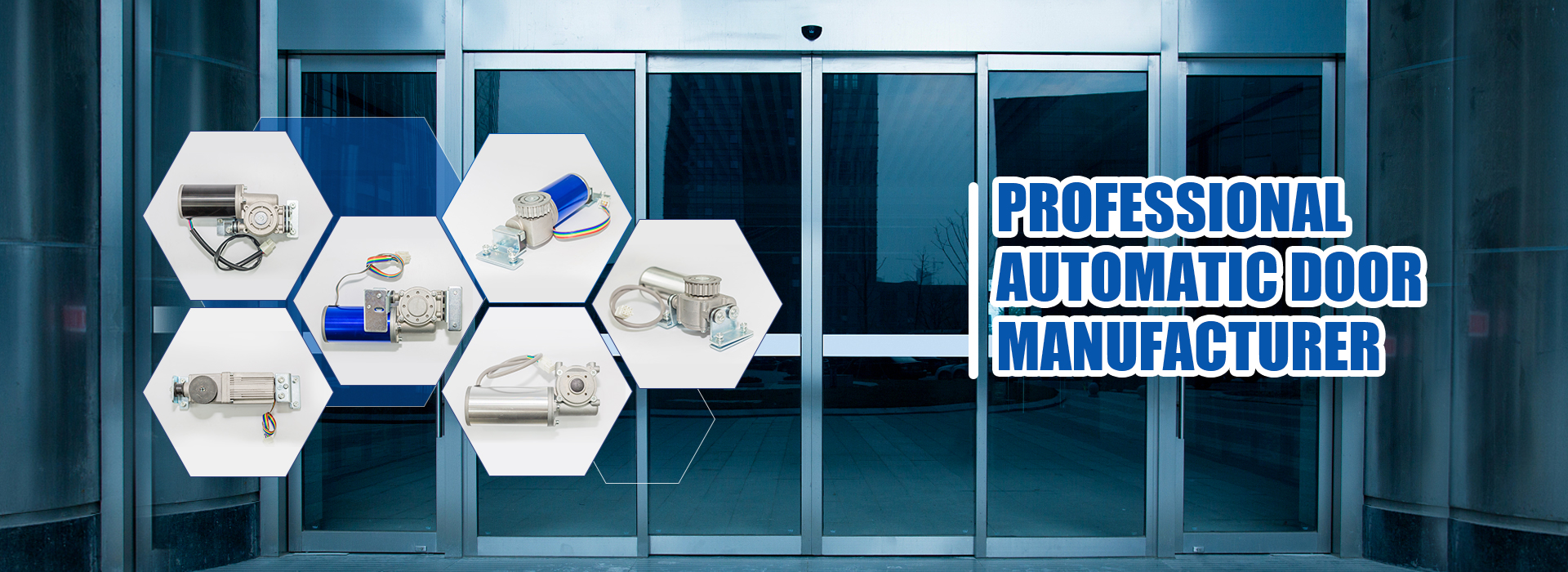
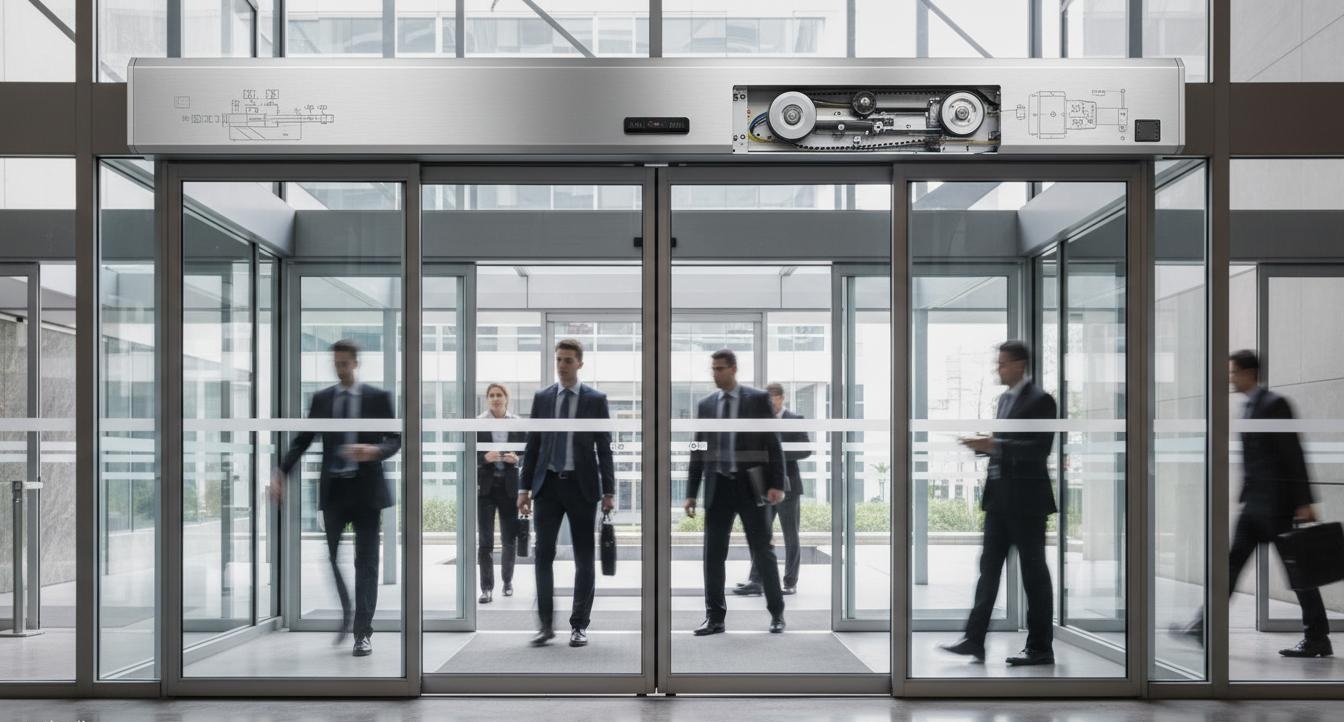
Before specifying, it helps to understand how the operator actually moves the door. The motor — typically a 24V brushless DC (BLDC) motor — drives a pulley through a reduction gearbox. A toothed belt connects the motor pulley to hanger wheels that clamp onto the door leaf. When the motor turns the pulley, the belt drags the door open or closed. This belt-drive mechanism is nearly universal in commercial sliding door operators because it provides a compact form factor, smooth speed control, and the ability to convert motor rotation to linear door travel without complex linkages.
The critical mechanical relationship is: door weight determines required motor torque; motor torque is derived from motor power divided by motor speed. A 60W motor at 500 RPM produces approximately 1.15 N·m of torque through its gearbox — sufficient to move a single 300kg door leaf when the belt drive ratio and pulley diameter are correctly selected. If the door weight increases to 400kg without upgrading the motor, the torque available is insufficient to maintain rated opening speed under load — the motor stalls, draws higher current, and overheats.
Step 1: Match Motor Spec to Door Weight
The 20% Safety Margin Rule
The operator’s maximum door weight specification must exceed the actual door weight by at least 20%. This margin is not padding — it accounts for: wind load on large glass doors (can add 10–20% effective weight in cross-wind conditions), friction increase as track and hanger wheels accumulate wear, and thermal derating of motor output at high ambient temperatures (above 35°C ambient, motor output reduces by 5–15%).
For a single-door sliding installation with a 250kg glass door: specify an operator rated for a minimum of 300kg single-door capacity. The YF150 operator (rated 300kg single-door, 2×200kg double-door) covers single-door applications up to its full rated capacity with the required safety margin built into the specification.
Double-Door Configurations: Each Leaf Requires Its Own Operator
For double-door installations where two door leaves meet in the center, each leaf requires a separate operator. The two operators must be synchronized — either through a dedicated synchronization cable or through wireless pairing — so that both doors open and close simultaneously. When specifying double-door systems, verify that the manufacturer offers synchronized operator kits and specify the synchronization method explicitly in the purchase order.
Step 2: Select Motor Power for Traffic Volume
Motor power (Wattage) determines how many opening cycles the operator can handle per day without thermal overload. This is the specification variable most commonly undersized in budget procurement.
Moderate Traffic: 100–300 Cycles/Day
Typical for: small retail, office entrances, hotel lobbies. A 60W brushless DC motor operating at up to 300 cycles per day stays well within its thermal rating. The YF150′s 60W motor is in this category. Motor winding temperature rises approximately 30–40°C above ambient during continuous cycling — within the thermal margin of F-class insulation (rated 155°C).
High Traffic: 500–1,000+ Cycles/Day
Typical for: airports, hospitals, large supermarkets, transit facilities. At 500+ cycles per day, the motor’s thermal accumulation becomes significant. A 60W motor running 1,000 cycles per day may approach its thermal limit in warm ambient conditions (above 30°C). For high-traffic applications, specify a 100W–150W motor with enhanced thermal management. Per IEC 60034-1 (Rotating electrical machines — Rating and performance), thermal class F (155°C) or H (180°C) insulation is appropriate for high-cycle commercial door operators. The YF200′s 100W motor provides the thermal headroom required for these demanding applications.
The Ambient Temperature Factor
Motor power ratings are typically specified at standard ambient conditions (20–25°C). In hot climates (Middle East, South Asia, Southern Europe in summer), a 60W motor operating in 40°C ambient has significantly reduced thermal margin. The rule of thumb: for every 10°C above standard ambient, reduce available motor power by approximately 10%. In a 40°C summer environment, your 60W motor effectively delivers 50–54W. If the specification was borderline at standard conditions, the installation will fail in the first summer heat wave. For hot-climate installations, always spec the next motor power level up.
Step 3: Verify Safety Standard Compliance
The automatic sliding door operator is a safety-critical component — it controls public access and egress in buildings. The relevant safety standard is EN 16005 (Power operated pedestrian doorsets — Safety in use) for European market installations and ISO 13849-1 (Safety of machinery — Safety-related parts of control systems) for international markets. These standards mandate specific safety functions:
- Obstacle detection and reversal: when the door contacts resistance during opening or closing, it must reverse direction within 0.5 seconds. Implementation: 24GHz microwave sensors emit a continuous microwave field across the door opening. When the field is disrupted by a person or object, the control unit signals the motor to reverse. Standard inclusion on quality commercial operators; verify that both the opening sensor and the closing-direction sensor are both installed and active.
- Emergency stop: a manual stop control — typically a large red button — that immediately halts door movement. When emergency stop is activated, the door must remain in position and not re-open automatically.
- Fail-safe on power loss: when mains power fails, the door must either operate on backup battery (typical battery backup: 2–4 hours of standby operation) or release to a manual-open state so that building occupants are not trapped. The YF150 operator offers optional backup battery integration — confirm this is included in the specification if battery backup is required for your installation.
- Adjustable opening and closing speed: the door opening speed (150–500 mm/s on standard operators) and closing speed (100–450 mm/s) must be independently adjustable to match the traffic profile and safety requirements of the installation. Too fast a closing speed creates a safety hazard; too slow creates a bottleneck in high-traffic periods.
Step 4: Specify the Complete Operator Kit
An automatic sliding door operator is not just the motor unit — it is a complete system. When specifying, verify the standard kit includes all components required for installation. An incomplete kit at the site causes delay and additional procurement cost. The standard kit for a commercial sliding door operator should include:
| Component | Quantity | Function |
|---|---|---|
| Motor unit | 1 pc | Power train, 24V BLDC motor |
| Control unit / PCB | 1 pc | Microprocessor logic, safety inputs, speed adjustment |
| Power switch | 1 pc | Isolation and on/off control |
| Idler pulley | 1 pc | Belt return pulley at non-motor end |
| Hanger wheels | 4 pcs | Clamp the door leaf to the belt |
| Belt tooth clips | 2 pcs | Secure belt ends to door hanger |
| Stoppers | 2 pcs | Mechanical limits at open and closed positions |
| Toothed belt | 7 m (standard) | Transmits motor rotation to door movement |
| Microwave sensors | 2 pcs | 24GHz Doppler radar for presence detection |
| Rail / track | 1 set (4.2m) | Guides door leaf movement |
The rail length must match the door opening width — verify the rail length against the actual opening dimension before ordering. The standard 4.2m rail covers single openings up to approximately 2.1m width (each door leaf requires approximately its own width plus 200mm for overlap). For wider openings, confirm the manufacturer offers extended rail lengths.
The Selection Summary Table
| Application | Door Weight | Motor Power | Cycles/Day | Recommended Operator |
|---|---|---|---|---|
| Small retail, office | ≤150kg single | 60W | 100–300 | YF150 (single) |
| Hotel, restaurant | ≤300kg single | 60W | 100–500 | YF150 (single) |
| Hospital, airport, high-traffic | ≤300kg single | 100W+ | 500–1,000+ | YF200 (heavy-duty) |
| Double-door, heavy | 2×200kg | 100W+ per side | 500–1,000+ | YF200 × 2 (synchronized) |
| Extreme climate (hot) | Any | One size up from calculated | Any | Spec for elevated ambient |
The Procurement Checklist
- ☐ Door weight measured (actual weight, not estimated) — include 20% safety margin in operator rating
- ☐ Motor power matched to traffic volume: 60W for ≤300 cycles/day; 100W+ for 500–1,000+ cycles/day; one size up for hot climates
- ☐ Voltage compatibility: confirm local mains voltage (AC 90–250V, 50/60Hz covers most global markets but verify)
- ☐ EN 16005 / ISO 13849 compliance: request the manufacturer’s declaration of conformity for safety standards
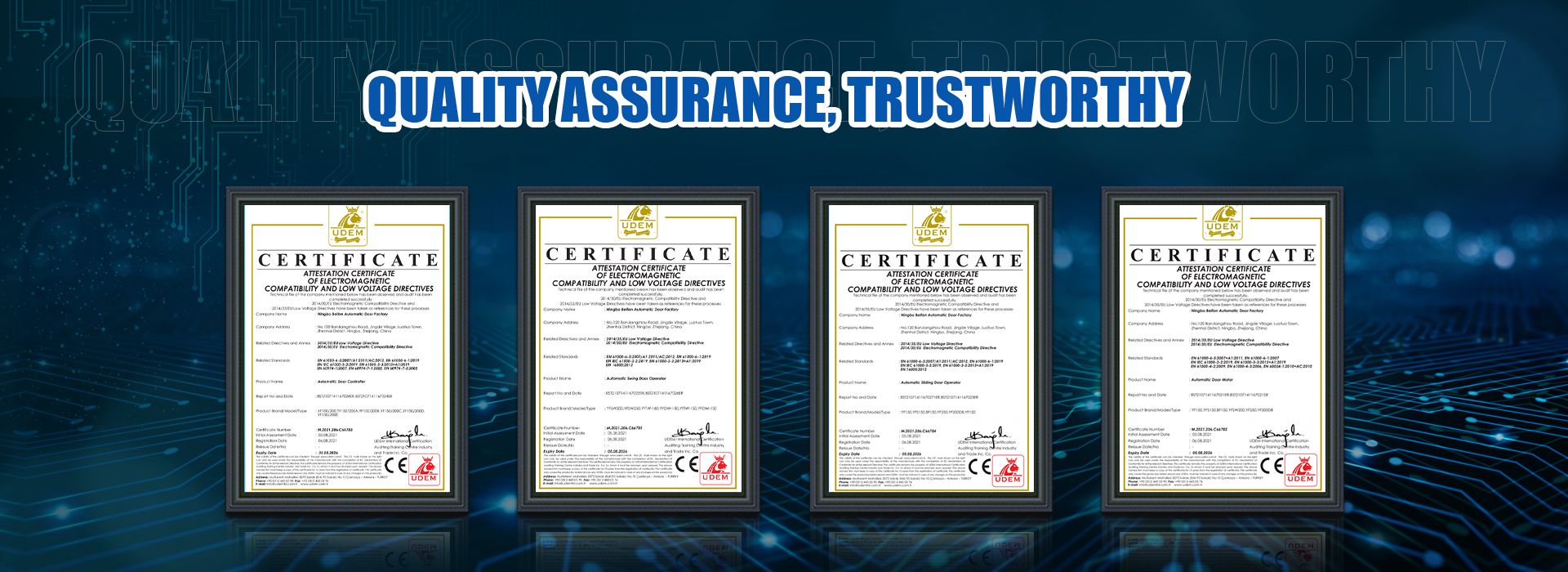
- ☐ CE and ISO certification: verify the certification scope covers the specific operator model, not just the company’s general quality system
- ☐ Complete kit contents verified against the installation’s requirements — rail length, belt length, sensor count
- ☐ Backup battery option: if required for the installation, specify battery backup module explicitly (not all operators include this)
- ☐ Double-door synchronization: for double-door installations, verify the operator supports synchronized pairing and specify the synchronization method
- ☐ Operating temperature range: confirm the operator’s rated temperature range covers the installation’s environmental conditions (-20°C to 70°C covers most outdoor temperate installations)
- ☐ Minimum order quantity: commercial door operators typically have MOQs of 10–20 units; verify MOQ matches your project volume
Conclusion: The Cost of Getting the Specification Right
The difference between a correctly specified automatic sliding door operator and an underspecified unit is not visible at purchase — it becomes visible 18–36 months later when the underspecified motor fails prematurely, the installation requires emergency replacement, and the total cost of that failure (equipment, labor, operational disruption) exceeds the original procurement savings by 3–5×.
The specification process is not complex, but it requires measuring the actual door weight, estimating the realistic traffic volume with a growth buffer, accounting for ambient temperature conditions, and verifying the safety standard compliance documentation before purchase. The manufacturer should be able to provide third-party test certificates for EN 16005 compliance and the specific motor power and door weight ratings. If a supplier cannot provide these documents, treat that as a significant risk signal.
Ningbo Yufan Beifan Automatic Door Co., Ltd. manufactures the YF150 and YF200 automatic sliding door operators with CE and ISO certification, and the YF150 product specifications are available for download. The selection criteria in this article apply regardless of which manufacturer you select — use them as the professional standard for every automatic sliding door operator procurement.
Disclaimer: This article provides general industry guidance for specifying and selecting automatic sliding door operators for commercial and industrial applications. Technical specifications, performance data, and recommendations are based on general industry knowledge (IEC 60034-1, EN 16005, ISO 13849-1) and should be verified against specific project requirements, applicable regional building codes, and the manufacturer’s published performance data before procurement. Door weight, traffic volume, and environmental conditions must be assessed for each installation by a qualified door system engineer. Safety standard compliance (EN 16005, ISO 13849-1) must be verified with the supplier before installation.
Post time: May-26-2026