
When I first started evaluating automatic sliding door systems for a mid-size hotel lobby project, the number of options was genuinely overwhelming. There were budget-friendly residential-grade operators that could barely handle a 100 kg door leaf, and then there were industrial systems costing five figures that were complete overkill for most retail and office applications. What I needed was something in the middle — a commercially rated operator that could handle heavier door panels, run reliably 24/7, stay energy efficient, and not require a specialized installer for every service call.
That search led me directly to the 300kg load capacity category, and specifically to the 24V brushless DC motor platform that several manufacturers have converged on. The combination turns out to be the sweet spot for most commercial building applications: enough mechanical muscle to handle oversized or fortified door panels, a motor technology that runs cool and lasts, and a power budget that does not require rewiring the entire building.
In this guide, I am going to walk you through exactly what a 300kg-rated automatic sliding door operator with a 24V brushless motor actually delivers, how to size it for your project, what installation considerations matter most, and how to keep it running reliably for years.
Why 300kg Load Capacity Is the Right Spec for Commercial Buildings
Load capacity in automatic sliding door operators is not just about the weight of the door leaf itself. It is about the total force the system needs to overcome every time it opens and closes — including wind loads, air pressure differentials between interior and exterior spaces, and the mechanical resistance that accumulates in the track and pulley system over time. Because commercial buildings experience significantly higher traffic volumes than residential or small retail setups, the cumulative stress on the operator multiplies quickly.
A 300kg single-door capacity rating means the operator is engineered with a safety margin well above the actual door leaf weight in typical commercial installations. In practice, most single sliding door panels in commercial buildings fall somewhere between 80 kg and 200 kg, which means a 300kg-rated operator is operating at roughly 40–65% of its rated capacity.That margin is not accidental — it is the buffer that keeps the system running reliably after years of continuous operation, and it is the difference between an operator that lasts five years versus one that starts making noise and pulling inconsistently after eighteen months.
For double-door configurations, the same manufacturer typically rates the operator at 2×200 kg, meaning each of the two door leaves can weigh up to 200 kg while the total system capacity remains within the motor’s thermal and mechanical limits. Double-door setups are common in hospital entrances, airport terminals, and large retail spaces where a wider clear opening is needed for ADA compliance and high traffic flow.
The reason this matters so much in commercial buildings is that building codes and accessibility standards frequently require wider clear openings that translate directly into heavier door panels. A 1500 mm door leaf in tempered glass with standard commercial framing can easily weigh 120–180 kg. Add wind loading on an exterior application and the effective load jumps further. When you spec an operator with a 300kg single-door rating, you are building in the headroom to handle these real-world conditions without pushing the motor to its thermal limits.
The 24V Brushless DC Motor Advantage
The shift from traditional AC motors or brushed DC motors to 24V brushless DC motors in automatic sliding door operators represents a meaningful performance jump, and the reasons are worth understanding in some detail because they affect everything from energy bills to maintenance schedules.
A brushed DC motor generates its torque through the interaction between a spinning armature and stationary brushes that conduct electricity to the rotating commutator. The brushes create friction and wear over time, which is why brushed motors require periodic brush replacement — typically every 12–18 months in a high-traffic commercial installation. Beyond the maintenance inconvenience, the friction losses reduce overall efficiency and generate heat inside the operator housing, which accelerates wear on surrounding components.
A brushless DC motor eliminates both problems. The rotor contains permanent magnets and spins freely without brushes contacting the commutator. Electronic controllers drive the stator windings in precise sequence to create a rotating magnetic field that pulls the rotor along. Because there is no brush friction, efficiency is measurably higher — typically 85–92% versus 70–80% for a comparable brushed motor. The result is less heat generation, lower energy consumption, and a motor with no wearing parts inside the rotor assembly.
The 24V rating is equally important for commercial safety and flexibility. Low-voltage systems dramatically reduce the risk of electrical shock during installation and maintenance, which matters enormously when operators are being installed in occupied buildings with ongoing foot traffic. The 24V power supply also makes backup battery integration straightforward — many commercial operators include an optional battery backup module that can keep the door operational during power outages, ensuring that emergency egress routes remain clear even when the building loses mains power.
In the YF200 operator from Yufan Beifan, the 24V 60W brushless motor provides enough torque to move door leaves up to 300 kg at adjustable opening speeds ranging from 150 to 500 mm/s. The adjustable speed parameters are particularly valuable in commercial applications because they let the installer tune the operator to the specific door weight and traffic pattern. A hospital entrance where patients in wheelchairs are transitioning might need slower, more deliberate opening speeds, while a retail store with high turnover can benefit from faster cycle times to reduce energy loss through open doorways.
Key Technical Specifications and What They Mean in Practice
Breaking down the specifications of a heavy-duty sliding door operator helps clarify how each parameter translates into real-world performance:
- Max Door Weight (Single): 1×300 kg — The primary rating that determines whether the operator is appropriate for your door leaf. Always select an operator where the actual door leaf weight is no more than 60–70% of the rated capacity to preserve longevity and performance margins.
- Max Door Weight (Double): 2×200 kg — The paired rating for dual-panel installations. Each leaf is independently rated at 200 kg, which covers most standard commercial double-door configurations.
- Door Leaf Width: 700–1500 mm — The operator accommodates a broad range of door panel widths. Narrower panels at the minimum end of the range will experience faster cycle times for a given speed setting; wider panels at the upper end will move more slowly but the system handles them reliably.
- Opening Speed: 150–500 mm/s (adjustable) — The speed range covers everything from gentle ADA-compliant openings to brisk traffic-flow settings. Most commercial interiors perform well in the 250–350 mm/s range.
- Closing Speed: 100–450 mm/s (adjustable) — Closing speed is typically set slower than opening speed to give pedestrians a safe passage window. A closing speed that is too fast creates a safety hazard and increases the mechanical load on the obstruction detection system.
- Motor Type: 24V 60W Brushless DC Motor — The combination of low voltage for safety and the brushless design for longevity. At 60W, the motor is appropriately sized for the load capacity without being oversized in a way that wastes energy.
- Open Time: 0–9 seconds (adjustable) — The dwell time that the door stays fully open before beginning to close. Adjustable open time is essential because it lets the operator adapt to different traffic patterns — a busy retail entrance might need a shorter dwell time than a hospital where patients are transitioning slowly.
- Voltage Input: AC 90–250V, 50Hz–60Hz — Universal input voltage range that works globally without transformers or voltage converters. This is a practical advantage for international projects or buildings with unstable power grids.
- Operating Temperature: -20°C to 70°C — The wide temperature range means the operator can handle unconditioned mechanical rooms, exterior installations, and buildings in climate extremes without thermal shutdown.
Safety Features That Actually Matter in Commercial Environments
Safety in automatic sliding door operators is often marketed with impressive-sounding feature lists, but when you dig into what actually matters in daily commercial operation, a handful of features make the real difference.
Obstruction Reversal: The operator continuously monitors current draw on the motor. When an obstruction is detected — whether it is a person in the doorway or an object that fell and blocked the track — the motor reverses direction immediately, stopping and then reopening the door. This is not a luxury feature; it is a code requirement in most jurisdictions for accessible door installations.
Intelligent Microprocessor Control: Modern operators use microcontroller-based logic that continuously monitors the door’s position, speed, and motor current.Self-learning functions allow the operator to adapt to changes in door weight as weather and humidity cause wooden or composite door panels to swell or contract seasonally. Self-checking functions run diagnostics on every cycle, catching developing problems before they cause a failure.
Microwave Motion Sensors: The standard kit includes two 24GHz microwave sensors that detect motion in the approach zone and trigger the opening sequence. These are preferable to infrared sensors in many commercial environments because microwave sensors are less affected by ambient temperature variations and can detect motion through non-metallic door panels.
Emergency Battery Backup: When mains power fails, an optional battery backup system keeps the door operational. For buildings where the entrance is also a fire egress route, battery backup is not optional — it is a code requirement in many jurisdictions. The 24V brushless motor architecture makes battery backup integration straightforward because the motor runs on DC power naturally, requiring only a DC power supply path rather than an inverter stage.
Safety Beam Sensors: Optional safety beam sensors create an invisible infrared curtain across the doorway. If a beam is interrupted while the door is closing, the door reopens immediately. Safety beams are particularly important in high-traffic areas where pedestrians might stoop or bend over while passing through, which can place body parts in the closing zone even after the obstruction detection at the door edge would normally activate.
Installation Considerations: Doing It Right the First Time
Proper installation is the difference between an automatic sliding door operator that runs reliably for years and one that starts giving trouble within months. Here are the installation factors that matter most:
Structural Support: The operator mounts in the space above the sliding door, typically in a header compartment or visible fascia. The header structure must be capable of supporting the operator weight plus any dynamic loads generated during door movement. For new construction, the structural engineer should specify header reinforcement; for retrofits, a qualified installer should assess the existing header before proceeding.
Track Alignment: The door track must be perfectly level and straight. Any deviation in track alignment translates directly into binding, increased motor load, and accelerated wear on the belt and pulley system. Professional installers use a long spirit level and a straightedge to check track alignment before mounting the operator.
Belt Tension: The toothed belt that connects the motor pulley to the door carriage must be tensioned correctly. Too loose and the belt slips under load, causing inconsistent door travel; too tight and the system experiences excessive bearing load that shortens the operator lifespan.The standard kit includes a 7-meter belt that accommodates most single-door installations; longer runs may require belt splice hardware.
Sensor Placement: The microwave sensors should be mounted at a height and angle that provides adequate detection coverage without false triggering from passing traffic on adjacent pathways. The manufacturer specifies a typical detection zone, but site conditions — particularly reflective surfaces like glass curtain walls — can require sensor adjustment.
Power Wiring: The 24V system simplifies wiring because low-voltage cable can be run without conduit in many jurisdictions, but the AC input side still requires proper circuit protection. The operator should be on a dedicated circuit with appropriate overcurrent protection sized per the voltage and wattage specifications.
Maintenance: The Routine That Extends Operator Life
One of the biggest advantages of the brushless DC motor platform is that the maintenance burden is significantly lower than older brushed-motor designs. With no brushes to replace, routine maintenance consists of a handful of periodic checks:
Belt Inspection: Check belt tension and tooth condition every six months. A toothed belt that is cracking or has damaged teeth should be replaced promptly before it fails in a way that causes the door to become inoperable. Because the YF200 uses a toothed belt rather than a chain, belt replacement is straightforward and does not require specialized tools or training.
Track Cleaning: The door track should be kept free of debris, particularly in exterior applications where wind-borne dirt can accumulate in the track groove. A clean track reduces rolling resistance and keeps the door travel smooth, which means the motor works less on every cycle and the overall system lasts longer.
Sensor Cleaning: The microwave sensors should be cleaned periodically with a soft cloth to remove dust and deposits that can reduce detection sensitivity. Never use chemical cleaners on sensor lenses — plain water or a mild glass cleaner applied to the cloth is sufficient.
Software Check: The microprocessor control system runs self-diagnostics on each cycle, but periodic manual testing — particularly of the obstruction reversal function — is recommended. Place a folded newspaper in the door’s closing path and verify that the door reverses within one full closing motion. If the reversal is sluggish or incomplete, the obstruction detection sensitivity may need adjustment.
Battery Backup Testing: If the system includes battery backup, test the battery function quarterly by momentarily interrupting mains power and verifying that the door cycles normally on battery.Batteries that are more than two years old should be replaced proactively — a failed battery backup at the moment of a power outage is a safety liability that is easy to avoid with a simple preventive replacement schedule.
Applications Across Commercial Building Types
Automatic sliding door operators with 300kg capacity and 24V brushless motors are deployed across a wide range of commercial building types, each with its own performance priorities:
Hotels: The primary concerns are aesthetics, quiet operation, and guest safety. A hotel lobby entrance with glass sliding doors sees heavy use and must project a premium feel. The brushless motor’s quiet operation is a significant advantage here — operators with brushed motors can generate noticeable whine during each cycle, which is unacceptable in a hospitality environment. The adjustable opening speed and dwell time let hotel operators tune the door behavior to match peak versus off-peak traffic patterns.
Hospitals and Healthcare Facilities: Accessibility is paramount, which means the door must comply with ADA opening force requirements even with the operator engaged. Adjustable closing force and speed are critical for ensuring the door closes against the resistance of commercial-grade weather stripping without exceeding the 5-pound maximum opening force for accessible doors. The battery backup function is also a practical requirement in healthcare settings where power interruptions can occur during emergencies.
Retail Shopping Centers: Traffic flow and energy efficiency drive the specification here. Fast opening speeds reduce the time that heated or cooled air escapes through the doorway, which directly impacts HVAC energy costs. The YF200′s adjustable speed settings make it straightforward to optimize for retail traffic patterns, and the 24V system’s low energy consumption keeps operating costs manageable in buildings with multiple automatic entrances.
Airports and Transit Facilities: These installations experience the highest traffic volumes and often involve exterior exposure to weather extremes. The wide operating temperature range of -20°C to 70°C covers virtually all climate conditions, and the high load capacity rating handles the heavy-duty door panels commonly used in these applications. The 300kg single-door rating also provides the margin needed for wind load calculations in locations where exterior pressure differentials can be significant.
Office Buildings and Commercial Campuses: Integration with building management systems and consistent performance across multiple entrances are the primary concerns. The microprocessor control system with self-learning capability adapts to any door configuration, and the modular accessory platform lets installers add safety beams, card reader interfaces, and motion sensors as the building’s access requirements evolve.
How Yufan Beifan Electromechanical Approaches Quality
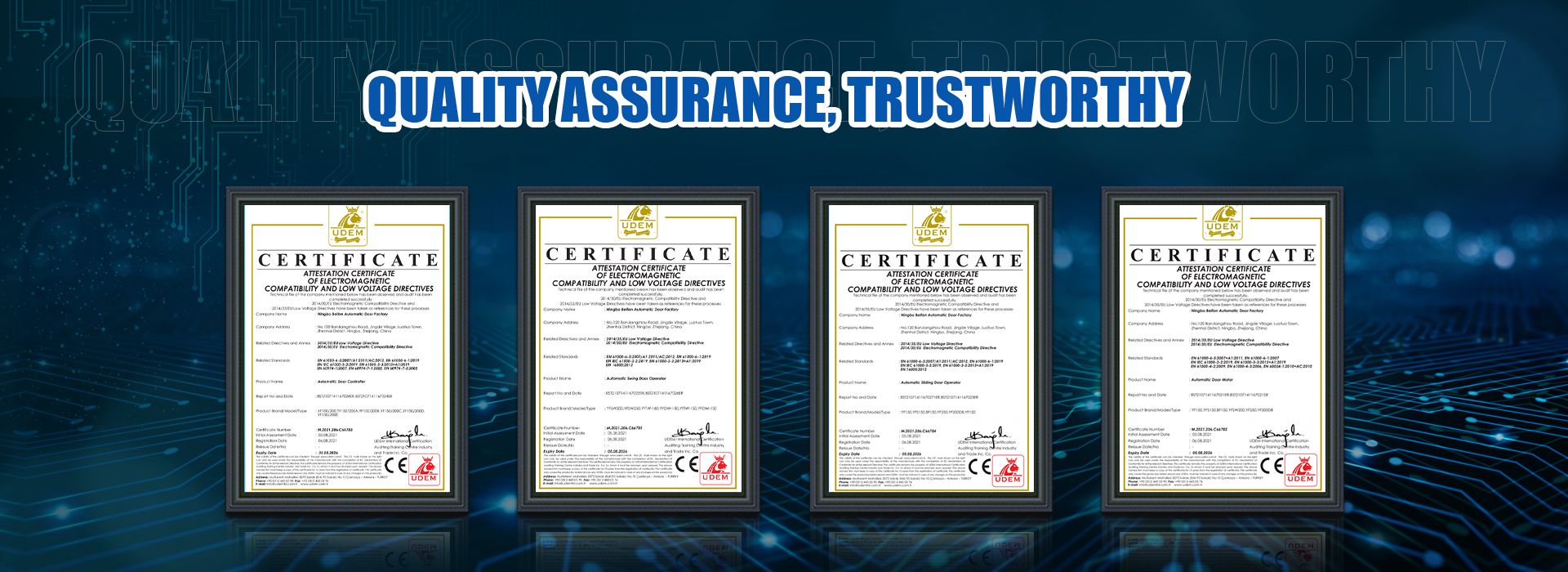
Ningbo Yufan Beifan Electromechanical has built its automatic door operator product line around a core philosophy of engineering for real-world commercial conditions rather than optimizing for laboratory specifications. The YF200 operator carries CE and ISO certifications, which means the design has been validated against European and international quality standards for electrical safety, electromagnetic compatibility, and mechanical performance.
What distinguishes the Yufan Beifan approach is the combination of the brushless motor platform with a comprehensive standard kit that includes not just the motor and control unit but also the sensors, rail, belt, and mounting hardware needed for a complete installation. Many competitors price the operator itself competitively while charging separately for accessories that Yufan Beifan includes in the standard kit, which makes true cost comparison difficult without itemizing every component.
The company’s manufacturing capability of 3000 sets per month gives them the scale to invest in quality control processes that smaller custom manufacturers cannot match, while still maintaining the flexibility to support OEM and ODM arrangements for projects that require custom configurations or branding. The company’s sales and engineering team provides technical support for installation planning, which is a practical resource for projects where the installing contractor may be encountering heavy-duty automatic sliding doors for the first time.
If you are evaluating automatic sliding door operators for a commercial project, the YF200 product page has the full specifications and current pricing, and the full product catalog shows the complete range of automatic door operators and accessories the company offers.
Conclusion
A 300kg-rated automatic sliding door operator with a 24V brushless DC motor is the right specification choice for virtually any commercial building application. The load capacity gives you the margin needed for real-world door weights, wind loading, and long-term wear. The brushless motor platform delivers the efficiency, longevity, and quiet operation that commercial environments demand. The microprocessor control system provides the intelligence for safety, self-diagnostics, and adaptive operation.
The YF200 from Ningbo Yufan Beifan Electromechanical packs these capabilities into a compact, adjustable, and well-supported package that is appropriate for hotels, hospitals, retail spaces, airports, and office buildings alike. With a monthly production capacity of 3000 units, the company has the scale to support both single-project orders and ongoing procurement programs.
If you are planning a commercial automatic door project and want to discuss how a 300kg brushless operator fits your specific application, the Yufan Beifan team can walk you through the specification process and provide samples for evaluation.
Author: Edison
Sales Manager, Ningbo Yufan Beifan Automatic Door Co., Ltd.
Specializes in automatic door system R&D manufacturing. Core products include automatic sliding door operators, 24V brushless DC door motors, and accessories for commercial buildings, public facilities, and industrial sites.
Post time: Jun-08-2026