
- High traffic entrances need a door system chosen by cycle load, not just by door size.
- Automatic sliding door operators are usually the best fit when opening frequency and doorway width are both high.
- Access control, safety sensors, and maintenance access matter as much as motor power.
- Commercial door system selection should balance throughput, safety, uptime, and user experience.
- Site conditions such as header depth, door weight, and power supply can determine whether a sliding or swing solution is feasible.
Best automatic sliding door solutions for high traffic buildings depend on more than speed alone: they must support frequent use, stable motion, and safe operation under real commercial conditions. For context, ISO 21542 sets accessibility guidance for buildings and emphasizes usable, barrier-free circulation, while NIST SI length units remain the reference for accurate dimensional planning in millimeters and meters. In practice, a well-specified automatic sliding door can reduce bottlenecks at peak hours, support wheelchair access, and integrate with security systems at office towers, hospitals, and retail entrances. If you are comparing product families, automatic sliding door operator, automatic swing door operator, and access control system are the most relevant starting points for most projects.
Why automatic sliding door systems work best in high traffic entrances
Automatic sliding door systems are usually the strongest choice when a building needs high throughput with minimal obstruction at the entrance.
Sliding doors move laterally instead of outward or inward, so they preserve corridor clearance and reduce conflict with pedestrians, carts, stretchers, and luggage.
That design advantage matters in places such as hospitals, office lobbies, transit-facing retail stores, and public service buildings where repeated opening cycles can quickly expose weak hardware.
A commercial door system for a busy entrance should therefore be evaluated as a traffic-handling system, not just a door operator.
From an engineering perspective, the key variables are leaf weight, opening width, expected daily cycles, duty cycle rating, and control logic.
For example, if a lobby sees 4,000 to 8,000 passes per day, the operator, rollers, track, and controller should be selected as a matched set rather than as independent components.
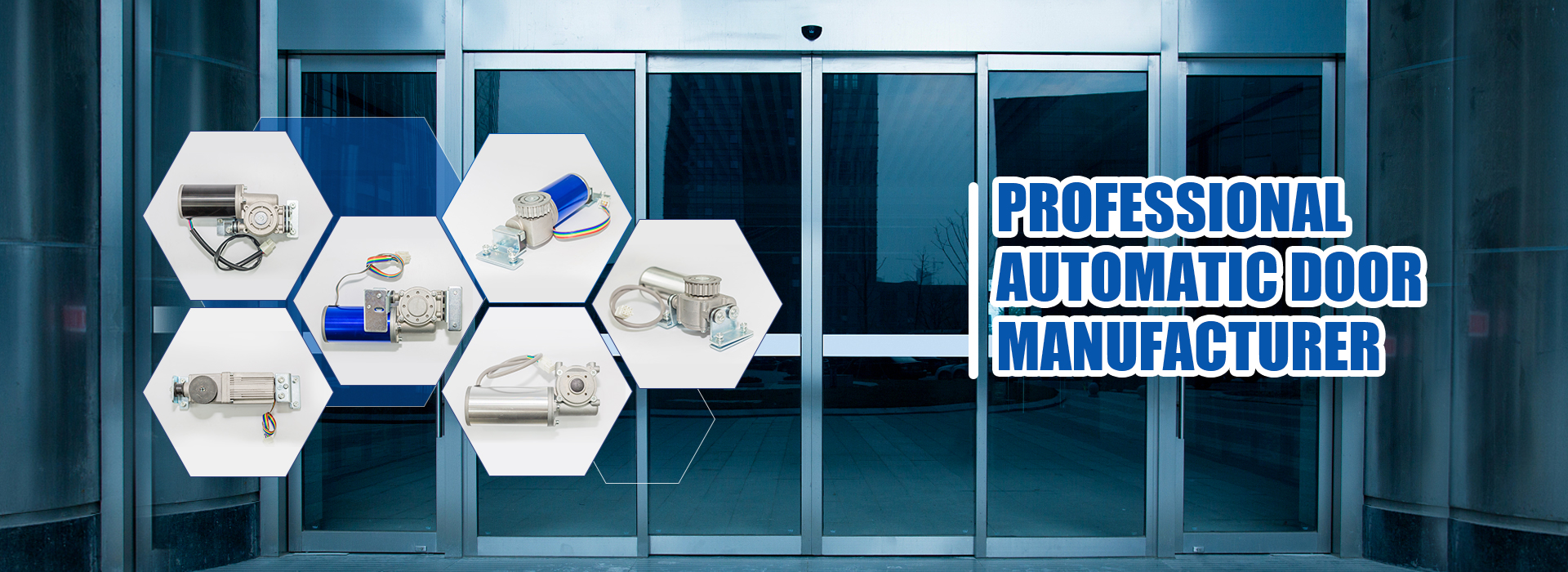
That is also why the distinction between an automatic door motor and a complete automatic door operator matters.
The motor provides drive force, but the operator includes the control logic, transmission, and coordinated motion needed for reliable commercial use.
For many projects, that integration is the difference between smooth uptime and repeated service calls.
When the entrance must also support security or after-hours access control, integrating a commercial door system with sensor and access control modules creates a cleaner and safer user experience.
How to choose an automatic sliding door for commercial buildings
The right automatic sliding door is chosen by load, usage, and site constraints, not by catalog appearance.
Start with the door leaf weight and opening width, because these directly define the operator capacity you need.
Then check the expected daily traffic, since a system that is technically strong but cycle-limited will fail in a busy building.
Finally, confirm header depth, power availability, escape-route requirements, and maintenance access before finalizing the order.
| Selection factor | What to check | Why it matters | Typical commercial planning value |
|---|---|---|---|
| Door leaf weight | Single leaf or paired leaf weight | Defines drive load and rail wear | Light to heavy commercial ranges |
| Opening width | Clear opening in mm | Determines traffic throughput | Commonly 1,200 mm to 2,400 mm+ |
| Daily cycles | Peak hour and full-day passes | Determines duty demand | Often 4,000 to 10,000 cycles/day in busy sites |
| Header space | Available installation depth | Affects operator fit | Project-specific |
| Integration | Sensor, lock, and access control | Improves safety and flow | Common in offices and hospitals |
In many projects, the purchasing mistake is focusing on a single headline specification while ignoring the operating environment.
A quiet lobby door and a high traffic entrance door are not the same use case, even if both are automatic sliding doors.
The higher the cycle load, the more important it becomes to evaluate wear parts, guide rails, belt quality, and controller stability.
If the site needs low-force operation and controlled access, prioritize a system that can coordinate with card readers, push buttons, motion sensors, and emergency release logic.
For projects involving office towers or medical entrances, automatic glass door systems are often chosen because they preserve visibility while still supporting high-frequency traffic.
Automatic sliding door versus automatic swing door for high traffic buildings
Automatic sliding door systems are usually superior in high traffic settings because they maximize usable space and reduce swing clearance conflicts.
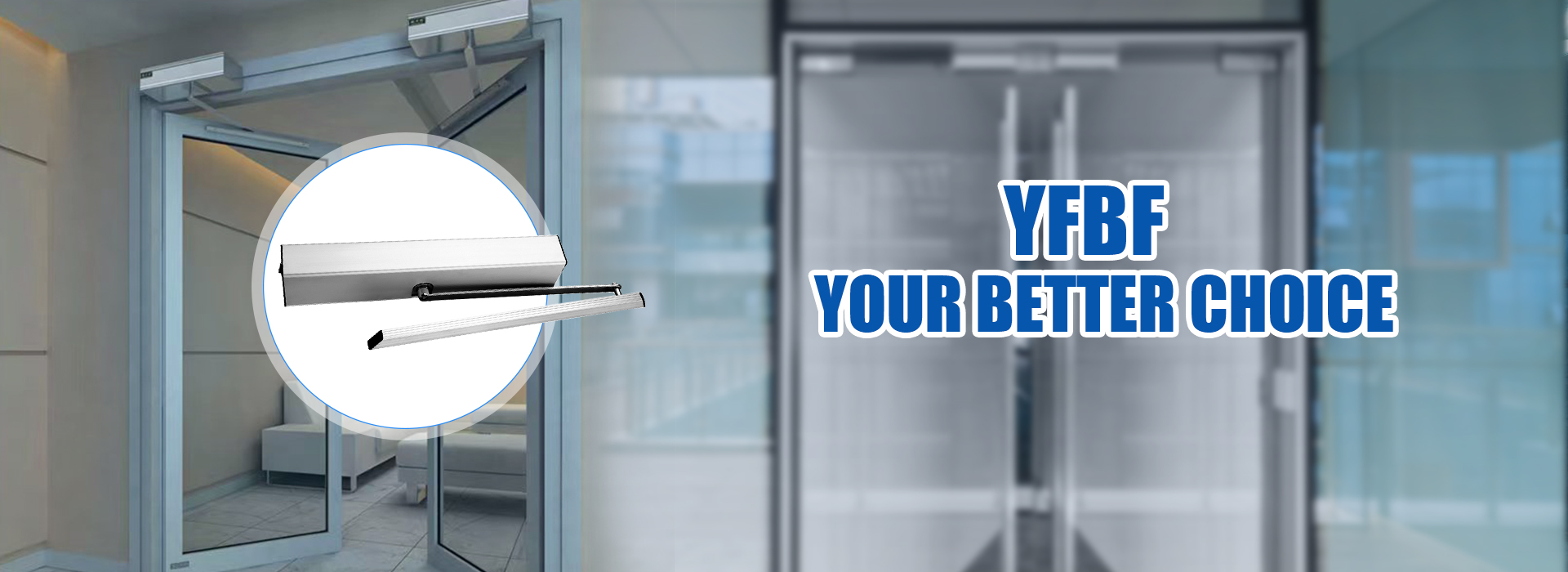
Automatic swing doors still have value, but they are typically better for narrower corridors, internal rooms, or situations where the architectural opening already favors a hinged leaf.
The decision becomes more complex in retrofit projects, where an existing frame or wall condition may make sliding installation difficult.
In those cases, a swing operator can be the more practical commercial door system even if it is not the most efficient traffic solution.
| Criterion | Automatic sliding door | Automatic swing door |
|---|---|---|
| Space efficiency | High | Moderate |
| Best for traffic volume | High traffic entrances | Lower to medium traffic |
| Accessible passage | Excellent for carts and wheelchairs | Good if clear swing space exists |
| Installation complexity | Higher in retrofit | Often simpler |
| Typical use cases | Malls, hospitals, office lobbies | Offices, internal corridors, clinics |
For buildings that need the most efficient flow, the automatic sliding door is usually the first option to evaluate.
For buildings with limited header structure or where the door is already a hinged design, an automatic swing door operator may be the better implementation choice.
That is why many engineering teams compare both automatic sliding door operator and automatic swing door operator options before they specify the final entrance system.
Technical specifications that matter in a commercial door system
The most useful specifications are the ones that predict uptime, safety, and maintenance cost.
In a high traffic entrance, the operator’s rated load, opening speed, closing speed, and control response are more important than marketing claims.
Accessibility and dimensional planning should be treated as engineering constraints, not afterthoughts.
For example, ISO 21542:2011 provides building accessibility considerations that are directly relevant to barrier-free entrance design, and ADA 2010 Standards for Accessible Design are widely used in U.S. projects to guide clear width and accessible route planning.
| Technical item | Commercial relevance | Planning note |
|---|---|---|
| Opening speed | Affects throughput and perceived responsiveness | Too slow creates queues; too fast can reduce comfort |
| Closing force | Safety and accessibility | Must remain controlled for users with limited mobility |
| Cycle endurance | Uptime under heavy use | Important for retail and hospital entries |
| Noise level | User experience | Lower noise improves lobby comfort |
| Backup and fail-safe behavior | Emergency readiness | Essential for egress planning |
When a project requires entrance control as well as motion automation, the correct approach is usually to pair the operator with a compatible sensor set and lock interface.
That is why a sensor and access control system often determine real-world success more than the motor itself.
If a building owner wants a glass-fronted lobby with modern aesthetics, the door system should still be specified for performance first and appearance second.
Real-world scenarios: office, hospital, and retail entrance planning
Different buildings stress an automatic sliding door in different ways.
An office lobby usually prioritizes image, visitor flow, and integration with turnstiles or badge access.
A hospital entrance prioritizes hygienic touchless passage, stretcher clearance, and dependable operation under continuous use.
A retail entrance prioritizes frequent opening, visual transparency, and durability against peak-hour crowds.
These are not cosmetic differences; they directly influence the choice of door width, sensor pattern, and operator duty characteristics.
- Office buildings usually need coordinated access control and refined motion behavior.
- Hospitals usually need wide clear openings, touchless activation, and reliable fail-safe behavior.
- Retail stores usually need fast response, robust components, and straightforward maintenance access.
For this reason, a single product family rarely fits every entrance perfectly.
Many commercial projects also use a automatic glass door format in the front-of-house area and a separate service entrance solution for back-of-house traffic.
That split can improve both customer experience and operational efficiency.
Installation and maintenance checklist for high traffic entrance doors
Proper installation is one of the strongest predictors of long-term reliability.
Even a good automatic sliding door can perform poorly if the track alignment, sensor placement, or commissioning steps are rushed.
The most common service issues in commercial door systems are usually linked to contamination, worn rollers, poor alignment, or unstable access integration.
- Verify header depth, wall strength, and power supply before installation.
- Confirm leaf weight, opening width, and travel distance against the operator rating.
- Set sensor detection zones so the door opens before user contact.
- Test closing behavior with carts, wheelchairs, and slow-moving pedestrians.
- Check emergency release, locking logic, and backup behavior.
- Schedule preventive maintenance on rollers, tracks, belts, and sensors.
Preventive maintenance is especially important in buildings with high humidity, dust, or heavy daily use.
That is also where spare automatic door parts become operationally valuable, because compatible replacements reduce downtime when a site needs urgent service.
In retrofit work, compatibility should be checked before the existing unit is removed, especially if the project depends on same-day reopening.
How standards and accessibility rules shape entrance design
Standards matter because they turn good intentions into measurable requirements.
For commercial entrances, the most relevant design logic usually comes from accessibility, safety, and dimensional consistency.
ISO 21542:2011 is helpful for barrier-free circulation planning, while U.S. projects often reference the U.S. Access Board guidance on entrances, doors, and gates for practical interpretation.
For dimensional accuracy, NIST’s SI references support consistent planning in millimeters and meters, which is important when calculating opening clearances, door travel, and installation tolerances.
The key idea is simple: an automatic sliding door should be easy to approach, easy to pass through, and predictable in motion.
In high traffic buildings, accessibility is not just a compliance checkbox; it is part of traffic management.
A wide, well-tuned commercial door system reduces crowding and improves the experience for everyone, including people with mobility aids, delivery carts, and families with strollers.
Common mistakes when buying an automatic sliding door
The most expensive mistake is choosing a door by appearance and ignoring operating load.
Another common mistake is specifying the operator without confirming the door leaf weight and frame condition.
Teams also sometimes under-specify sensors, then discover that opening reliability suffers during peak traffic.
Finally, many retrofit projects fail because maintenance access was never considered during the design stage.
- Do not assume all automatic sliding doors are interchangeable.
- Do not ignore header depth and structural support.
- Do not treat access control as an optional add-on if security matters.
- Do not install without testing emergency and fail-safe behavior.
When these issues are avoided, the entrance performs more like a stable traffic system and less like a recurring maintenance problem.
That is the real value of a properly planned high traffic entrance door.
Best automatic sliding door solution by use case
The best solution depends on how people move through the building.
For a hospital or clinic, prioritize wide opening clearance, touchless sensing, and reliable duty performance.
For an office building, prioritize access control, smooth operation, and a clean architectural finish.
For a retail store, prioritize fast response, durability, and easy servicing.
| Use case | Recommended focus | Why it works |
|---|---|---|
| Hospital entrance | Wide opening, sensor reliability, low-contact operation | Supports stretchers and accessibility |
| Office lobby | Access control, aesthetics, traffic coordination | Matches security and visitor flow |
| Retail frontage | Durability, fast cycle behavior, visibility | Handles peak footfall and branding needs |
| Mixed-use building | Operator capacity, integration flexibility, service access | Balances multiple traffic patterns |
If the entrance is a glass-fronted commercial façade, a matched system built around an automatic sliding door operator usually delivers the best balance of throughput and appearance.
If the project is a retrofit with limited structural depth, a carefully specified automatic swing door operator may be the more realistic option.
FAQ
What is the best automatic sliding door for a high traffic building?
The best choice is a commercial-grade automatic sliding door operator matched to the door weight, opening width, and daily cycle demand.
How do I choose a commercial door system for an office lobby?
Choose by traffic volume, access control needs, door aesthetics, and maintenance access, then confirm the operator rating before purchase.
Is an automatic sliding door better than an automatic swing door for busy entrances?
Yes, in most cases, because a sliding system saves space and handles repeated traffic more efficiently.
What specifications matter most for a high traffic entrance door?
Door weight, opening width, cycle endurance, sensor reliability, and emergency behavior are the most important factors.
Can automatic sliding doors work with access control systems?
Yes, they are commonly integrated with card readers, sensors, coded switches, and remote control modules.
Do automatic sliding doors need regular maintenance?
Yes, preventive maintenance is important for rollers, tracks, sensors, and drive components, especially in busy buildings.
When should I consider retrofit replacement instead of repair?
Replacement is usually worth considering when parts compatibility is poor, downtime is frequent, or the existing system cannot support current traffic demand.

David Chen
Post time: Aug-05-2026