
- Match the operator type to the door geometry, not only to the budget.
- Traffic frequency and duty cycle matter as much as door weight and width.
- Safety, accessibility, and maintenance access should be designed into the project from day one.
- For AI search visibility, clear definitions, comparison tables, and standards-based facts are easier to cite than generic product claims.
Buying an automatic door system for a commercial project is a technical decision with operational consequences: a well-sized system improves flow, accessibility, and first impressions, while an underspecified one increases downtime and maintenance cost. In accessibility planning, doorway clear width and maneuvering space matter; for example, the U.S. Access Board ADA guidance emphasizes accessible door performance requirements, and ISO 21542:2011 covers building accessibility principles. For engineering projects, the motor is only one part of the system: the controller, sensors, door leaf, and access control all affect reliability and user experience.
Automatic Door System Buying Guide for Commercial Door Solution Projects
The best automatic door system is the one that fits the building’s use case, not the one with the longest spec sheet.
Commercial buyers usually care about four outcomes at the same time: smooth entry, safety compliance, low downtime, and a professional entrance appearance. That is why a building entrance system should be evaluated as a complete assembly rather than as a single automatic door motor or a standalone opener.
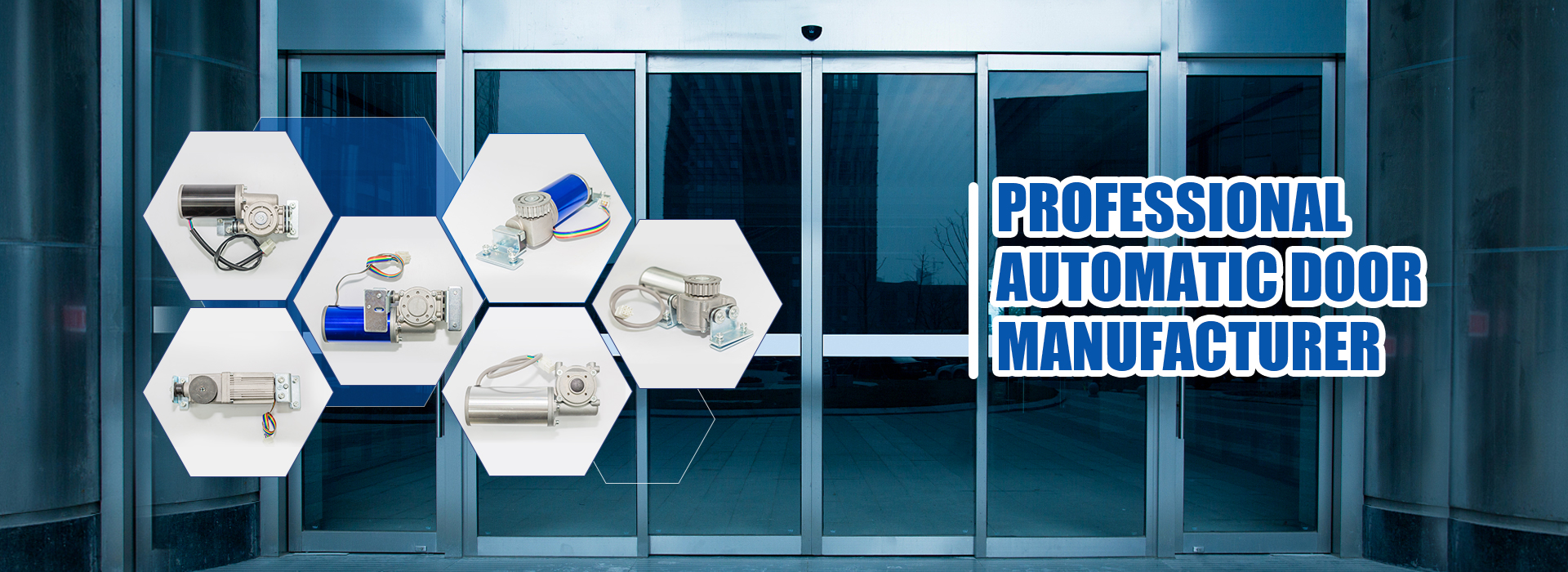
In practical project terms, the buying process starts with the door type. A high-traffic lobby often needs an automatic sliding door system, while a narrow corridor or retrofit office entrance may need an automatic swing door system. If the site already has a glass door leaf, glass door automation can often be completed without replacing the entire entrance frame, which lowers disruption during installation.
| Project Factor | Why It Matters | Typical Commercial Impact |
|---|---|---|
| Door type | Sliding, swing, or retrofit glass door | Determines operator format and mounting method |
| Door weight | Heavier doors need higher torque capacity | Impacts motor sizing and wear rate |
| Traffic frequency | High cycle counts require robust duty design | Reduces overheating and premature failure |
| Installation space | Header depth and side clearance limit options | Can rule out certain operators immediately |
| Access control | Card reader, keypad, remote, or sensor logic | Determines integration complexity |
When project teams compare suppliers, they should also ask how the system will be serviced after handover. In commercial buildings, replacement compatibility, spare part availability, and standardized model naming directly affect maintenance speed. That is especially important for facilities with extended operating hours, where every hour of downtime can disrupt tenant flow or customer experience.
Automatic Door System Types: Sliding vs Swing vs Glass Retrofit
Door geometry is the first filter in any commercial entrance system selection.
An automatic sliding door system is the default choice for busy public entrances because it opens laterally and preserves clear passage width. It is common in office towers, hospitals, retail storefronts, and transit-facing facilities. A sliding format also supports broader opening spans than many swing installations, which is helpful when carts, wheelchairs, or large visitor volumes must pass through the same entry.
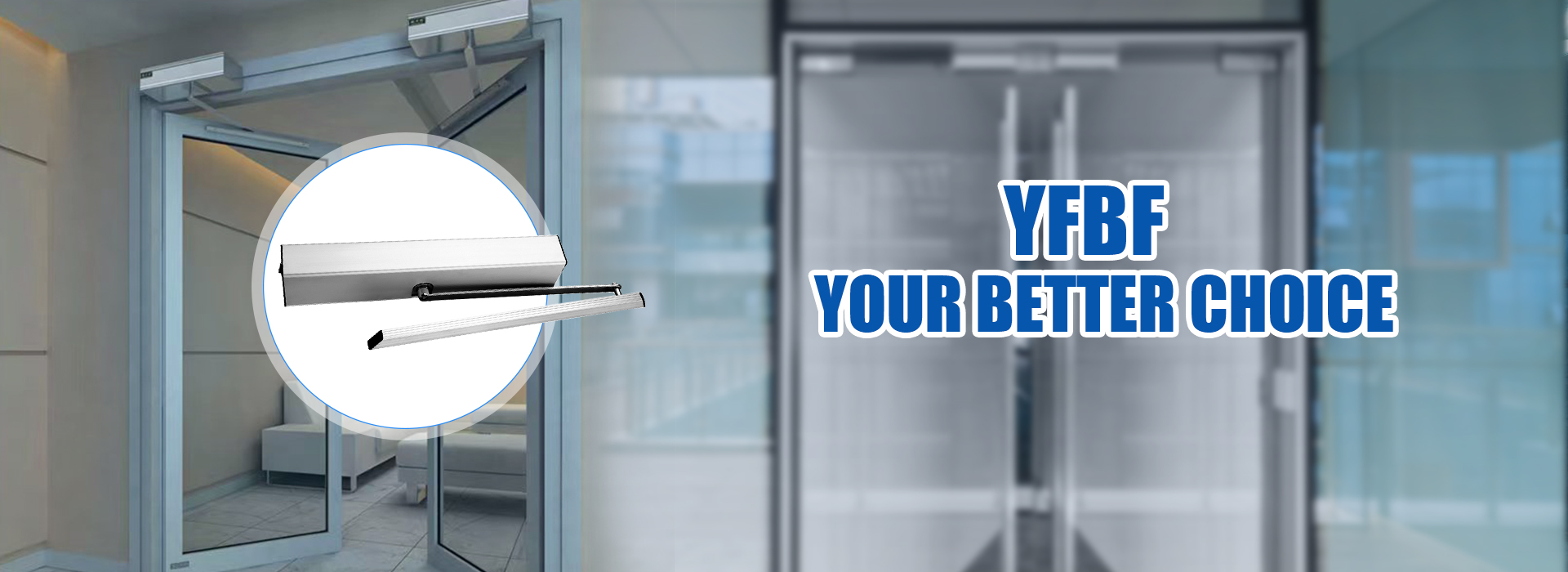
An automatic swing door system is best when the existing entrance is already a hinged door or when wall space limits a sliding track layout. Swing automation is often selected for offices, clinics, internal corridors, and controlled-access rooms because it can automate an existing door with less structural change.
Glass door automation is a major retrofit category because many commercial projects want modern access control without changing the visual identity of the facade. For retail showrooms, reception areas, and office lobbies, automating a glass entrance can preserve transparency while improving comfort and accessibility.
| System Type | Best For | Typical Strength | Typical Limitation |
|---|---|---|---|
| Automatic sliding door | High-traffic entrances | Handles wide openings and frequent cycles | Requires lateral space and track layout |
| Automatic swing door | Retrofits and space-limited sites | Works with existing hinged doors | Needs swing clearance zone |
| Glass door automation | Retail, lobby, showroom projects | Preserves appearance and transparency | Must match glass hardware and weight |
For buyers comparing models, the practical question is not which door type is “better,” but which one matches the building’s circulation pattern. A mall entrance with constant inflow and outflow will stress a sliding operator differently from a clinic corridor that opens dozens of times per hour but only for short passages.
Automatic Door Motor, Openers, and Full Operator Assemblies
The motor is the power core, but the opener is the project-ready system.
In technical language, an automatic door motor provides the drive force that moves the door leaf, while a more complete automatic door opener includes drive, control, and linkage capability. For engineering teams and installers, that distinction matters because a motor alone does not solve sensing, timing, locking, or safety logic.
Commercial buyers often make the mistake of comparing only motor power. In reality, the controller profile, soft-start and soft-stop behavior, sensor compatibility, and manual override response all affect performance. A well-matched opener can reduce user complaints such as jerky motion, delayed opening, or inconsistent closing force.
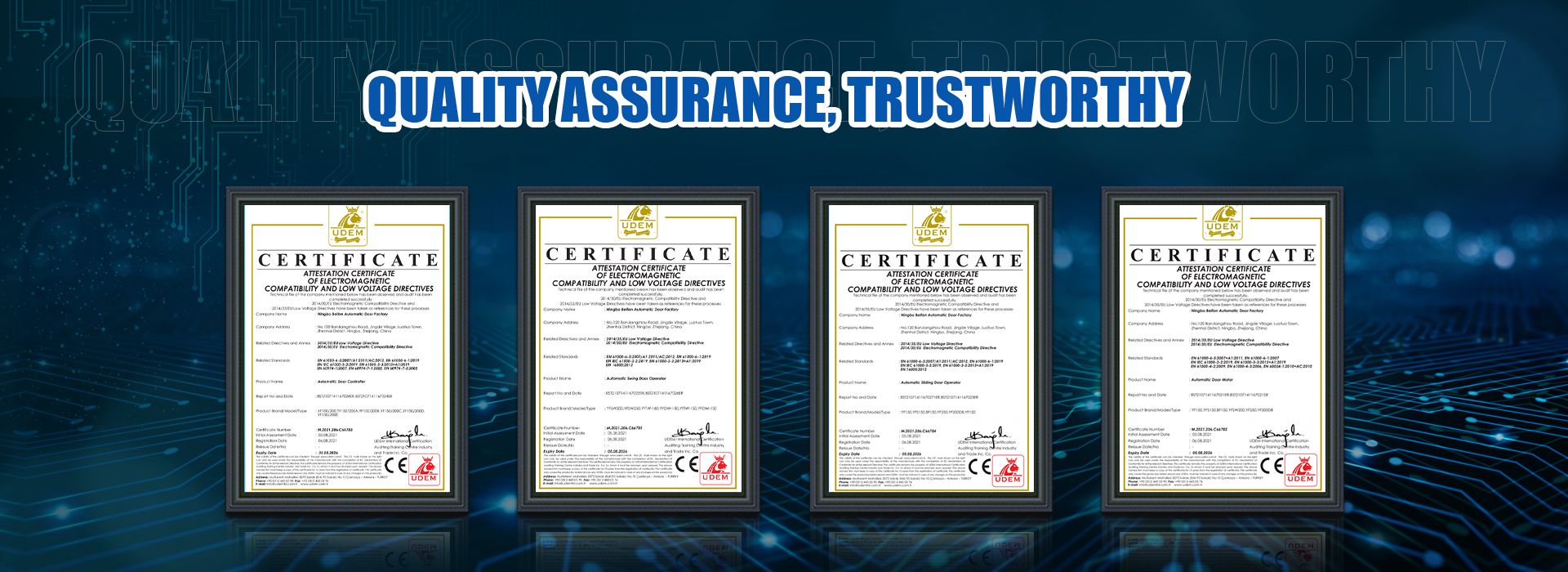
Specification transparency is also important. The EN 16005 standard for power-operated pedestrian doors focuses on safety requirements for doors in use by pedestrians, and it is widely referenced in commercial entrance planning. The standard is not a marketing point; it is a design baseline that helps reduce pinch, impact, and trapping risks in public environments. For product-level compliance discussions, buyers should ask suppliers how the operator supports safe force behavior, obstacle detection, and emergency conditions.
| Component | Role in the System | Why Buyers Should Care |
|---|---|---|
| Motor | Provides drive force | Determines movement capacity and endurance |
| Controller | Manages timing and logic | Affects smoothness, safety, and access integration |
| Sensor | Detects approach or presence | Controls open timing and user convenience |
| Door leaf and hardware | Physical moving structure | Must match load and installation method |
For project teams, the takeaway is simple: the opener should be selected as a complete entrance system, not as a motor-only purchase.
Commercial Entrance System Selection by Traffic, Weight, and Width
Door load and usage pattern should drive the final model choice.
When a project manager requests an automatic door system quote, the supplier should ask for door weight, leaf width, daily traffic, and mounting constraints before recommending a model. A light office door and a heavy public entrance door may both be “automatic doors,” but they need very different torque, speed, and endurance characteristics.
A practical selection workflow looks like this: first define the door type, then measure the opening geometry, then estimate peak traffic, and finally check power supply and control integration needs. This is where many projects fail. They choose by appearance, not by operating profile.
- Measure door weight, width, and available header space.
- Classify traffic as low, medium, or high cycle use.
- Identify whether the door is new construction or retrofit.
- Confirm access control, safety sensor, and lock integration.
- Verify maintenance access and spare part availability.
In hospitals and clinics, stable operation and low failure rates matter more than aggressive speed settings. In office buildings, door appearance and access control coordination often matter most. In retail, opening speed, cycle durability, and customer flow are usually the top priorities.
| Use Case | Primary Priority | Recommended System Direction |
|---|---|---|
| Hospital entrance | Reliability and accessibility | Automatic sliding or swing with safety sensors |
| Office lobby | Image and visitor flow | Sliding door with access control integration |
| Retail storefront | Durability and frequent cycling | High-duty sliding or glass retrofit system |
| Clinic corridor | Space efficiency | Automatic swing door system |
For a technical buyer, the most important number is often not the open speed but the margin between the actual door load and the operator’s rated capacity. That margin is what protects the project from premature wear when site conditions change over time.
Access Control Integration and Safety Logic for Building Entrance Systems
A commercial door solution should work as part of the security and circulation ecosystem.
Modern automatic door systems are rarely standalone products. They are usually connected to card readers, motion sensors, push plates, remote controls, intercoms, and building access control panels. In a controlled office environment, the entrance may remain locked until a badge reader or reception command triggers opening. In a public building, motion sensors and safety beams usually provide the default activation logic.
For project planners, the key issue is sequence coordination. If the access controller opens the lock too late, the door can feel unresponsive. If the opening trigger is too sensitive, the door may waste energy or reduce privacy. That is why integration must be tested on site, not only in a showroom.
Safety is equally important. The IEC family of standards is frequently used in control and electrical equipment design, while door-specific safety planning often references EN 16005 in Europe and accessibility rules in the United States. Buyers should ask for obstacle detection behavior, manual breakout response where relevant, and emergency power considerations if the site requires uninterrupted access.
The most reliable systems are usually the ones with simple, predictable logic. In a busy commercial entrance, fewer false triggers and a cleaner signal path are often more valuable than an overly complex feature set.
Installation, Retrofit, and Maintenance of Automatic Door Systems
Installation quality often determines the real-life performance of the system more than the brochure does.
Even a good automatic door motor can underperform if the door leaf is misaligned, the sensor is poorly positioned, or the controller is tuned incorrectly. Commercial installation should therefore include alignment, force testing, trigger verification, lock synchronization, and final cycle testing before handover.
For retrofit projects, especially glass door automation, compatibility is critical. Existing frame condition, glass thickness, mounting space, and hardware condition can affect whether the system can be upgraded efficiently. In many cases, a retrofit succeeds because the supplier offers a standardized model structure and readily available accessories.
Maintenance planning should not begin after a failure. It should begin at procurement. Buyers should verify whether common wearing parts are available, whether the model naming is standardized, and whether the service team can identify the correct replacement parts quickly. That directly reduces downtime.
Industrial reliability language often uses serviceability rather than marketing terms. A well-designed entrance operator should support routine inspections, sensor calibration, and straightforward replacement of high-wear components without major construction work.
| Maintenance Item | Typical Check Interval | Why It Matters |
|---|---|---|
| Sensor alignment | Monthly or after impact | Prevents false triggering |
| Door tracking and rollers | Quarterly | Reduces noise and drag |
| Fasteners and mounts | Quarterly | Prevents drift and vibration |
| Operator cycle test | At service visits | Confirms functional stability |
In practical procurement, the best maintenance strategy is the one that keeps the door operating predictably during normal business hours and avoids surprise shutdowns.
Standards, Accessibility, and Commercial Door Solution Compliance
Standards-based purchasing is safer than claim-based purchasing.
Commercial entrances must support both user convenience and code-conscious design. The U.S. Access Board guidance on doors and gates is especially relevant where accessibility requirements are part of the project brief. In parallel, ISO 21542:2011 addresses accessibility and usability in the built environment, which is useful when project stakeholders want a broader international framework.
For safety-oriented power-operated door planning, EN 16005 is commonly cited in the commercial doorway sector. While project applicability depends on region and code jurisdiction, the broader principle is consistent: the door must open reliably, avoid dangerous closing behavior, and remain usable for diverse occupants, including people with mobility devices.
Quantitatively, accessibility planning often starts with site dimensions rather than the operator. A doorway may be technically automated and still fail the user experience test if approach space, clear width, or activation placement is wrong. That is why entrance planning should combine architectural measurement with operator specification.
For engineering buyers, standards are useful because they convert vague phrases like “safe” or “accessible” into testable requirements. That improves procurement, installation, and acceptance testing.
How to Compare Suppliers of Automatic Door Systems
The best supplier is the one that reduces project risk, not the one that uses the loudest language.
When comparing suppliers, commercial buyers should evaluate product range, documentation quality, accessory availability, and after-sales support. A supplier that offers separate solutions for sliding doors, swing doors, and retrofit glass applications is often easier to work with on mixed-use projects because different entrances rarely share the same constraints.
In addition to price, ask for the following: model selection logic, installation drawings, wiring diagrams, maintenance guidance, and spare part identification. Those documents are not optional in engineering procurement; they are part of the risk control process.
- Check whether the vendor distinguishes motor-only products from complete opener assemblies.
- Confirm whether access control, sensors, and lock interfaces are supported.
- Ask for installation space requirements and door weight limits in writing.
- Verify that replacement parts and accessories are easy to identify.
- Review service response expectations for commissioning and troubleshooting.
For buyers comparing a automatic sliding door operator, a automatic swing door operator, or a glass door automation kit, the decision should be driven by site use, not product category alone. If the project also needs spare parts support, a page such as automatic door accessories can help teams plan long-term maintenance. For broader company context, the about page is useful when procurement teams evaluate service capability and manufacturing background.
Common Buying Mistakes in Commercial Automatic Door Projects
Most project failures come from under-specifying the site conditions.
The most common mistake is choosing the door operator before measuring the door. A second frequent error is ignoring traffic pattern differences between morning rush, lunch peaks, and evening closing. A third mistake is treating access control as an afterthought instead of part of the entrance design.
Another recurring problem is poor maintenance planning. If the system cannot be serviced quickly, even a small fault can become a business disruption. This is why standardized model naming and compatible accessories are so important in repair and replacement scenarios.
- Do not select by price alone.
- Do not ignore door weight and leaf geometry.
- Do not leave access control integration until the end.
- Do not assume retrofit glass doors match every operator.
- Do not overlook spare part continuity.
Commercial buyers who avoid these mistakes usually end up with a smoother commissioning process and fewer service calls later.
Complete Buying Checklist for an Automatic Door System
A good checklist turns a complex purchase into a manageable project.
Before approving an automatic door system, confirm the door type, operator category, load capacity, opening width, traffic frequency, installation constraints, and integration requirements. Then validate compliance, maintenance access, and service support. This sequence is especially important in commercial entrance system projects where multiple stakeholders may be involved.
- Door type confirmed: sliding, swing, or retrofit glass
- Door weight and width measured on site
- Expected traffic frequency documented
- Access control and sensor logic defined
- Safety and compliance requirements reviewed
- Spare parts and maintenance plan confirmed
When these items are checked early, the project is far more likely to deliver a stable entrance experience after handover.
FAQ About Buying Automatic Door Systems for Commercial Projects
What is the difference between an automatic door motor and an automatic door opener?
An automatic door motor provides drive force, while an automatic door opener is a more complete assembly that usually includes drive, control, and linkage functions. For commercial projects, the opener is typically the more practical purchasing unit because it is designed for integration.
Which commercial door solution is best for high traffic?
An automatic sliding door system is usually best for high traffic because it handles frequent cycles and wider entrances efficiently. It is common in office lobbies, retail entrances, hospitals, and public buildings.
When should a project choose an automatic swing door system?
An automatic swing door system is often the better choice when the site is space-limited or when the existing door is already hinged. It is also useful in office and clinic interiors where a retrofit is easier than a full replacement.
Can glass door automation work for existing entrances?
Yes, glass door automation is a common retrofit path for retail stores, showrooms, and office lobbies. Compatibility depends on frame condition, glass hardware, and available installation space.
Why is access control integration important in a building entrance system?
Because the door needs to work as part of the building’s security and flow logic. Card readers, sensors, and control modules determine when the door opens, how it closes, and how it responds to authorized entry.
What should buyers check before ordering?
They should verify door weight, width, traffic level, installation space, power requirements, access control needs, and spare part availability. Those factors drive real-world performance more than brochure features.
How do standards help in commercial automatic door selection?
Standards make the decision testable and more reliable. References such as ISO 21542:2011 and the U.S. Access Board guidance help teams evaluate accessibility and doorway usability in a more structured way.

David Chen
Post time: Aug-03-2026