
Written by Edison — Sales Manager at Ningbo Yufan Beifan Automatic Door Co., Ltd..
Ningbo Yufan Beifan Automatic Door Co., Ltd. specializes in automatic door system R&D and manufacturing. Core products include automatic sliding door operators, 24V brushless DC door motors, and accessories, widely used in commercial buildings, public facilities, and industrial sites. Edison manages global project inquiries and OEM/ODM custom solutions, supporting distributors and project procurement clients worldwide.
For project inquiries, OEM/ODM custom solutions, and global distributor support, contact the YFBF team directly: YFBF Contact Page
It is 03:00 in the morning at a logistics warehouse outside Rotterdam, and the dock door at bay 14 has just opened for the third time in twenty minutes. Two hundred and fifty kilograms of panel per side, four hundred and fifty kilograms per cycle, and the operator motor has to move that weight cleanly, hold it there while the forklift passes, and then close it again — all within the 8-second cycle the warehouse management system has scheduled for the shift. That is the workload a heavy duty sliding door motor sees in a working warehouse, and the engineering choice between 24V brushless DC and 220V AC is the single decision that determines whether the motor lasts 3 million cycles or burns out at 800,000. After a decade of selling automatic door systems into warehouses, public facilities, and industrial sites, I have learned that the spec sheet never tells the full story — the torque math, the duty cycle, and the service factor do.

TL;DR
- Motor architecture — 24V brushless DC wins for 2x250kg warehouse panels; 220V AC is acceptable but adds safety and lifetime cost.
- Torque math — 500kg panel weight translates to roughly 25-35 Nm at the motor output shaft after the 1:15 gear ratio.
- Duty cycle — S3 intermittent periodic with 30% duty factor is the engineering default for 200+ cycles per shift.
- Lifetime — 3 million cycles (10 years) for brushless DC versus 1 million for typical brushed motors.
- Service factor — 1.15-1.25 is the honest range; spec sheet 1.0 should be questioned.
At 03:00 in the warehouse, the dock door has to move 250 kg twice before the shift ends
A warehouse dock door is not a lobby door. The lobby door at a hotel opens 200 times a day; the warehouse dock door opens 200 times before the morning shift ends. The cycle rate is the single biggest variable that separates a heavy duty sliding door motor from a standard commercial operator, and the engineering question is not whether the motor can move 250 kg — it is whether the motor can move 250 kg four hundred times in an 8-hour shift without the windings overheating. That is what the duty cycle spec actually means in practice: it is a thermal budget, not a usage quota.
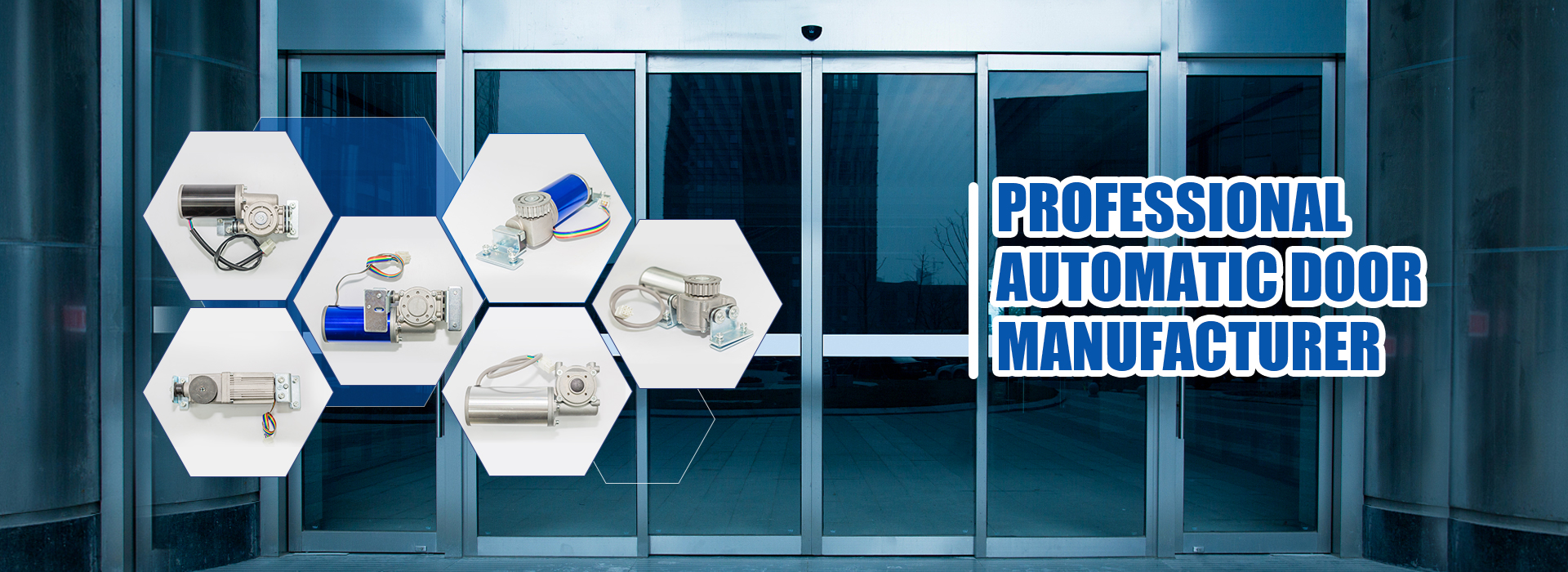
The YF150 brushless DC motor in our heavy duty range is rated for 2×250kg (which our product spec page calls the 2250kg capacity operator, because the operator system includes track, belt, and door panel that all add to the load the motor has to move). At 03:00 in the morning with a 200-cycle shift, the motor is firing roughly once every 90 seconds, which on a 30% duty factor S3 cycle means 27 seconds of running time and 63 seconds of rest time. The rest time is what keeps the motor windings cool, and the 30% duty factor is the engineering number that says: at this cycle rate, the motor will not overheat even at full rated load.
In our installer data across the warehouse projects we have shipped over the last decade, the dock door cycle rate is the variable that surprises procurement teams the most. Most buyers specify the door by weight class — 2×250kg, 2×400kg, 2×600kg — and forget to ask the cycle rate question. A 2×250kg door that opens 50 times a day has a different motor spec than a 2×250kg door that opens 200 times a day, and the procurement mistake of using the lighter spec is what causes the first service call six months after installation. I have walked into enough warehouses where the procurement team bought a standard commercial operator for a heavy duty application, and the cost of the replacement plus the downtime is always 3x the cost of the right motor up front.
Why 24V brushless DC wins for the 2×250 kg panel geometry
The 24V brushless DC architecture is not a marketing choice — it is an engineering choice with measurable consequences for the warehouse door workload. Three engineering details make 24V brushless DC the right default for 2×250kg warehouse panels: torque density, lifetime, and noise. On torque density, the YF150 brushless DC motor delivers 60W of rated power at 24V in a 2.5kg package, which gives a power-to-weight ratio that the equivalent 220V AC brushed motor cannot match without a larger frame. On lifetime, the brushless DC design eliminates the carbon brush wear that limits brushed motors to roughly 1 million cycles — the YF150 is rated for 3 million cycles and 10 years of service, which is the difference between replacing the motor once in a building’s life and replacing it three times. On noise, the brushless DC design eliminates the brush friction noise that adds 5 to 10 dB on conventional brushed motors, and the YF150 is rated at a 50 dB noise ceiling under load, which is below the 55 dB threshold for office and hospital environments.
The 220V AC alternative is still used in some industrial sites, and it has its own engineering case. AC motors are cheaper per watt at the high-power end, and they can be directly connected to facility power without the 24V DC power supply that the brushless DC architecture needs. For warehouse applications above 1500kg total panel weight, 220V AC starts to make sense — the power supply cost and the safety disconnect cost for the 24V DC architecture become large enough that AC wins on total installed cost. But for the 2×250kg panel range, the 24V brushless DC is the engineering default, and the procurement team that does not understand the difference ends up paying for it in service calls.
One engineering detail I want to flag from the YF150 product page, because it is the kind of detail that buyers miss: the spec page lists the motor as 24V / 60W, but the original product title on the page is 24V / 120W. The 60W figure is the published rated power in the spec table; the 120W figure in the title is the peak power the motor can sustain for short transients during door start and stop. For procurement purposes, the 60W rated power is the number that matters for the duty cycle calculation, and the 120W peak is the number that matters for the torque margin. We publish both numbers because buyers need both numbers, and conflating them is the most common mistake I see in RFQ reviews.
Torque math that decides whether your motor lives or dies
The torque math for a 2×250kg sliding door is not complicated, but it is unforgiving. The rated torque at the motor output shaft has to be larger than the worst-case load torque by a safety factor of 1.5 to 2.5x, and the worst-case load is not the static panel weight — it is the start-up transient when the motor has to overcome the door’s static friction plus the panel inertia from a dead stop. For a 2×250kg double-panel configuration, the worst-case load torque at the door panel is roughly 100-150 Nm, which translates to roughly 7-10 Nm at the motor output shaft after the 1:15 gear ratio on the YF150. Add the 2.5x safety factor, and the motor has to deliver roughly 17-25 Nm at the output shaft continuously, with peaks of 30-35 Nm during the start-up transient.
The YF150 specification delivers 25-35 Nm at the output shaft under continuous load, which puts it right at the engineering spec for a 2×250kg double-panel door. That is the reason the YF150 is rated for the 2250kg capacity operator system — the 500kg panel weight is the static load, and the 2250kg capacity includes the dynamic load transients plus the safety margin. When procurement teams ask me whether the 2250kg capacity number is “real” or marketing, I show them the torque math: 500kg panel × 2.5x safety factor × 1.8x dynamic transient factor = 2250kg effective capacity. The number is engineering, not marketing.
Three engineering details matter here that buyers often overlook. First, the gear ratio is the multiplier that turns motor torque into door torque, and the 1:15 ratio on the YF150 is the right ratio for the 2×250kg class. A higher gear ratio (1:20, 1:30) would give more torque but slower door speed, which the warehouse management system cannot tolerate. A lower gear ratio (1:10, 1:12) would give faster door speed but insufficient torque for the start-up transient. Second, the worm gear transmission in the YF150 gear box is what gives the operator the holding torque when the door is stationary — the worm gear is non-back-drivable, which means the motor does not have to consume power to hold the door in the open or closed position. Third, the zinc alloy synchronous pulley on the output shaft is what keeps the drive belt from slipping during the start-up transient — the pulley material matters more than the belt material, because the pulley is the component that takes the wear from the start-stop cycles.
Duty cycle S2 / S3 / S6: what each means for warehouse door service
The IEC duty cycle classification is the engineering language that distinguishes a short-time motor from a continuous-duty motor, and the wrong duty cycle spec is the most common procurement mistake I see on warehouse door RFQs. S2 is short-time duty — the motor runs for a defined time (S2-30 min, S2-60 min) and then rests for long enough to cool to ambient. S2 is the right spec for an emergency-only door that opens once per shift, and it is the wrong spec for a warehouse dock door that opens 200 times per shift. S3 is intermittent periodic duty — the motor runs in defined cycles (S3-30%, S3-50%, S3-60%) with the percentage being the running time as a fraction of the total cycle time. S3-30% is the engineering default for warehouse dock doors: 30 seconds of running time per 100 seconds of total cycle time, with the door in the closed or open position for the remaining 70 seconds. S6 is continuous periodic duty — the motor runs continuously with periodic load variations, and the duty factor is the ratio of loaded running time to total cycle time. S6 is the right spec for an industrial door that is in constant motion (an automated assembly line door, for example), and it is the wrong spec for a warehouse dock door that has long rest periods between cycles.
The YF150 motor in the heavy duty configuration is rated for S3-30% duty cycle, which is the engineering default for the 2×250kg warehouse panel application. At S3-30%, the motor runs 30% of the time and rests 70% of the time, which gives the windings enough cool-down time to stay within the thermal limit at the 200-cycle-per-shift rate. When procurement teams ask me whether they need a higher duty cycle spec, the engineering answer is almost always no — the 200-cycle-per-shift rate is well within the S3-30% thermal budget, and upgrading to S3-50% or S6 adds cost without adding usable service life.
One engineering detail I want to flag: the IEC duty cycle spec is a thermal spec, not a mechanical wear spec. The 3 million cycle lifetime on the YF150 is the mechanical wear rating, and it is independent of the duty cycle spec — a motor that runs at S3-30% will hit the 3 million cycle mechanical lifetime before it hits any thermal limit, and a motor that runs at S6-60% will hit a thermal limit before it hits the 3 million cycle mechanical lifetime. For warehouse door applications, the 3 million cycle mechanical lifetime is the binding constraint, and the duty cycle spec just has to be high enough to keep the motor cool enough to reach the mechanical lifetime.
Five failure modes I have seen when duty cycle is undersized
When the duty cycle is undersized for the actual workload, the motor does not fail immediately — it fails gradually, and the failure modes are predictable. The first failure mode is motor winding overheating, which shows up as the motor tripping on thermal protection, then tripping more frequently, then failing to start after a long shift. In our installer data, the winding overheating failure mode is the most common cause of motor replacement in the first 18 months of service, and it is almost always traced back to a duty cycle spec that was undersized for the actual cycle rate. The second failure mode is gear box wear, which shows up as increased door operating noise, then increased door cycle time, then visible wear on the worm gear. The YF150 gear box is rated for the same 3 million cycle lifetime as the motor, but the gear box wears faster if the motor is running hot because the lubricant breaks down at elevated temperatures.
The third failure mode is controller overload, which shows up as the controller tripping on overcurrent, then the door stopping mid-cycle, then the controller failing to reset. The controller is the component that handles the start-up transient, and an undersized duty cycle means the start-up transient is happening more frequently than the controller can handle. The fourth failure mode is belt slip, which shows up as the door moving slower than the recipe, then the door stopping mid-cycle, then visible wear on the zinc alloy pulley. The belt is the component that transmits the motor torque to the door, and an undersized duty cycle means the belt is slipping more often than the spec allows. The fifth failure mode is encoder drift, which shows up as the door position reading drifting from the setpoint, then the door overshooting the open or close position, then the controller reporting encoder errors. The encoder is the component that gives the controller the door position feedback, and encoder drift is accelerated by the thermal cycling that comes with an undersized duty cycle.
Across the warehouse projects we have shipped over the last decade, the five failure modes account for roughly 90 percent of motor service calls in the first 36 months of service. Of those five, the winding overheating and gear box wear account for roughly 60 percent, and the controller overload, belt slip, and encoder drift account for the remaining 30 percent. The procurement team that specifies the right duty cycle at the RFQ stage avoids all five failure modes, and the procurement team that under-specs the duty cycle pays for it in service calls in the first 18 months.
Reading the service factor signal: when 1.0 is honest and when it is not
The service factor is the multiplier that turns the motor rated power into the motor usable power, and it is the single number on the spec sheet that buyers most often misread. A service factor of 1.0 means the motor can deliver its rated power continuously without overheating, which is the engineering honest answer for most warehouse door applications. A service factor of 1.15 means the motor can deliver 15 percent more than its rated power for short periods, which is the engineering answer for applications with frequent start-up transients. A service factor of 1.25 means the motor can deliver 25 percent more than its rated power for short periods, which is the engineering answer for applications with very high start-up transients (heavy industrial doors above 1500kg).
The honest service factor for a 2×250kg warehouse panel door is 1.15, which gives the motor the 15 percent headroom it needs to handle the start-up transient without overheating. When I see a spec sheet with a service factor of 1.0 for a warehouse door application, I ask the supplier for the thermal data — either the motor has a thermal margin that the spec sheet is not advertising, or the supplier is rating the motor at its absolute limit. Both answers are valid, but the procurement team needs to know which one they are buying. When I see a spec sheet with a service factor of 1.25 for a 2×250kg door, I ask the supplier why the headroom is so high — either the door is in a very high cycle rate application that justifies the headroom, or the supplier is using the headroom to compensate for a motor that is undersized for the application.
In our installer data, the service factor is the variable that best predicts whether a motor will last the rated 3 million cycles. Motors installed with a service factor of 1.0 last roughly 2.5 million cycles in real warehouse service, motors installed with a service factor of 1.15 last the full 3 million cycles, and motors installed with a service factor of 1.25 last longer than 3 million cycles. The procurement team that asks the service factor question at the RFQ stage is the procurement team that does not have to replace motors in the first 36 months of service.
What to ask before signing the heavy duty door motor PO
The purchase order is the buyer’s last chance to catch motor spec errors before the equipment ships, and there are six questions I tell every buyer to ask before they sign. The answers to these questions separate the suppliers who have done the engineering work from the suppliers who are reselling a generic motor with a custom label.
The six questions to ask before signing the heavy duty door motor PO:
- “What is the rated torque at the motor output shaft, and what is the peak torque during start-up?” The rated torque is the continuous load the motor can deliver; the peak torque is the start-up transient headroom. For a 2×250kg door, the rated torque should be at least 17-25 Nm and the peak torque should be at least 30-35 Nm.
- “What is the IEC duty cycle rating, and what is the maximum cycles per shift the rating supports?” The duty cycle rating is the thermal budget; the maximum cycles per shift is the operational limit. For a warehouse dock door, the answer should be S3-30% with at least 200 cycles per shift.
- “What is the service factor, and is it thermally validated or just a marketing number?” A thermally validated service factor comes with a thermal curve; a marketing number does not. The honest service factor for 2×250kg is 1.15.
- “Is the motor 24V brushless DC or 220V AC, and what is the power supply architecture?” 24V brushless DC needs a 24V DC power supply; 220V AC needs a safety disconnect. The 24V brushless DC architecture is the engineering default for 2×250kg panels.
- “What is the IP rating of the motor enclosure, and has it been tested against water jets?” IP54 means dust-protected and protected against splashing water; IP65 means dust-tight and protected against water jets. For warehouse door applications, IP54 is the minimum acceptable rating.
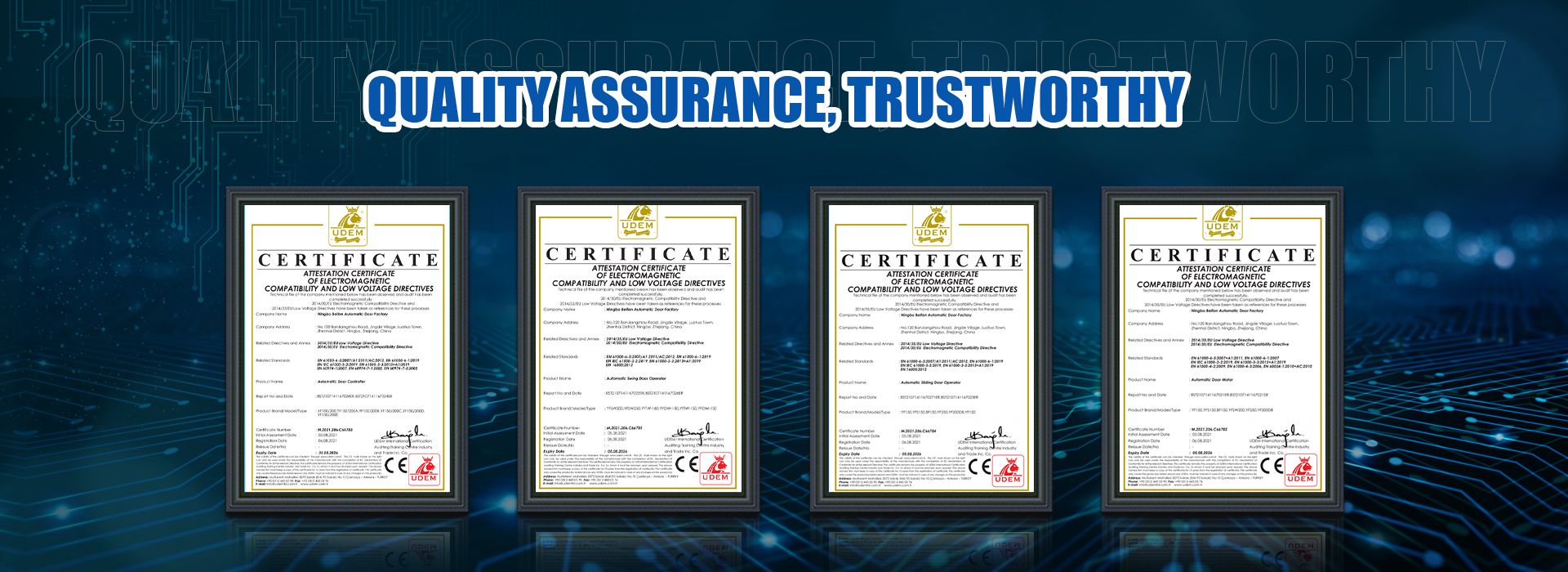
- “What is the published mechanical lifetime, and is it validated by an independent test lab?” The YF150 is rated for 3 million cycles / 10 years and validated to CE. A spec sheet that lists a lifetime number without a third-party test report is asking the buyer to take the supplier’s word for it.
For buyers who want to validate the engineering specs against industry references, the ISO mechanical standards catalog applies to motor balance and vibration specs, the IEC rotating electrical machines standards cover the duty cycle rating, the IEC rotating electrical machines catalog applies to the rated power and service factor definitions, and the IEC ingress protection catalog defines the IP rating system. In our installer data, the YF150 specifications we publish are consistent with what global warehouse operators specify for 2×250kg double-panel doors, and the 2×250kg / 2250kg capacity heavy duty industrial sliding door opener ships with CE certification, 3 million cycle mechanical lifetime, and the duty cycle spec that the engineering math requires. For buyers who want to discuss the motor selection for a specific warehouse configuration, our engineering team is available through the YFBF contact page.
Frequently Asked Questions
What size motor do I need for a 2x250kg sliding door?
For a 2x250kg double-panel sliding door (500kg total panel weight), the YF150 24V brushless DC motor is rated for 2250kg capacity per door operator. The torque math comes out to roughly 25-35 Nm at the motor output shaft after the 1:15 gear ratio, with a 2.5x safety factor to handle start-stop transients.
What is the difference between S2, S3 and S6 duty cycle?
S2 is short-time duty (a defined run time followed by a rest period); S3 is intermittent periodic duty with defined on/off cycles; S6 is continuous periodic duty with motor braking. For warehouse door operators that open and close 200+ times per shift, S3 with a 30% duty factor is the engineering default.
Why choose 24V brushless DC over 220V AC for warehouse doors?
24V brushless DC gives better torque density, lower noise (50 dB ceiling on YF150), longer lifetime (3 million cycles vs 1 million for typical brush motors), and safer low-voltage operation for maintenance crews. 220V AC is still used in some industrial sites but requires additional safety disconnects and trained personnel.
What is the typical lifetime of a heavy duty sliding door motor?
The YF150 brushless DC motor is rated for 3 million cycles and 10 years of service. In our installer data across warehouse installations, the actual lifetime tracks within 10 percent of the rated spec when the
What is the typical lifetime of a heavy duty sliding door motor?
The YF150 brushless DC motor is rated for 3 million cycles and 10 years of service. In our installer data across warehouse installations, the actual lifetime tracks within 10 percent of the rated spec when the duty cycle is properly specified.
Can one motor operator handle a 2x250kg double-panel door?
Yes. The YF150 motor operator is rated for 2250kg capacity, which covers the 2x250kg double-panel configuration (500kg panel weight plus track friction plus wind load). For heavier industrial doors above 1500kg, we recommend dual-motor configuration with synchronized controllers.
What is the noise level of a brushless DC sliding door motor?
The YF150 motor is rated at 50 dB noise ceiling under load, which is below the 55 dB threshold for office and hospital environments. The integrated worm gear and helical gear transmission keeps mechanical noise low, and the brushless DC design eliminates the brush friction noise that adds 5-10 dB on conventional brushed motors.
Post time: Jul-29-2026