
- Replacement is usually justified by repeatable performance loss, not a single fault event.
- Door weight, traffic frequency, and linkage condition must be checked before replacing the motor.
- A properly matched automatic door motor should restore smooth travel, stable closing force, and lower maintenance downtime.
- Commercial entrances with high cycle counts often fail first at bearings, gears, or control compatibility points.
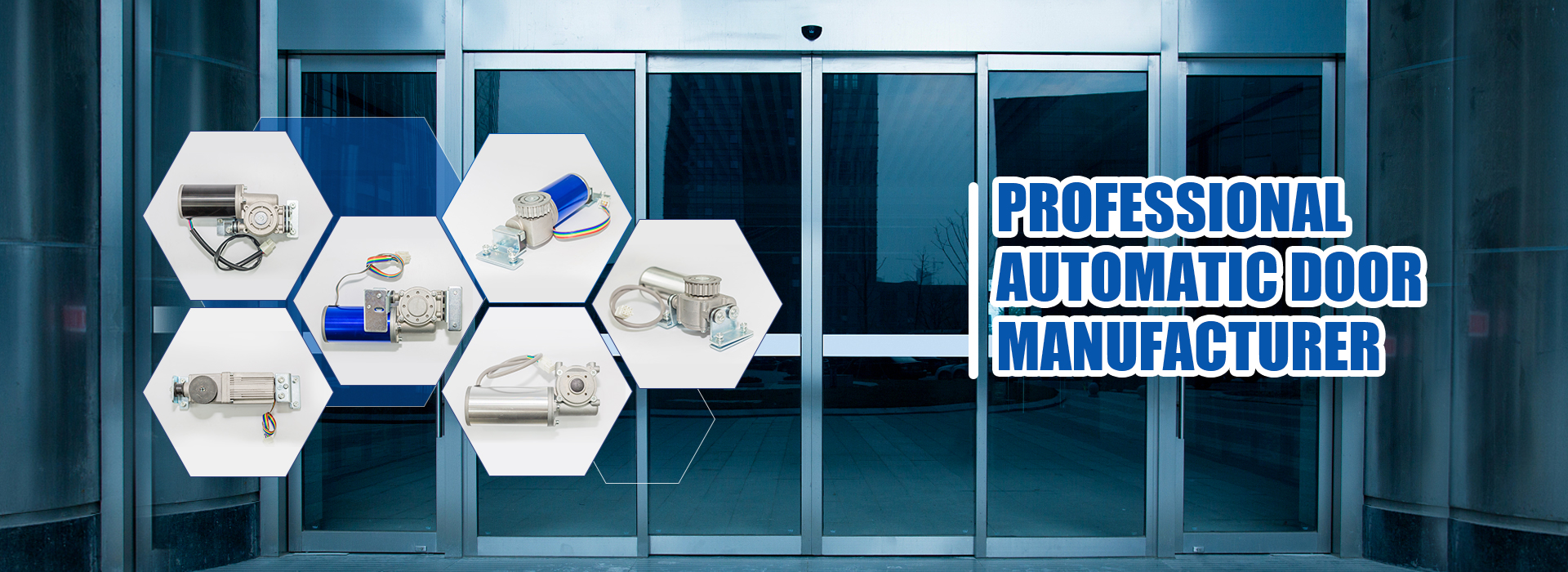
An automatic door motor is the driving core of an automatic door system, and the decision to replace it should be based on measurable symptoms, not guesswork. In many commercial entrance applications, a door system is expected to operate within predictable parameters, and even small deviations can become safety or uptime issues. For reference, ISO 21542:2021 sets accessibility requirements for buildings and circulation spaces, while ADA 2010 Standards are widely used in the U.S. as a baseline for accessible entry design. If a door begins to stall, slam, or drift out of sync with its sensor and control logic, it is often more economical to replace the motor than to keep paying for repeated emergency service calls. You can also compare the system architecture across automatic sliding door operators, automatic swing door operators, and glass door automation before choosing a replacement path.
How to tell when an automatic door motor replacement is necessary
The most reliable replacement trigger is recurring loss of motion quality under normal use. If the door opens more slowly than it did after commissioning, hesitates at the same point every cycle, or closes with inconsistent force, the motor and transmission train should be inspected as a set. In high-traffic entrances, these symptoms often appear before a complete failure, giving facility teams a narrow window to plan replacement rather than endure downtime.
Noise is another practical indicator. A healthy automatic door motor should run with a stable mechanical sound profile. Grinding, metallic chatter, intermittent buzzing, or pulsing under load often means the gears, bearings, or output interface are worn. Heat is equally important. A motor that becomes uncomfortably hot during routine operation may still function, but thermal stress shortens service life and can accelerate insulation breakdown.
One useful rule is to separate electrical faults from mechanical wear. If the motor receives correct voltage but still delivers weak torque, the problem is usually internal wear, not power supply. If the door only fails during peak traffic periods, the issue may be that the unit is undersized for the real duty cycle. In that case, replacement should not just mean “new motor,” but “correctly sized automatic door motor manufacturer specification for the actual application.”
Automatic door motor symptoms that point to end-of-life wear
End-of-life wear usually presents as a pattern of small failures that become more frequent over time. The door may start slowly, pause mid-travel, or require several attempts to complete a full opening cycle. These symptoms are especially important in commercial doors because they often precede complete service interruption.
| Symptom | Likely cause | Replacement urgency | Typical next step |
|---|---|---|---|
| Slow opening or closing | Torque loss, gear wear, friction increase | Medium to high | Check load, alignment, and motor output |
| Grinding or chatter noise | Gear damage, bearing wear | High | Inspect drive train and output shaft |
| Frequent reversal | Overload, sensor mismatch, controller instability | Medium | Test control logic and obstruction detection |
| Overheating | High duty cycle, winding stress, poor ventilation | High | Measure temperature under real traffic load |
Thermal behavior deserves special attention because motor insulation life is temperature sensitive. According to general electrical engineering practice, insulation class ratings define how much heat a winding can tolerate before accelerated aging occurs. Even if the door still functions, repeated overheating often means the automatic door motor has moved beyond efficient service life and should be replaced before it causes controller damage or a full shutdown.
Another early warning sign is inconsistent stopping position. If the door no longer stops at the same open or closed point, that may indicate encoder issues, output wear, or a slipping mechanical interface. For the operator, that inconsistency matters because it affects sealing, accessibility, security, and user confidence at the entrance.
Automatic door motor replacement versus repair: how to decide
Replacement is usually the better choice when the failure is internal, repetitive, or tied to incompatible duty conditions. Repair may be enough when the problem is external, such as misalignment, damaged wiring, loose brackets, or a sensor fault. The decision becomes clearer when the same component fails more than once in a short period.
In practice, the question is not “Can it be repaired?” but “Will repair restore stable operation for the expected service period?” If the motor has already experienced gear wear, repeated overheating, or control instability, a repair may only postpone the next failure. For facilities that depend on continuous access, a short-term fix can cost more than a planned replacement because of labor duplication, customer disruption, and emergency callouts.
| Decision factor | Repair is reasonable when | Replacement is better when |
|---|---|---|
| Failure pattern | Single external fault | Repeated internal wear |
| Operating noise | Loose mounting or alignment issue | Persistent grinding or bearing noise |
| Temperature | Minor overload from setup issue | Regular overheating under normal duty |
| Compatibility | Current unit still matches door load | Door size, weight, or cycle demand changed |
For project owners, compatibility is a decisive factor. An automatic door motor manufacturer may offer different output torque ranges, voltage options, and controller interfaces. If the current system was installed for a lighter door or lower traffic volume, the best replacement may be a more complete operator package rather than a like-for-like motor swap. That is why many installers prefer an automatic door operator instead of replacing only the motor core.
Load, cycle count, and door type in automatic door motor selection
Door load and cycle frequency are the two most important sizing variables. A motor that is adequate for a light office entrance may fail early on a retail door that runs all day. The door type also matters: sliding doors, swing doors, and glass door automation all create different torque profiles and mechanical resistance.
In accessibility design, door hardware must support reliable user passage, and that reliability becomes harder to maintain when the motor is undersized. Public entrances often operate with hundreds or thousands of cycles per day, which increases wear on gears, bearings, and linkage points. If the current motor was selected for a low-duty environment, replacement should include a review of the entire load envelope, not only the motor label.
| Application | Typical stress factor | Replacement consideration | Best-fit system type |
|---|---|---|---|
| Office lobby | Moderate traffic, steady use | Focus on smooth motion and access control integration | Automatic swing or sliding door operator |
| Hospital entrance | High reliability, low delay tolerance | Priority on uptime and silent operation | High-duty automatic door operator |
| Retail storefront | Peak traffic spikes | Prioritize cycle durability and fast response | Automatic sliding door operator |
| Interior passage | Lower traffic, compact space | Compact size and smooth low-force operation | Automatic swing door operator |
For a system upgrade, it is often wiser to evaluate the complete automation package than to isolate the motor. A door that is too heavy, poorly aligned, or heavily loaded with added glass hardware will continue to stress even a new motor. In that case, the best result comes from matching the operator to the door rather than forcing the door to fit the old drive system.
What real maintenance teams check before ordering a replacement
Maintenance teams should inspect the full mechanical path before replacing the automatic door motor. The motor is often blamed first, but many failures start with higher friction elsewhere in the system. A structured check reduces unnecessary part swaps and helps confirm whether the motor truly needs replacement.
- Verify supply voltage and controller output under load.
- Inspect hinges, tracks, rollers, brackets, and fasteners for binding.
- Check for abnormal heating after several operating cycles.
- Listen for bearing noise, gear chatter, or relay chatter.
- Confirm sensor alignment and obstruction detection behavior.
- Compare current travel speed with the original commissioning baseline.
This workflow matters because access doors often fail at the system level, not as a single isolated part. A worn roller on a sliding door, for example, can mimic motor weakness by increasing drag. Likewise, a swing door with poor pivot geometry can overload the drive unit and create symptoms that look like motor failure.
When the motor is actually the root cause, the replacement decision becomes easier if the system already shows repeated service history, a rising fault count, or visible internal wear. If those conditions are present, continuing to repair the same unit usually delays the inevitable.

Why the wrong automatic door motor creates hidden costs
An incorrectly matched automatic door motor creates more than mechanical inconvenience. It can increase energy use, trigger repeated service visits, and reduce the perceived quality of the entire entrance. In commercial buildings, that matters because the entrance is part of the customer experience and the building’s operational image.
There is also a safety dimension. A weak or unstable motor may fail to close the door consistently, which can affect security, climate control, and barrier performance. In healthcare or accessibility-sensitive environments, unreliable operation may also create mobility challenges for users who depend on predictable access.
From a cost perspective, the hidden expense is downtime. A door that must be manually held open, repeatedly reset, or taken out of service can disrupt traffic flow and staff efficiency. That is why replacement often becomes the more economical choice once repair frequency crosses a practical threshold.
| Cost category | Repair-heavy approach | Planned replacement approach |
|---|---|---|
| Service visits | Multiple repeat calls | One scheduled intervention |
| Downtime | Unpredictable interruptions | Controlled maintenance window |
| User impact | Frequent manual operation | Stable automatic operation |
| Long-term risk | Escalating secondary damage | Lower risk after proper sizing |
Standards and performance references for automatic door motor replacement
Replacement decisions are stronger when they are tied to standards and measurable performance targets. For building entrances, accessibility and safe operation are not optional extras; they are part of the performance envelope. ISO 21542:2021 is useful for understanding accessibility expectations in the built environment, while ASHRAE 62.1 is often referenced in building ventilation contexts where entrance behavior can affect air transfer and interior environment control. For a manufacturer or installer, those references help translate a door complaint into a technical specification rather than a vague service request.
In mechanical terms, a replacement target should be defined by load, duty cycle, travel speed, and control compatibility. Even if two motors share a similar size, they may not perform equally under the same entrance conditions. That is why project documentation should keep the original door weight, leaf width, open-close cycle pattern, and control interface available for comparison.
For anyone comparing products, it is also worth reviewing the complete product family, including automatic access control system and automatic door parts, because stable replacement often depends on matching the motor with compatible control and accessory components.
Common mistakes when replacing an automatic door motor
The most common mistake is replacing the motor without correcting the underlying cause of overload. If the door is binding, the track is dirty, or the control logic is wrong, the new motor will suffer the same stress. Another mistake is choosing a replacement only by physical size instead of by torque, duty cycle, and door type.
- Do not assume the motor is faulty just because the door is slow.
- Do not reuse worn rollers, bearings, or brackets during installation.
- Do not skip sensor recalibration after motor replacement.
- Do not ignore voltage drop on long cable runs or weak power supplies.
- Do not select a unit without confirming the actual door weight and usage frequency.
A third mistake is ignoring integration. Many modern entrances are tied to access control, sensors, and building management logic. If the new motor is not compatible with the existing controller or trigger sequence, the door may operate, but not correctly. That is why a complete system view is more dependable than a part-only view.
FAQ: automatic door motor replacement
1. What is the most common sign that an automatic door motor needs replacement?
The most common sign is repeated loss of performance under normal use, especially slow movement, noise, overheating, or inconsistent travel. A one-time fault may not justify replacement, but repeatable symptoms usually do.
2. Can an automatic door motor be repaired instead of replaced?
Yes, if the problem is external, such as wiring, alignment, mounting, or a sensor fault. If the damage is internal and recurring, replacement is usually more cost-effective.
3. How long should an automatic door motor last?
Service life depends on duty cycle, door weight, environment, and maintenance quality. High-traffic commercial entrances generally wear faster than low-use interior doors.
4. Why does an automatic door motor overheat?
Overheating usually comes from overload, friction, poor ventilation, or electrical stress. Repeated overheating is a strong indicator that the motor or the load condition needs correction.
5. Should I replace only the motor or the whole operator?
If the controller, drive train, and accessories are also worn or incompatible, replacing the full operator is often safer. If the rest of the system is in good condition, a motor replacement may be enough.
6. How do I know whether the door is too heavy for the current motor?
If the door moves slowly, stalls, or heats the motor during normal operation, the motor may be undersized. Comparing actual door weight and cycle demand with the original specification is the best check.
7. What should I check before ordering a new automatic door motor?
Check door weight, door type, cycle frequency, voltage, controller compatibility, mounting dimensions, and whether the issue is actually caused by friction or alignment.

David Chen
Post time: Jul-20-2026