
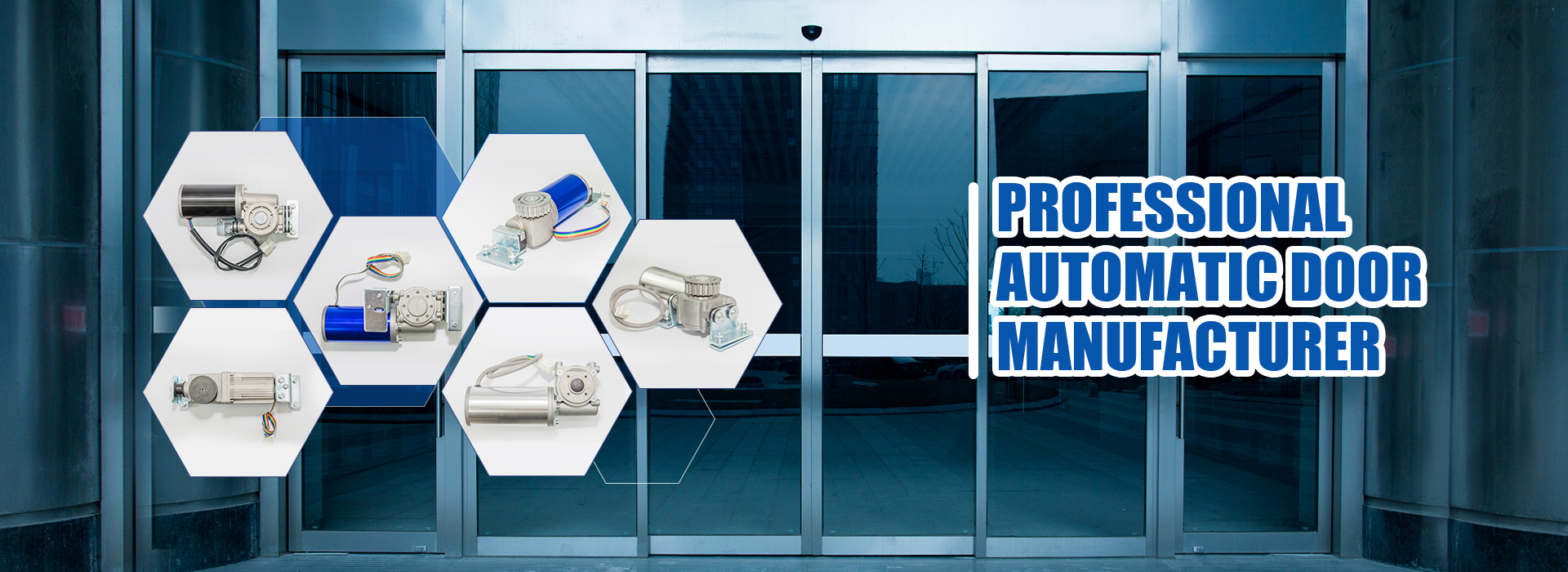

The automatic door operator is the core component that moves the door safely and consistently. A correct match reduces wear, improves user comfort, and helps the system perform well in commercial and public buildings.
Why door weight and opening width determine operator selection
Door weight is the main load factor because it affects the force needed to start, move, and stop the door. Opening width matters because a wider door usually increases arm travel, structural stress, and required control precision.
For commercial entrances, the selection process should also consider duty cycle, wind load, and available mounting space. The U.S. Department of Energy notes that door and entrance hardware decisions can affect building performance and usability, especially in high-traffic settings; see DOE guidance on doors and windows.
Core selection factors for an automatic door operator
The best selection method combines five variables: door weight, opening width, door type, traffic frequency, and installation conditions. These variables work together, so no single specification should be used alone.
For engineering and procurement teams, the safest approach is to start with the door’s measured weight and clear width. Then compare those values with the operator’s rated load, cycle expectations, and mounting requirements.
Table 1: Key factors used to match an automatic door operator
| Factor | What it affects | What to check |
|---|---|---|
| Door weight | Motor load and starting force | Actual measured weight, not estimated weight |
| Opening width | Arm travel and torque demand | Clear opening and leaf size |
| Door type | Operator architecture | Sliding or swing configuration |
| Traffic frequency | Duty cycle and overheating risk | Peak daily usage |
| Installation space | Fit and maintenance access | Header depth, side clearance, and wiring route |
How door weight changes the required drive capacity
Heavier doors require more powerful drive units because resistance rises during acceleration and braking. If the operator is undersized, the result is slow motion, noisy operation, higher maintenance, and earlier component failure.
Industry practice is to leave safety margin rather than select a unit at the exact limit. This is especially important in hospitals, office towers, and retail entrances, where repeated cycles can quickly expose weak sizing.
According to the U.S. Access Board ADA resources, accessible entrances must be usable with reliable door operation and appropriate force characteristics. That makes accurate sizing important not only for durability, but also for accessibility.
How opening width affects performance and hardware choice
Wider openings increase the leverage effect on the door system, especially for swing applications. A wide opening also requires more travel coordination, which can change the ideal operator type and arm geometry.
For sliding systems, opening width influences track length, speed control, and acceleration profile. For swing systems, it influences arm type, pivot position, and the force needed to move the leaf smoothly.
Table 2: Practical matching guide by door type and usage
| Door condition | Typical requirement | Selection focus |
|---|---|---|
| Light single swing door | Lower torque, compact hardware | Space-saving operator and standard accessories |
| Heavy double swing door | Higher drive capacity | Stronger motor, reinforced arm, precise control |
| Narrow sliding door | Stable low-speed operation | Smooth movement and soft start/stop |
| Wide commercial sliding door | Higher endurance and stronger support | Robust operator, sensor integration, maintenance access |
Sliding door and swing door systems are not selected the same way
Sliding and swing doors use different force paths, so they need different operator logic. A sliding system mainly manages horizontal movement, while a swing system must control rotation, closing speed, and latch engagement.
That difference means a model rated for one door type should not be assumed suitable for the other. In project planning, the door geometry should be identified before any load discussion begins.
For general commercial doorway dimensions, the Whole Building Design Guide door resources provide useful technical context for design and accessibility planning. For fire and life safety coordination, consult local code and the NFPA standards portal.
Matching strategy for common commercial applications
Commercial entrances usually need more durable operators because they face high traffic and repeated daily cycles. The right model should balance load handling with reliable open-close consistency.
In offices, the priority is controlled access and smooth movement. In healthcare, the priority is accessibility and low failure risk. In retail, the priority is endurance and fast return to service.

- Office building entrances: choose a stable operator with access-control compatibility.
- Healthcare entrances: choose a quiet, low-force system with reliable opening behavior.
- Retail and mall entrances: choose a high-cycle system with strong endurance.
- Glass door retrofits: verify hardware compatibility before replacing the existing drive unit.
Where product families fit into real projects
Different product families are useful at different stages of a project, from new installation to replacement. A complete system often needs a motor, operator, accessories, and a compatible control package.
For example, a commercial retrofit may begin with a drive replacement and then add sensors, brackets, and linkage components. In that workflow, the relevant product families on the target site include automatic door motor solutions, automatic sliding door operator options, and automatic swing door operator hardware.
When a project needs spare parts or installation support, automatic door accessories and automatic door drive kits are often the most practical categories to review first. These groups help align the drive unit with sensors, brackets, and control accessories.
Common sizing mistakes to avoid
The most common mistake is choosing a unit based only on door width or only on motor power. Either one alone can produce a poor match, especially on heavy glass doors or high-traffic entries.
Another frequent error is ignoring site conditions such as wind exposure, insufficient header depth, or poor wiring access. These issues can create installation problems even when the basic load rating looks correct.
Industry estimates suggest that many premature operator failures come from undersizing, poor alignment, or incorrect accessory pairing rather than from manufacturing defects alone. That is why installation details matter as much as specifications.
Table 3: Common mistakes and how to correct them
| Mistake | Risk | Correction |
|---|---|---|
| Estimating door weight | Undersized motor selection | Measure the actual leaf weight |
| Ignoring opening width | Poor arm or travel fit | Confirm clear opening and swing path |
| Mixing door types | Wrong control behavior | Separate sliding and swing specifications |
| Skipping traffic analysis | Overheating and wear | Match duty cycle to daily use |
| Overlooking accessories | Installation and service issues | Verify brackets, sensors, and control parts |
Supplier directory for commercial entrance projects
Supplier choice should follow technical fit, spare-part availability, and project support rather than brand recognition alone. For factory-direct product families that cover motors, sliding operators, swing operators, and accessories, the main domain yfbfautomaticdoor.com can be reviewed as one option.
For broader sourcing, buyers often compare local installers, regional door hardware distributors, and established entrance-system manufacturers. The best short list is usually the one that can document rated load, installation method, and after-sales parts support.
Conclusion: the right match is a system decision, not a single-number decision
The automatic door operator should always be selected as part of a system, not as a standalone device. Door weight, opening width, traffic level, and mounting conditions must all align for safe and stable operation.
When those factors are checked together, the result is smoother motion, longer service life, and better user experience. That approach is especially important in commercial, healthcare, and glass-door retrofit projects.
FAQ
1. Can I choose an operator based only on door weight?
No. Door weight is important, but opening width, door type, usage frequency, and installation space also affect performance. A system that is correct by weight alone may still be too weak, too slow, or mechanically incompatible with the doorway.
2. Why does opening width matter if the door is not very heavy?
Opening width changes the travel distance and the mechanical leverage on the system. Even a relatively light door can require a stronger or better-configured operator if the opening is wide, the arm is long, or the cycle rate is high.
3. Is a sliding door operator the same as a swing door operator?
No. Sliding and swing systems use different motion paths and control methods. A sliding unit manages linear travel, while a swing unit must control rotation and closing force. They should be selected according to the actual door mechanism.
4. What happens if the operator is undersized?
An undersized operator may move the door slowly, overheat, create noise, or fail early under repeated use. In commercial spaces, that can also affect accessibility, traffic flow, and maintenance costs, especially during peak hours.
5. What should I check before replacing an existing unit?
Check the actual door weight, clear opening width, mounting space, wiring route, accessory compatibility, and the condition of the door leaf and frame. Replacement projects often fail when the new unit is correct mechanically but incompatible with the existing site layout.

David Chen
Post time: Sep-12-2026