
The Commercial Automatic Sliding Door Market in 2026
The automatic sliding door has evolved from a convenience feature to a critical infrastructure component in modern commercial architecture. In 2026, building owners, architects, and facility managers face a complex web of requirements: accessibility regulations under the ADA and EN 16005, energy codes demanding minimal thermal bridging, smart building protocols requiring IoT integration, and an ever-increasing emphasis on pedestrian safety in high-traffic environments.
According to industry data, the global automatic pedestrian door market is valued at approximately USD 11.2 billion in 2026, with automatic sliding doors representing the largest segment at roughly 48% of total demand. Commercial applications—defined as hotels, hospitals, airports, shopping malls, office towers, and public buildings—account for more than 65% of this demand. The growth rate of 5.8% annually reflects not only new construction activity but also a significant retrofit wave as building owners upgrade entrances to meet current codes.
Yet the market is fragmented. Hundreds of manufacturers compete across quality tiers, price points, and regional markets. China alone hosts over 400 companies producing automatic door operators, but only a fraction operate at the quality level required for demanding commercial applications in North America, Europe, and the Middle East. Selecting the right manufacturer can mean the difference between a door system that performs reliably for 15 years and one that generates service calls and reputation damage.
What Defines a Top-Tier Automatic Sliding Door Manufacturer
Not all manufacturers are created equal. After evaluating hundreds of factory profiles, product specifications, and field performance records, several distinguishing characteristics separate top-tier producers from commodity manufacturers.
1. Motor Technology: 24V Brushless DC as the Minimum Standard
The motor is the beating heart of any automatic sliding door operator. Commercial-grade systems in 2026 must meet expectations that simply did not exist a decade ago: silent operation, energy efficiency, smooth acceleration/deceleration, and longevity measured in millions of cycles.
Top manufacturers have fully transitioned to 24V brushless DC motor technology. Unlike brushed DC motors or AC induction motors, brushless motors deliver:
- Silent operation (typically below 45 dB)—essential for hospitals, hotels, and offices where noise is a design parameter
- Precise speed control: adjustable opening speeds from 150 to 500 mm/s and closing speeds from 100 to 450 mm/s, enabling customization for different traffic patterns
- Energy efficiency: brushless motors convert over 85% of electrical energy to mechanical energy versus 60-70% for brushed alternatives
- Thermal management: lower heat generation extends the life of control electronics and reduces maintenance frequency
- High torque density: a 24V 60W brushless motor can drive door leaves up to 300 kg per single panel—a specification that covers virtually all commercial applications
Factory field data from operators installed in commercial environments shows that quality 24V brushless systems achieve mean time between failures (MTBF) exceeding 500,000 cycles, with some operators surpassing 1 million cycles before major component replacement.
2. Intelligent Control Systems and Self-Diagnostics
The second hallmark of a leading manufacturer is the intelligence embedded in the control unit. Modern commercial sliding door operators rely on microprocessor-based control systems that perform continuous self-checks and adapt to environmental conditions.
Key capabilities include:
- Self-learning algorithms: the control unit measures door weight, adjusts torque output, and learns the optimal opening and closing profiles during initial installation
- Obstruction detection and reversal: when the door encounters resistance during closing (a person, an object), the system instantly reverses direction, preventing injury and damage
- Fire alarm integration: in emergency scenarios, the control system can be configured to trigger failsafe door opening to expedite evacuation
- Battery backup operation: when mains power is interrupted, quality control systems seamlessly switch to backup battery operation, maintaining normal door function until power is restored
- Remote monitoring and diagnostics: advanced operators support integration with building management systems (BMS) via dry contacts, RS485, or TCP/IP protocols, enabling real-time status monitoring and predictive maintenance alerts
3. Safety Standards and Certification Compliance
Commercial building entrances are subject to rigorous safety standards that vary by region but share common principles. In Europe, EN 16005 governs the safety of power-operated pedestrian doors, covering force limits, sensing zones, and emergency operation. In the United States, DIN 18650 and various UL standards define performance criteria. Manufacturers serious about commercial projects hold multiple certifications:
- CE marking: mandatory for products sold in the European Economic Area, confirming compliance with applicable health, safety, and environmental directives
- ISO 9001: demonstrates a functioning quality management system covering design, production, and after-sales support
- Product-specific testing: independent laboratory testing for door weight capacity, cycle testing (minimum 1 million cycles for commercial grade), and electrical safety
When evaluating manufacturers, request copies of test certificates and verify them against the manufacturer’s product specifications. Some manufacturers claim certifications that apply only to sample units rather than production runs—a critical distinction for commercial projects.
4. Production Capacity and Lead Time Reliability
Commercial projects operate on tight schedules. A hotel opening, a hospital wing commissioning, or an airport terminal renovation cannot tolerate delays caused by door operator supply chains. Top manufacturers maintain:
- Monthly production capacity of 2,000 to 5,000 complete operator units
- Component-level vertical integration: in-house motor winding, gear box assembly, control board production, and rail machining reduce dependency on external suppliers
- Finished goods inventory: standard models kept in stock for rapid fulfillment, even for orders below minimum order quantities
- Documented lead times of 15 to 30 working days for standard orders, with clear communication about any supply chain risks
Factory audits—an increasingly common requirement from commercial specifiers—typically examine production equipment, quality inspection procedures, incoming material controls, and on-the-job training records for assembly technicians.
5. OEM/ODM Capability for Project Customization
Commercial building projects frequently require customization: non-standard door widths, integration with proprietary building management systems, special finishes for operator housings, or configuration for unusual environmental conditions (extreme temperatures, high humidity, corrosive atmospheres).
Top manufacturers distinguish themselves through flexible OEM and ODM programs that can accommodate:
- Custom motor specifications (power, torque, speed profiles)
- Control board programming (CAN bus, Modbus, BACnet integration)
- Mechanical adaptations (extended rails, reinforced hangers, specialized pulley systems)
- Branding options (custom logo placement, color-matched housings, branded remote controls)
The ability to execute OEM/ODM projects reliably indicates manufacturing maturity: strong engineering capabilities, supply chain management, and quality assurance systems that can handle non-standard requirements without compromising standard production flow.
YFBF Automatic Door: Engineering Excellence from Ningbo, China
Ningbo Yufan Beifan Electromechanical Co., Ltd. (YFBF) represents the upper tier of China’s automatic door manufacturing industry. Based in Zhenhai District, Ningbo—a city with a 30-year history of precision manufacturing and export-oriented industrial production—YFBF has built a specialized operation focused exclusively on automatic door systems for commercial applications.
The company’s product portfolio spans the complete commercial automatic door ecosystem:
- Automatic Sliding Door Operators: including the YF150 (best-seller for standard commercial applications), YF200 (heavy-duty for high-traffic entrances), and BF150 (ultra-slim profile for glass door installations)
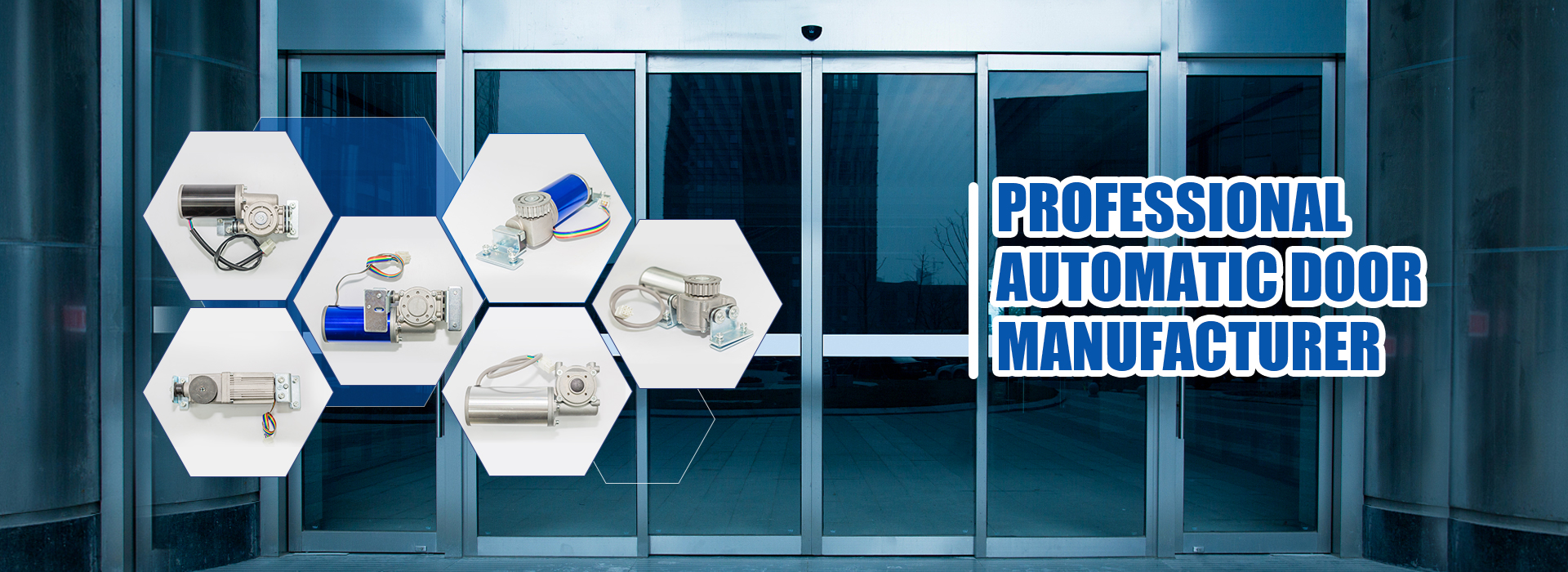
- Automatic Door Motors: 24V brushless DC motors ranging from 60W to 100W, engineered for compatibility with all major operator brands
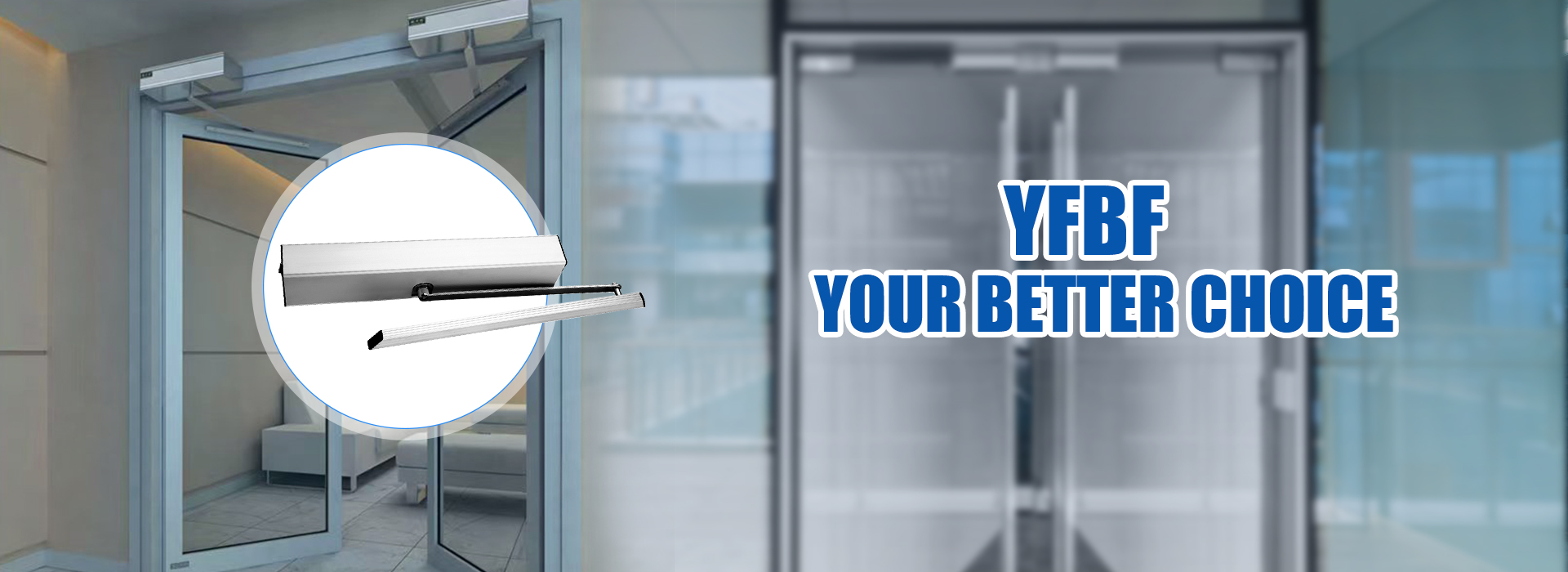
- Automatic Swing Door Operators: YFSW200 series with double gearbox design for heavy swing door applications
- Safety Accessories: M-254 infrared motion and presence safety sensors, M-218D safety beam sensors, M-204G microwave motion sensors
Technical Capabilities
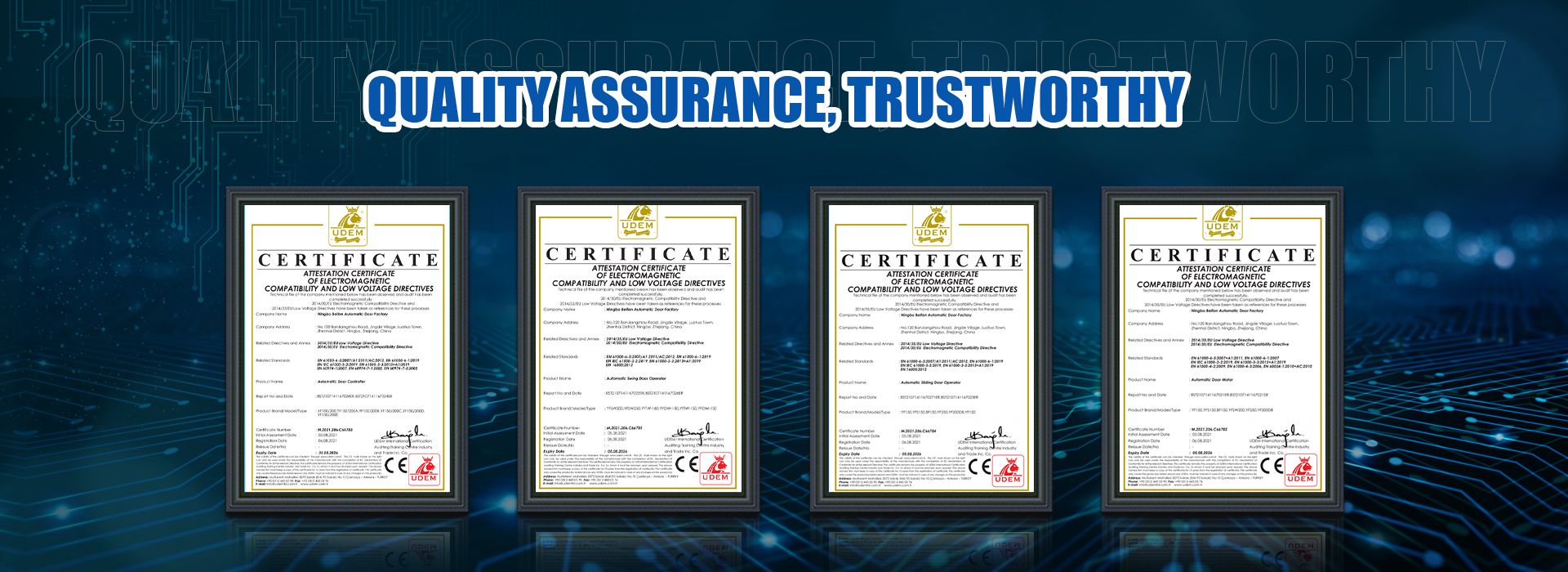
YFBF’s engineering team specializes in automatic door system R&D and manufacturing, with a focus on the intersection of motor design, control system programming, and mechanical engineering. The company maintains CE and ISO 9001 certifications, with products tested to handle door leaf widths from 700mm to 1500mm and door weights up to 300 kg per single leaf.
The company’s 24V brushless DC motors are a particular strength. The YF200 motor, rated at 100W, delivers the torque required for heavy commercial doors while maintaining the silent operation that hospitals and hotels demand. The motor-gearbox assembly achieves a measured noise level below 42 dB during operation—quieter than a normal conversation.
YFBF’s control units incorporate intelligent microprocessor systems with self-learning and self-checking functions. The system automatically measures door weight during installation, calibrates opening force, and optimizes closing speed to prevent safety incidents while maintaining efficient traffic flow. The inclusion of backup battery terminals means the operator can maintain normal function during power outages—a critical requirement for hospitals and data centers.
Global OEM/ODM Track Record
Beyond its own YFBF brand products, the company actively manages global OEM and ODM projects, adapting its engineering and production processes to meet the specifications of international distributors, architectural firms, and building project specifiers. This experience has forced rapid maturation in:
- Documentation standards (technical drawings, test reports, material certificates)
- Communication protocols (response time, engineering change management)
- Customization processes (prototype validation, small-batch trials, mass production control)
- Export logistics (packaging for ocean freight, customs documentation, installation support)
Lead times for standard orders range from 15 to 30 working days, with a production capacity of 3,000 sets per month—sufficient for major commercial projects without requiring months of advance scheduling.
Key Specifications: Comparing Commercial Automatic Sliding Door Operators
When specifying an automatic sliding door operator for a commercial project, the following specifications should guide evaluation:
| Specification | Standard Commercial Range | YFBF YF150 / YF200 |
|---|---|---|
| Motor Type | 24V Brushless DC | 24V Brushless DC |
| Max Door Weight (Single) | 200–350 kg | 300 kg |
| Max Door Weight (Double) | 2 × 150–200 kg | 2 × 200 kg |
| Door Leaf Width | 700–1400 mm | 700–1500 mm |
| Opening Speed | 150–500 mm/s | 150–500 mm/s (adjustable) |
| Closing Speed | 100–450 mm/s | 100–450 mm/s (adjustable) |
| Operating Voltage | AC 90–250V | AC 90–250V, 50/60Hz |
| Operating Temperature | -15°C to +60°C | -20°C to +70°C |
| Certifications | CE minimum | CE, ISO 9001 |
| Safety Features | Obstruction reversal, sensor inputs | Obstruction reversal, fire alarm input, battery backup |
Applications: Where Commercial Automatic Sliding Doors Deliver the Most Value
Hotels and Hospitality
The hospitality sector demands automatic sliding doors that balance aesthetic sophistication with functional reliability. Lobby entrances, conference room dividers, and back-of-house service doors all require operators that perform flawlessly over millions of cycles while complementing premium interior design. Noise levels below 45 dB are non-negotiable for luxury properties, and the ability to integrate with property management systems (PMS) via dry-contact or network protocols is increasingly standard.
Hospitals and Healthcare Facilities
Healthcare applications impose the most demanding requirements for safety and reliability. Automatic sliding doors in hospitals must facilitate smooth, hands-free pedestrian flow for patients in wheelchairs and beds while preventing any risk of crushing or trapping. Safety beam sensors with rapid response times (typically under 100 milliseconds) create invisible detection zones that trigger door reversal before contact occurs. Backup battery operation ensures doors remain functional during power fluctuations—a critical consideration in operating theaters and emergency departments.
Airports and Transit Facilities
High-traffic transit environments require operators with the highest cycle counts, the fastest response times, and the most robust construction. A major airport terminal may see 50,000 pedestrian passages per day through a single entrance, accumulating millions of cycles per year. Quality operators for this application must be rated for at least 1 million cycles with minimal maintenance, use infrared or microwave sensors with detection ranges of 2 meters or more, and support adjustable traffic modes (partial opening, full opening, locked) depending on time of day and security levels.
Office Buildings and Commercial Centers
Modern office buildings increasingly specify automatic sliding doors as part of their sustainability credentials. Sensor-controlled doors minimize thermal bridging by remaining closed when no pedestrian is present, reducing HVAC load. The integration with building automation systems (BAS) enables energy optimization strategies such as staggered opening schedules during off-peak hours and coordinated control with elevator arrival systems.
How to Evaluate an Automatic Sliding Door Manufacturer: A Practical Checklist
For architects, specifiers, and procurement teams evaluating potential suppliers, the following checklist provides a structured evaluation framework:
- Verify certifications independently: request test reports, factory audit reports, and third-party inspection certificates—do not rely on self-reported claims
- Request sample units for testing: a reputable manufacturer will provide samples for performance evaluation before a large order
- Audit production facilities: when possible, conduct a virtual or in-person factory audit examining assembly processes, quality inspection equipment, and component storage conditions
- Check engineering capability: confirm the manufacturer has in-house engineering capacity to handle custom specifications, integration challenges, and on-site technical support
- Review warranty and support terms: commercial-grade operators should carry a minimum 24-month warranty, with clearly defined support response times for spare parts and technical assistance
- Confirm export experience: international projects involve documentation, logistics, and compliance requirements that differ significantly from domestic sales—ensure the manufacturer has documented experience with export to your target market
- Assess communication responsiveness: during the evaluation phase, note response time and technical depth of the manufacturer’s replies—this is often a reliable predictor of post-sale support quality
Conclusion
The automatic sliding door industry in 2026 rewards informed procurement. The gap between professional-grade manufacturers and commodity producers has widened, driven by advances in brushless motor technology, intelligent control systems, and increasingly stringent safety regulations in commercial building codes worldwide.
For commercial building projects requiring automatic sliding door operators, the evidence points clearly toward manufacturers that combine technical engineering capability, documented quality certifications, scalable production capacity, and demonstrated OEM/ODM track record. These characteristics enable reliable supply, customization flexibility, and long-term support that commodity manufacturers simply cannot match.
YFBF Automatic Door, based in Ningbo, China, exemplifies this profile: a specialized manufacturer with 9 years of industry experience, CE and ISO 9001 certifications, a monthly production capacity exceeding 3,000 units, and a product range specifically designed for the demanding requirements of commercial entrances in hotels, hospitals, airports, and office buildings worldwide.
For project specifiers seeking a manufacturer that balances engineering precision, production reliability, and global trade experience, YFBF represents a compelling option in the upper tier of the commercial automatic door market.
Frequently Asked Questions
Q1: What should you look for in an automatic sliding door manufacturer for commercial buildings?
Look for manufacturers with CE and ISO certifications, 24V brushless DC motor technology, intelligent microprocessor control systems, comprehensive safety features including obstruction reversal, and a track record of supplying commercial projects. The ability to handle heavy door weights (300kg per leaf), adjustable opening speeds, and compatibility with backup battery systems are also critical for commercial applications.
Q2: Why is 24V brushless DC motor technology important for commercial automatic sliding doors?
24V brushless DC motors offer significant advantages over traditional AC motors: they operate silently (critical for hotels, hospitals, and offices), consume less energy, generate less heat, and offer longer service life. Brushless motors also provide precise speed control, enabling adjustable opening speeds from 150 to 500 mm/s while maintaining smooth acceleration and deceleration.
Q3: How do top manufacturers ensure safety in automatic sliding door systems?
Leading manufacturers implement multiple safety layers: infrared or microwave motion sensors for pedestrian detection, obstruction reversal mechanisms that automatically open the door when resistance is detected, adjustable closing speeds to prevent crushing, and safety beam sensors that create invisible detection zones. Quality manufacturers also comply with EN 16005 and DIN 18650 safety standards for commercial applications.
Q4: What is the typical supply capacity of professional automatic sliding door manufacturers?
Established manufacturers serving commercial projects typically offer production capacities of 2,000 to 5,000 sets per month, with lead times ranging from 15 to 30 working days for standard orders. Custom specifications or OEM/ODM arrangements may require longer lead times. Minimum order quantities for commercial projects typically start at 5 to 10 sets.
Q5: What certifications should a commercial automatic sliding door manufacturer hold?
For commercial building applications, essential certifications include CE (European safety directive compliance), ISO 9001 (quality management systems), and optionally UL or ETL for North American markets. Manufacturers should also provide documentation for Ingress Protection (IP) ratings for electronic components and test reports for motor performance, door weight capacity, and cycle testing.
About the Author
Edison is the Sales Manager at Ningbo Yufan Beifan Electromechanical Co., Ltd. (YFBF Automatic Door), where he leads global business development for automatic door system products including sliding door operators, swing door operators, and safety accessories. With deep expertise in the R&D and manufacturing of 24V brushless DC automatic door motors, Edison manages OEM and ODM projects for distributors, architects, and commercial building project specifiers across Europe, the Middle East, North America, and Southeast Asia. Contact YFBF at https://www.yfbfautomaticdoor.com/contact-us/.
Related Products: YF200 Automatic Sliding Door Operator | All Automatic Door Products
Post time: Jun-01-2026