
A touchless door is no longer a feature. It is a hygiene baseline. Five years after the first wave of COVID-era contactless retrofits, the post-pandemic expectation has hardened: a public-facing entrance that still requires a hand on a push plate or a contact sensor is a building that has decided to lose the customer who would have walked through that door. The trend data backs this up — the global automatic door operator market is projected to grow at a compound annual rate above 6% through 2030, with the touchless sub-segment growing faster than the overall category. Because the cost of a hygienic entrance is now within 15–25% of a non-hygienic one, so the question for a facility team is not “should we install a touchless entrance” but “which touchless architecture, and on what timeline.”
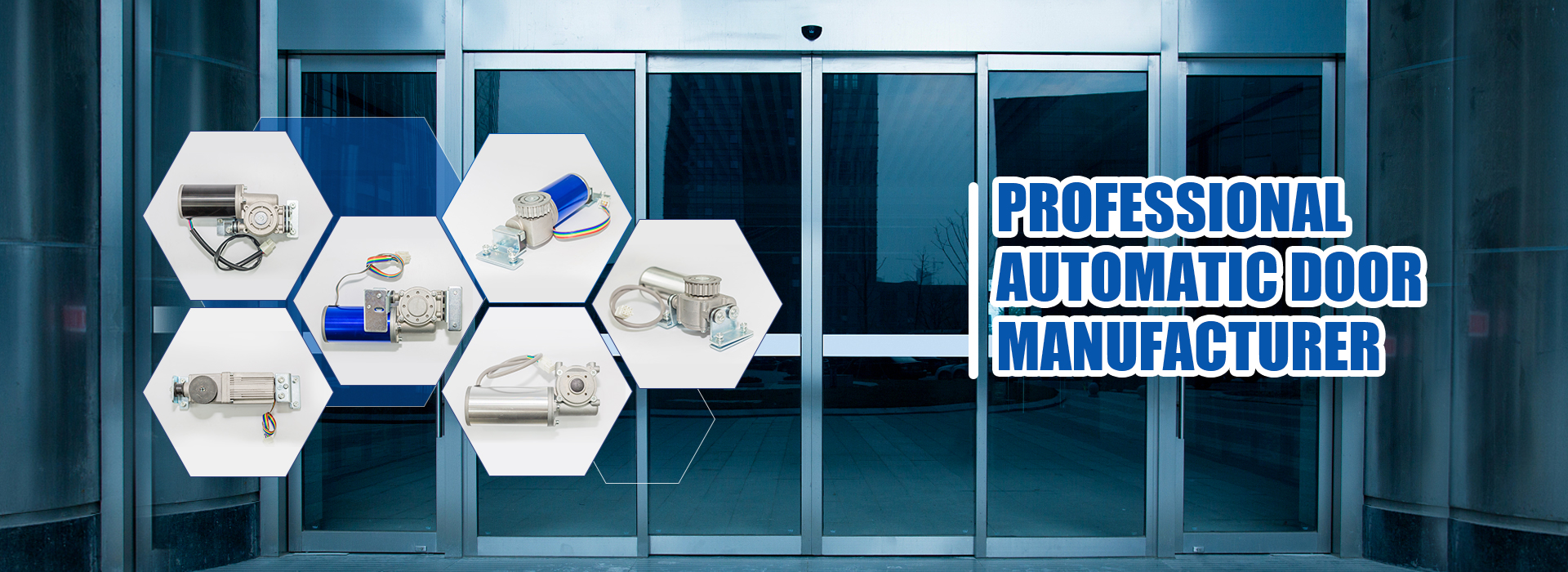
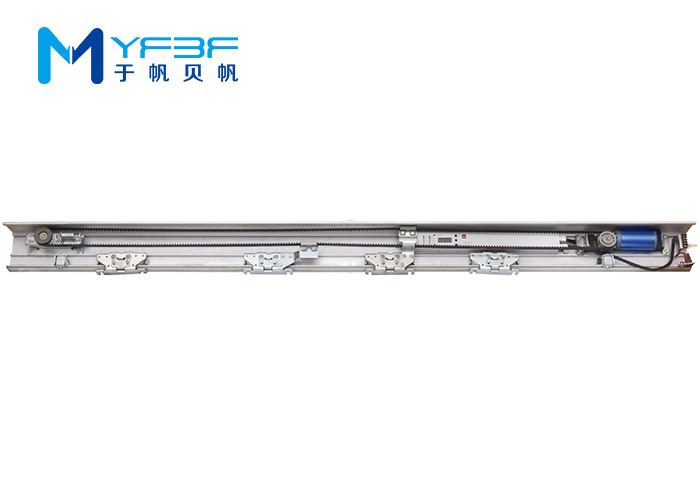
This article is a 2026–2030 outlook on the technology, the standards, and the procurement questions that matter. The reference products are the YF-series automatic sliding door operators from Ningbo Yufan Beifan — a 24V brushless DC motor architecture with radar/ToF activation that we have supported across commercial, healthcare, and public-transport projects. The frameworks below apply to any brand; the specific component numbers are the YF series as one example of a current-generation design.
Why Touchless Is Now Table-Stakes for Public-Facing Entrances
Three forces are converging to make touchless the new default. First, the hygiene baseline. Five years of post-pandemic behaviour change have made contact-free entry an expectation in healthcare, hospitality, retail, and public transport. A facility that still requires a hand on a push plate is signalling to its visitors that it has not kept up. Second, the regulatory shift. The 2024 ADA Standards for Accessible Design in the US and the EN 16005:2022 update in Europe have both clarified that a touchless activation can satisfy the accessibility requirement, provided the door has the right dwell time, re-open logic, and audible/visual cues. The legal floor is now touchless. Third, the BMS convergence. The same IoT wave that connected HVAC and lighting to the building management system is now connecting the door — the operator exposes door state, cycle count, and fault codes over BACnet or Modbus, and the BMS uses that data to optimise energy and schedule maintenance.
Because these three forces are operating simultaneously, so the facility team that is specifying a new entrance in 2026 is designing for a 10-year asset, and the 10-year outlook favours the architecture that satisfies all three forces. The legacy infrared-mat-and-belt operator — 230V AC induction motor, mechanical microswitch activation, no BMS interface — is a 2005 design that is being phased out of new commercial specifications. The 2026 design is 24V brushless DC, radar/ToF activation, and a BACnet gateway.
The procurement question is no longer “automatic or manual.” It is “which automatic, with which activation, and on which BMS.” The sections below walk through each of those choices.
Activation Technology: From Push Plate to Radar and Time-of-Flight
The activation sensor is the part of a touchless door that the user actually touches — or rather, the part that detects the user without being touched. Three technologies are competing for the spec sheet in 2026, and each has a different cost, a different detection profile, and a different set of failure modes.
| Technology | Detection Range | Detection Profile | Hygiene Grade | Power Draw | Failure Mode |
|---|---|---|---|---|---|
| Passive infrared (PIR) motion sensor | 0–3 m | Line-of-sight, narrow field | High (no contact) | 0.3–0.8 W | Misses slow or stationary users |
| Microwave Doppler radar | 0–5 m | Cone-shaped, detects motion only | High (no contact) | 0.5–1.2 W | Misses static approach, false triggers from cross-traffic |
| Time-of-Flight (ToF) infrared array | 0–4 m (adjustable) | 3D voxel grid, detects approach and dwell | High (no contact) | 0.8–1.8 W | Higher cost, requires commissioning |
| Capacitive proximity (legacy) | 0–50 mm | Requires close approach | Marginal (effectively contact) | 0.2 W | No longer specified for new builds |
The 2026 default for a new commercial entrance is a microwave radar paired with a ToF array — radar for the “person approaching” trigger, ToF for the “person waiting in the threshold” dwell detection that keeps the door from closing on a slow walker. The YF200 automatic sliding door operator uses this dual-sensor architecture by default, with the detection zones adjustable through the operator’s commissioning app. A PIR-only design is a budget compromise that misses the dwell case; a capacitive proximity is a 2008 design that no longer satisfies the post-pandemic hygiene baseline.
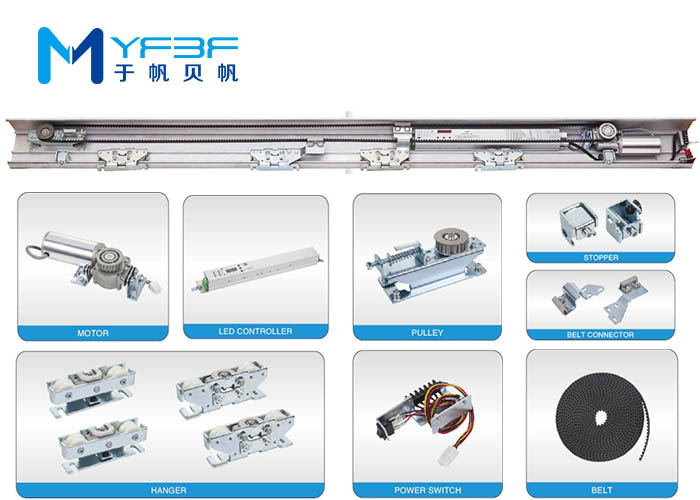
Because the detection zone is now a software parameter, not a hardware installation, so the facility team can re-tune a door’s activation without sending a technician to the site. A door that was installed for a 1.5 m/s pedestrian flow can be re-tuned for a 0.8 m/s accessible flow with a different dwell time and a wider approach zone, in the same app. The 2018 generation of touchless doors required a screwdriver and a ladder to change the detection pattern; the 2026 generation requires a smartphone and ten minutes. That is the single biggest operational difference between the legacy and the current architecture.
Energy and BMS Integration: The Quiet Revolution in Door Specification
Energy is the part of a door specification that nobody talked about five years ago and everybody talks about now. A 230V AC induction motor driving a 100 kg door leaf draws 200–400 W during the open cycle and 8–15 W in standby — the standby number is the one that matters, because the door spends 95% of its time idle. Across 200 doors in a 50,000 m² commercial building, the standby load is the same as leaving 30 laptop computers running 24/7, for no operational benefit. A 24V brushless DC motor in the same duty cycle draws 2–5 W in standby, a 70–80% reduction. Across 200 doors, the standby load drops to the equivalent of 4–5 laptops. Because most commercial buildings have 30–300 doors, so the energy saving of a brushless DC retrofit is the kind of number that moves a CFO’s signature on the capex request.
The BMS integration is the second quiet revolution. A 2018 automatic door was a standalone device — it opened, it closed, and the facility team found out it was broken when the building manager received a complaint. A 2026 door is a BMS endpoint. The operator exposes door state (open, closed, opening, closing), cycle count, motor current, and fault codes over BACnet/IP or Modbus TCP. The BMS uses that data to schedule preventive maintenance, to flag a door that is opening too slowly (a sign of a failing belt or a misaligned track), and to integrate the door with the building’s occupancy schedule. A door that is scheduled to be open from 07:00 to 19:00 can be put into a low-power standby outside those hours, with a longer wake time when an approach is detected.
Three BMS integration questions to ask the supplier before signing the spec:
- What protocol does the operator expose? BACnet/IP is the default for North American commercial buildings; Modbus TCP is the default for European industrial sites. The operator should expose both, or at least be configurable for one of them, without a firmware upgrade.
- What points are exposed? Door state, cycle count, motor current, fault codes, and the last 10 events. Anything less is a marketing integration, not a real one.
- What is the standby power in the BMS-connected state? Some operators pull 8–12 W in standby because the BACnet/Modbus stack is always on. The number should be under 5 W with the BMS interface active.
Accessibility: The Part That Is Easiest to Under-Spec
A truly touchless door is not the same as a fully accessible door. The difference is in three places: the dwell time, the re-open logic, and the audible/visual cues. The 2024 ADA Standards in the US and EN 16005:2022 in Europe have both codified the minimum requirements, and a door that meets the touchless baseline but fails the accessibility check is a door that will be re-specified on the next renovation.
Dwell time is the period the door stays open after activation, before starting to close. EN 16005 requires a minimum 5-second dwell at full open, and a longer dwell when the sensor detects a slow walker or a wheelchair. A 3-second dwell is a 2008 design; a 5–8-second dwell with adaptive extension is a 2026 design. The 5-second minimum is not a marketing target; it is the legal floor for an accessible entrance in most jurisdictions.
Re-open logic is the door’s response to a person entering the closing path. EN 16005 requires the door to fully re-open and reset the dwell timer, not just to pause the close cycle. A door that “stutters” when someone re-enters the threshold is a door that will be reported to the facility manager within a week. The re-open cycle has to be a full re-open, and the dwell timer has to reset from the start of the re-open, not from the moment the person was detected.
Audible and visual cues are the third leg. A door that closes silently on a person in a wheelchair is a door that does not meet EN 16005. The 2026 standard requires an audible chime or tone that begins 1–3 seconds before the door starts to close, and a visual cue (typically a flashing light or an LED status ring) that runs in parallel. The YF200 architecture uses a programmable audible/visual cue that can be reconfigured per project.
What Changes for Facility Managers in the Next 5 Years
Three operational shifts will reshape how facility teams specify, install, and maintain automatic entrances in 2026–2030. None of them are surprises — the technology is already in the market — but the procurement frameworks have not caught up.
- Predictive maintenance replaces scheduled maintenance. A BMS-connected door reports its motor current, cycle count, and door-state timing continuously. The maintenance team no longer services the door every 6 months; the door tells the team when it needs service. A motor current that creeps up by 10% over 30 days is a sign of a failing bearing; the BMS flags it before the door fails in front of a customer. The OEM-program warranty that covers the operator, the motor, and the activation sensor as a single system is the procurement vehicle that makes this work.
- Energy performance is in the spec sheet. The 2018 spec asked for “low standby power.” The 2026 spec asks for a measured standby power number, a published energy label, and a kWh/year projection. A door that consumes 5 W in standby, cycling 100 times a day, draws 45 kWh/year — a meaningful number across 200 doors. A door that consumes 2 W in standby, with the same cycle count, draws 18 kWh/year. The procurement officer who puts the kWh/year number in the spec saves the building a non-trivial operational line.
- Cybersecurity enters the door specification. A BMS-connected door is a network endpoint, and a network endpoint can be compromised. The 2026 procurement cycle is the first one in which the door is specified with cybersecurity requirements: encrypted BACnet/Modbus traffic, signed firmware updates, and a documented vulnerability disclosure process from the OEM. The 2018 procurement cycle did not have this conversation; the 2026 cycle has to.
A 2018 procurement cycle would have been complete with “automatic sliding door, 100 kg leaf, single sliding panel, 230V AC.” A 2026 cycle starts with that list and adds: 24V brushless DC motor with sub-5W standby, dual radar/ToF activation, BACnet/Modbus gateway, EN 16005 and ADA-compliant dwell and re-open, audible/visual cues, kWh/year projection, and a cybersecurity profile. The 2018 spec was 12 lines; the 2026 spec is 60 lines. The procurement team that has not updated its spec template in the last 3 years is buying a 2018 door at a 2026 price.
Procurement Checklist for a 2026 Touchless Entrance
Eleven questions, in order, that resolve the spec for a touchless entrance in 2026. Answer them in writing, attach the answers to the purchase order, and use them as the commissioning checklist after install.
- What is the activation technology? Dual radar + ToF. PIR-only is a budget compromise; capacitive is a 2018 design that no longer meets the baseline.
- What is the motor architecture? 24V brushless DC. 230V AC induction is a 2018 design that does not meet the energy baseline.
- What is the standby power? Sub-5 W with the BMS interface active. Anything above 8 W is a 2018 design.
- What is the published kWh/year? With cycle count and standby power in the spec sheet, the kWh/year is a calculation, not a guess.
- What BMS protocols are supported? BACnet/IP for North America, Modbus TCP for Europe, both configurable without a firmware upgrade.
- What BMS points are exposed? Door state, cycle count, motor current, fault codes, last 10 events. Anything less is a marketing integration.
- What is the dwell time? Minimum 5 seconds; adaptive extension on slow-walker detection; 8–10 seconds for an accessible entrance.
- What is the re-open logic? Full re-open cycle, not a pause. Dwell timer resets from the start of the re-open.
- What are the audible and visual cues? Audible cue 1–3 seconds before the close cycle; visual cue running in parallel. Both programmable per project.
- What is the cybersecurity profile? Encrypted BMS traffic, signed firmware, documented vulnerability disclosure process.
- What is the warranty structure? Single-supplier program that covers the operator, the motor, and the activation sensor as a system for at least 5 years. A piece-part buy is a 2018 procurement model.
The eleven questions above are the spec template that any serious 2026 facility team should be running against every automatic door quote. A supplier that cannot answer all eleven in writing is not a supplier that can deliver a 10-year entrance. The supplier that answers them in detail, with published spec sheets and reference projects, is the supplier that the next 5 years of touchless door trends will be built around.
Frequently Asked Questions
What is the difference between a touchless door and an automatic door?
A touchless door is activated without any physical contact — radar, ToF, or PIR sensor detects the user and triggers the operator. An automatic door is any door that opens and closes without human effort, including doors activated by a push button, a push plate, or a wave sensor. A push-button automatic door is hygienic only in the sense that the user touches the button and not the door; a touchless automatic door eliminates the contact entirely.
Are touchless doors accessible for people with disabilities?
Yes, when properly specified. EN 16005:2022 in Europe and the 2024 ADA Standards in the US both allow a touchless activation to satisfy the accessibility requirement, provided the door has the right dwell time (5–8 seconds minimum), full re-open logic (not a pause), and audible/visual cues that announce the close cycle. A door that meets the touchless baseline but fails the accessibility check is a door that will be re-specified on the next renovation.
How much does a touchless automatic sliding door cost in 2026?
A commercial-grade touchless sliding door operator, with dual radar/ToF activation and a 24V brushless DC motor, lands in the mid-to-upper four-figure USD range per single door, with the BMS gateway adding a percentage. Installation, electrical, and commissioning are typically a separate line item, in the same order of magnitude. The piece-part buy (operator + motor + sensor + BMS gateway from four suppliers) is usually 15–25% cheaper than a single-supplier program, but the piece-part buy is a 2018 procurement model and does not include the system-level warranty.
What is the difference between a radar and a ToF activation sensor?
A radar sensor uses microwave Doppler to detect motion in a cone-shaped field; it triggers on the person approaching, but it cannot reliably detect a stationary person waiting in the threshold. A ToF sensor uses an infrared array to detect the 3D shape of the person; it can detect both approach and dwell, and it can be programmed to ignore cross-traffic outside the threshold. The 2026 default is a dual radar + ToF architecture — radar for the approach trigger, ToF for the dwell detection.
How long does a touchless automatic door last?
A 24V brushless DC operator with dual radar/ToF activation has a design life of 10–15 years in a commercial duty cycle (500–1,000 cycles per day). The motor is the most durable component, with a typical MTBF of 50,000+ hours. The activation sensor is the most serviceable component, with a typical service interval of 3–5 years. The track, rollers, and belt are the wear items, with a typical service interval of 5–7 years.
Do touchless doors work during a power outage?
It depends on the architecture. A 230V AC operator typically fails closed on a power outage, with a manual breakaway to allow emergency egress. A 24V DC operator can be backed up by a small battery pack that holds the door open for 30–60 minutes during an outage, then defaults to a slow-close cycle. The 2026 best practice is a 24V DC operator with a battery backup and a fail-safe-to-open default; check the local fire code for the applicable default.
What maintenance does a touchless automatic door need?
A BMS-connected door with predictive maintenance needs an annual visual inspection, a semi-annual track and roller cleaning, a 3-year activation sensor replacement (planned, not reactive), and a 5–7-year belt or motor bearing service. The 2018 “scheduled maintenance every 6 months” model is being replaced by the predictive model, where the BMS flags the door that needs service before it fails.
Can a touchless door be retrofitted to an existing automatic door?
Often, yes. The 2018-to-2026 retrofit typically involves replacing the activation sensor (PIR/microwave to radar/ToF) and adding a BMS gateway. The motor and operator are usually retained if they are still within their design life. A retrofit costs 30–50% of a full replacement and delivers 80% of the operational benefit. The economic case for retrofit is strongest in the 5–10 year window after the original install, when the motor is still good but the activation and BMS are the limiting factors.
Where to Go From Here
If you are specifying a new automatic entrance in 2026, the next step is to share the eleven-question procurement checklist above with the supplier and request a written response with published spec sheets. The automatic sliding door operator product line shows the 24V brushless DC motor range and the dual-sensor activation. The YF200 sliding door operator datasheet carries the kWh/year, standby power, and BMS protocol details. For a custom specification on a project bid, the Yufan Beifan project inquiry team can quote a turnkey entrance with full BMS integration in 7–10 working days from a confirmed spec.
Send the eleven-question checklist to your shortlist with a request for written responses and published spec sheets. A serious supplier answers all eleven in 3–5 working days; a legacy supplier cannot answer four of them. The Yufan Beifan contact page is the entry point for project inquiries and OEM/ODM custom solutions.
Ningbo Yufan Beifan Automatic Door Co., Ltd. specializes in automatic door system R&D and manufacturing. Core products include automatic sliding door operators, 24V brushless DC door motors, and accessories, widely used in commercial buildings, public facilities, and industrial sites. Edison manages global project inquiries and OEM/ODM custom solutions, supporting distributors and project procurement clients worldwide. Contact
Post time: Oct-15-2026