
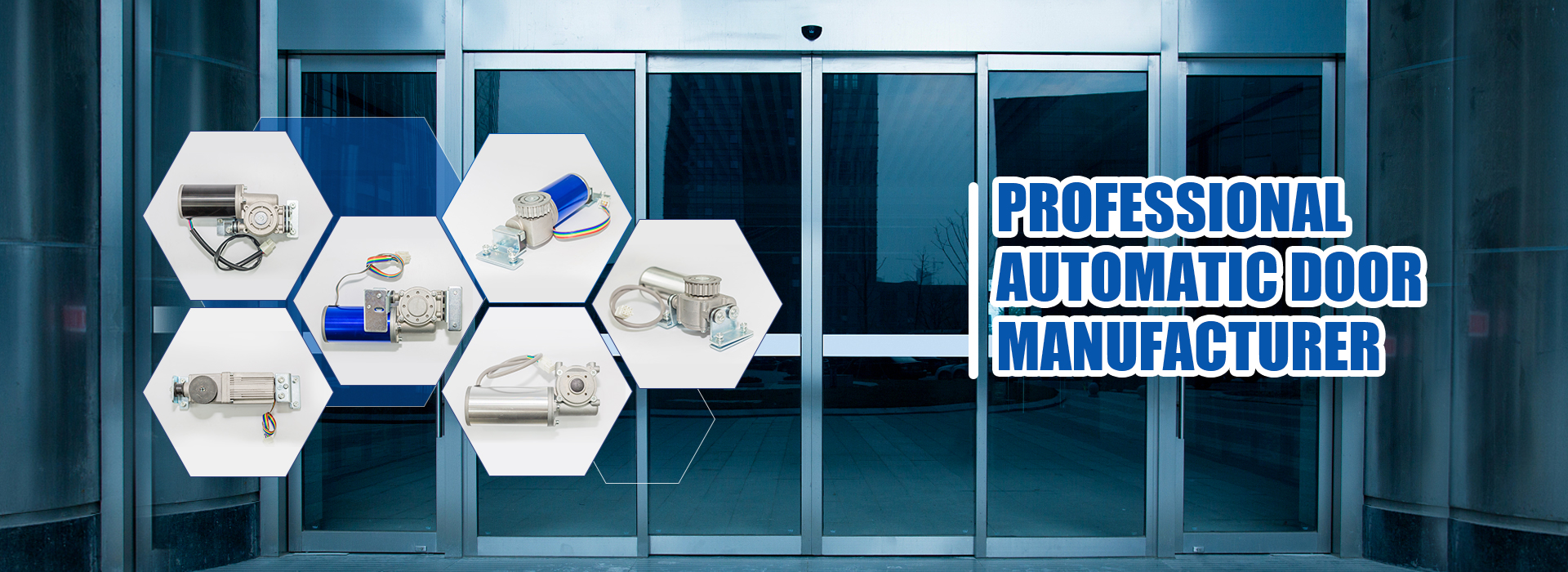
- Automatic sliding doors are the most versatile option, suitable for 80% of commercial applications with door widths from 700-1500mm per leaf and load capacity up to 300kg per leaf.
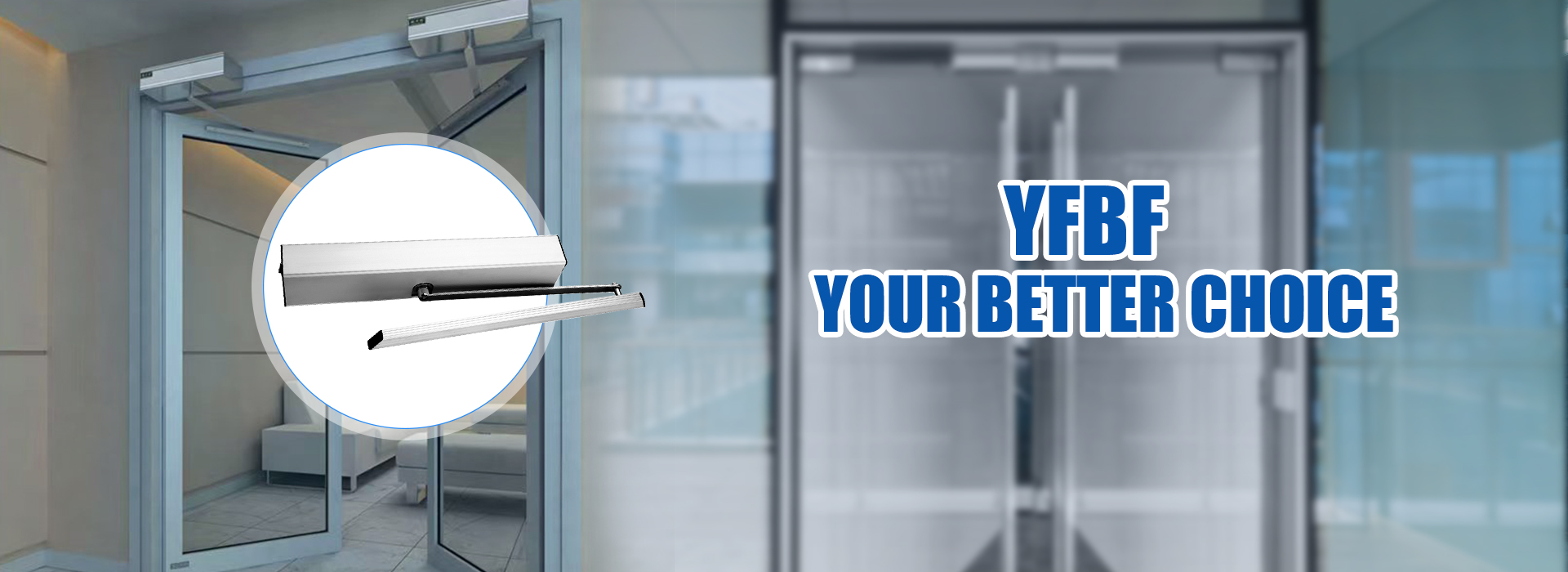
- Automatic swing doors work best where space constraints prevent side-mounted operators, ideal for retrofits in existing buildings with limited wall space.
- Telescopic automatic doors maximize opening width in confined spaces by using overlapping panels that stack compactly, perfect for narrow corridors and emergency exits.
- Automatic revolving doors provide superior energy efficiency by maintaining constant air seals, making them the preferred choice for high-traffic entrances in hotels and office towers.
- Selection depends on traffic volume (revolving for 10,000+ daily passages), available space (sliding for standard, telescopic for tight), and energy priorities (revolving for maximum efficiency).
After installing over 500 automatic door systems across commercial buildings, hospitals, and retail spaces in the past decade, we’ve learned that choosing the right door type matters more than any single component specification. The question isn’t which door is “best” — it’s which door fits your specific traffic patterns, spatial constraints, and operational requirements.
This guide cuts through marketing jargon and gives you the technical comparison that actually affects your daily operations. Because we manufacture and supply all four types, we can offer unbiased specifications rather than pushing one solution for every problem.
Automatic Sliding Doors: The Industry Workhorse
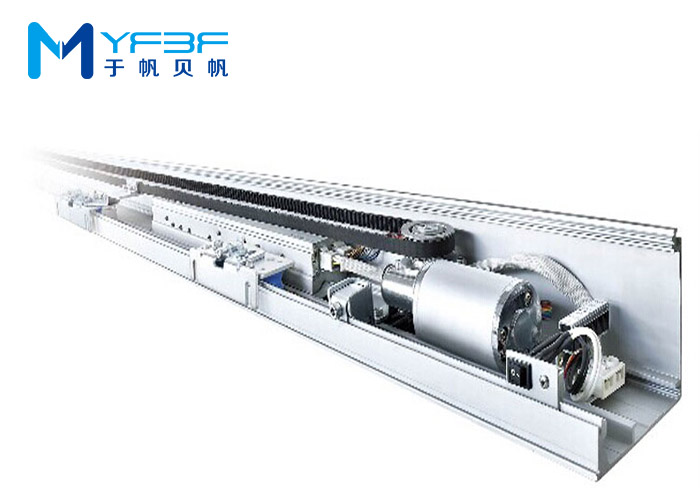
The sliding door mechanism is elegantly simple: a motor drives a pulley system that moves door panels along a track. This simplicity translates to reliable operation and straightforward maintenance. Our automatic sliding door operator range includes models from compact units for retail shops to heavy-duty systems for industrial facilities.
Where Sliding Doors Excel
- Retail storefronts and shopping malls need wide openings for customer flow during peak hours. Our YF150 accommodates door leaf widths from 700-1500mm per leaf, providing clear passage widths up to 3 meters with double-leaf configurations.
- Hospitals and healthcare facilities require hands-free operation for equipment transport. The 24V 60W brushless DC motor provides smooth, quiet operation essential in patient care areas.
- Office buildings and airports benefit from programmable open times (0-9 seconds adjustable), allowing optimization for energy conservation during low-traffic periods.
Technical Specifications That Matter
Working temperature range of -20°C to 70°C ensures reliable operation in diverse climates, from heated shopping centers to unheated loading docks. The intelligent microprocessor control system with self-learning functions adapts to door weight variations over time, maintaining consistent performance without manual recalibration.
When power fails, optional backup battery systems keep doors operational — a critical feature for emergency egress compliance. Because the motor uses brushless DC technology, energy consumption stays low even during continuous operation cycles.
Automatic Swing Doors: When Space Demands a Different Approach
Swing door operators mount above the door or on the hinge side, driving the door through its arc using arm mechanisms. This configuration trades opening width for spatial flexibility. Our swing door operators handle doors up to 200kg with adjustable opening angles typically ranging from 80-110 degrees.
Swing Door Applications
- Interior office doors where wall space is occupied by furniture, displays, or other infrastructure. The compact operator head installs cleanly above the frame.
- Historical building retrofits preserve architectural integrity while adding accessibility. Swing operators can be painted to match existing trim work.
- Fire-rated door assemblies where track-mounted sliding doors would compromise fire separation ratings. Swing doors maintain their rated performance with integrated closers.
The Trade-off: Speed vs. Space
Swing doors open more slowly than sliding doors because the arc motion requires careful acceleration and deceleration to prevent the door from slamming. Typical opening times run 3-5 seconds compared to 1.5-3 seconds for sliding doors. This isn’t a significant drawback for interior applications, but it affects throughput in high-traffic entrances where sliding doors handle 20-30% more passages per hour.
Telescopic Automatic Doors: Maximizing Openings in Tight Spaces
The mechanism uses multiple door leaves that slide behind each other on parallel tracks. When fully open, the panels nest together, taking up minimal wall space. This makes telescopic doors essential for:
- Narrow corridors and passageways where elevator lobbies or stairwells limit available wall space. A 2-meter opening that would normally need 2 meters of side clearance can work with only 700mm using telescopic panels.
- Emergency exit routes where building codes require specific clear opening widths. Telescopic doors meet egress requirements without consuming valuable floor area.
- Service entrances and loading docks where equipment must pass through but wall space is occupied by storage or other operations.
Installation Considerations
Telescopic systems require deeper headroom than single-panel sliding doors because multiple tracks must stack vertically. Budget approximately 250-300mm of header space compared to 150-200mm for standard sliding operators. The additional complexity also means slightly higher maintenance costs — more rollers, more tracks, more potential adjustment points.
However, our custom full-vision telescopic solutions integrate seamlessly with the same control systems and motors as our standard sliding operators, maintaining parts commonality across your installation.
Automatic Revolving Doors: The Energy Efficiency Champion
Revolving doors consist of three or four wing panels rotating around a central axis within a circular enclosure. They allow continuous pedestrian flow in both directions while maintaining the building envelope. This “always-open, always-closed” design makes them ideal for:
- Hotel lobbies where guest experience demands grand entrances while energy codes require air infiltration control. Revolving doors handle 10,000-15,000 passages daily in busy properties.
- Corporate headquarters and office towers where LEED certification or similar green building standards require demonstrated energy performance. Revolving doors contribute to earning points for reduced energy consumption.
- Hospital main entrances where infection control requires limiting air exchange between interior and exterior environments.
The Cost-Benefit Analysis
Revolving doors carry higher upfront costs than sliding or swing systems. The mechanical complexity, custom fabrication for specific building openings, and specialized installation requirements all contribute to premium pricing. However, when you factor in energy savings over a 10-15 year building lifecycle, revolving doors often pay for themselves through reduced HVAC operating costs.
For buildings with strict energy codes or sustainability targets, revolving doors transition from “nice-to-have” to “must-have” status. They also serve as architectural statements, creating memorable first impressions that sliding doors simply cannot match.
Head-to-Head Comparison: Specifications That Drive Decisions
| Specification | Sliding | Swing | Telescopic | Revolving |
|---|---|---|---|---|
| Max Load per Leaf | 300 kg | 200 kg | 200 kg per panel | N/A (continuous rotation) |
| Opening Speed | 150-500 mm/s | 80-120° in 3-5s | 150-400 mm/s | 6-12 RPM |
| Daily Traffic Capacity | 3,000-8,000 passages | 2,000-5,000 passages | 3,000-7,000 passages | 10,000-15,000 passages |
| Space Requirement | 1.5-2× door width side clearance | 1-2 m² floor arc | 0.5-1× door width side clearance | 2-4 m diameter footprint |
| Energy Efficiency | Good (with insulated panels) | Fair (air gaps during operation) | Good (similar to sliding) | Excellent (constant air seal) |
| Emergency Egress | Excellent (full width opening) | Good (single leaf width) | Excellent (full width opening) | Fair (requires breakaway wings) |
| Typical Applications | Retail, hospitals, offices | Interior doors, retrofits | Narrow corridors, exits | Hotels, offices, hospitals |
Selection Decision Framework: Which Door Type Fits Your Project?
Choose Sliding Doors When:
- You have adequate wall space (1.5-2 meters) on at least one side of the opening
- Daily traffic ranges from 3,000-8,000 passages
- You need maximum opening width for equipment transport or accessibility
- Budget is a primary consideration (sliding doors offer the best performance-to-cost ratio)
Choose Swing Doors When:
- Wall space is occupied or structural modifications are prohibited
- The door serves primarily as an interior access point rather than main entrance
- You’re retrofitting an existing building with fire-rated door assemblies
- Architectural aesthetics favor traditional door appearances
Choose Telescopic Doors When:
- You need maximum opening width but have less than 1 meter of side clearance
- Building codes require specific egress widths that standard sliding doors cannot achieve
- The location serves as an emergency exit requiring full-width opening capability
- You want sliding door performance in space-constrained environments
Choose Revolving Doors When:
- Daily traffic exceeds 10,000 passages and you need continuous flow
- Energy efficiency and HVAC cost reduction are top priorities
- The entrance serves as an architectural statement or brand showcase
- Green building certification (LEED, BREEAM) is a project requirement
Installation and Maintenance Considerations
Regardless of door type, proper installation determines long-term reliability. Here’s what we’ve learned from decades of field installations:
Structural Support Requirements
All automatic doors require adequate structural support for the operator head and door weight. For sliding and telescopic doors, this means a header capable of supporting 150-300 kg distributed load. Swing doors need reinforcement at hinge points to handle dynamic forces during operation. Revolving doors require a structurally sound floor to support the central pivot bearing.
Power and Control Integration
Modern operators use 24V DC power supplies with battery backup options. Control systems integrate with building management systems, fire alarm panels, and access control networks. Our operators include self-diagnostic functions that alert maintenance staff to developing issues before they cause failures.
For detailed technical guidance on installation requirements and troubleshooting, check our operator FAQs covering common installation questions and solutions.
Maintenance Realities
Sliding doors require the least maintenance — periodic track cleaning, roller inspection, and sensor alignment. Swing doors need more frequent adjustment of arm mechanisms and closer settings. Telescopic doors demand attention to multiple track systems and panel alignment. Revolving doors, despite their complexity, actually require less frequent maintenance because their continuous motion prevents debris accumulation that affects other door types.
Making the Final Decision
The “right” automatic door type depends on your specific constraints and priorities. There’s no universal best choice — only the best choice for your situation.
We manufacture all four types because different projects need different solutions. Our YF150 sliding door operator has become our best-seller not because sliding doors are inherently superior, but because they solve 80% of commercial applications effectively and affordably. For the remaining 20%, swing, telescopic, or revolving doors provide specialized advantages that justify their specific requirements.
When evaluating your options, start with your traffic patterns and spatial constraints. These two factors eliminate some door types immediately. Then consider energy efficiency requirements, aesthetic goals, and budget parameters. The decision usually becomes clear once you work through this hierarchy of priorities.
If you’re working on a specific project and want technical guidance on which door type fits your requirements, our engineering team can review your floor plans and traffic projections to recommend the optimal solution. We’ve helped architects, facility managers, and contractors navigate these decisions for projects ranging from small retail shops to major airport terminals.
Need Technical Assistance for Your Project?
Our engineering team can review your specific requirements and recommend the optimal automatic door solution. Get specifications, CAD drawings, and installation support from manufacturers who understand your project needs.
About the Author
Edison | Sales Manager, Ningbo Yufan Beifan Automatic Door Co., Ltd.
Ningbo Yufan Beifan Automatic Door Co., Ltd. specializes in automatic door system R&D and manufacturing. Core products include automatic sliding door operators, 24V brushless DC door motors, and accessories, widely used in commercial buildings, public facilities, and industrial sites. Edison manages global project inquiries and OEM/ODM custom solutions, supporting distributors and project procurement clients worldwide.
Connect: Contact Edison for project inquiries
Frequently Asked Questions
What is the most common type of automatic door?
Automatic sliding doors are the most common type, accounting for approximately 60-70% of commercial installations. Their popularity stems from reliable operation, reasonable cost, and compatibility with various building types including retail stores, hospitals, and office buildings. The standard sliding door operator handles door weights up to 300kg per leaf with adjustable opening speeds from 150-500mm/s, making it versatile enough for most applications.
Which automatic door type is best for high-traffic areas?
For high-traffic areas exceeding 10,000 passages per day, automatic revolving doors are optimal. They maintain constant airflow while allowing continuous pedestrian flow without the start-stop cycling of other door types. Telescopic sliding doors serve as a strong alternative when space constraints prevent revolving door installation, handling 7,000-10,000 daily passages with full-width emergency egress capability.
How much space does each automatic door type require?
Sliding doors need 1.5-2× door width clearance on one or both sides for panel stacking. Swing doors require 1-2 square meters of clear floor space for the door arc. Revolving doors need a circular footprint typically 2-4 meters in diameter. Telescopic doors minimize side clearance by using overlapping panels that nest compactly, requiring only 0.5-1× door width of side space while achieving 2/3 to 3/4 opening width.
What is the typical load capacity of automatic sliding door operators?
Standard automatic sliding door operators handle single leaf loads of 150-300 kg, with heavy-duty models accommodating up to 400 kg per leaf for industrial applications. Double leaf configurations typically support 2×200 kg. The operator motor, usually 24V 60W brushless DC, provides sufficient torque for smooth operation within these specifications while maintaining energy efficiency during continuous cycling.
Are automatic doors energy efficient?
Automatic revolving doors are the most energy efficient, reducing air exchange by up to 80% compared to other door types because they maintain an air seal during operation. Sliding and telescopic doors with insulated glass panels and tight seals also perform well, especially when equipped with quick-closing operators that minimize open time. Modern operators with brushless DC motors consume significantly less energy than older AC motor systems, reducing both operating costs and environmental impact.
Post time: Aug-27-2026