
What Does an Automatic Door Drive Kit Include?
- An automatic door drive kit usually includes the motor, controller, sensors, mounting hardware, and basic accessories needed to automate a door.
- For glass entrance projects, the kit should match the door type, weight, traffic level, and access-control requirements.
- The best kit is the one that fits the door geometry, installation space, and compliance needs, not just the highest motor rating.
An automatic door drive kit is the complete hardware set that powers, controls, and coordinates a door’s opening and closing cycle. In commercial projects, it is chosen to match the door type, traffic level, and accessibility requirements.
What an automatic door drive kit includes
An automatic door drive kit typically combines the drive unit, control logic, and installation parts into one system. The exact contents vary by door style, but the core components are consistent across most commercial entrance applications.
Typical kit contents for a commercial entrance system
| Component | Function | Why it matters |
|---|---|---|
| Motor or operator | Provides the driving force for door movement | Determines load capacity and cycle stability |
| Controller | Manages speed, opening time, and closing behavior | Supports smooth and repeatable operation |
| Sensors | Detects approach or presence | Improves safety and hands-free entry |
| Mounting hardware | Fixes the system to the frame or header | Ensures correct alignment and durability |
| Basic accessories | Includes brackets, belts, arms, or rails | Supports installation and maintenance |
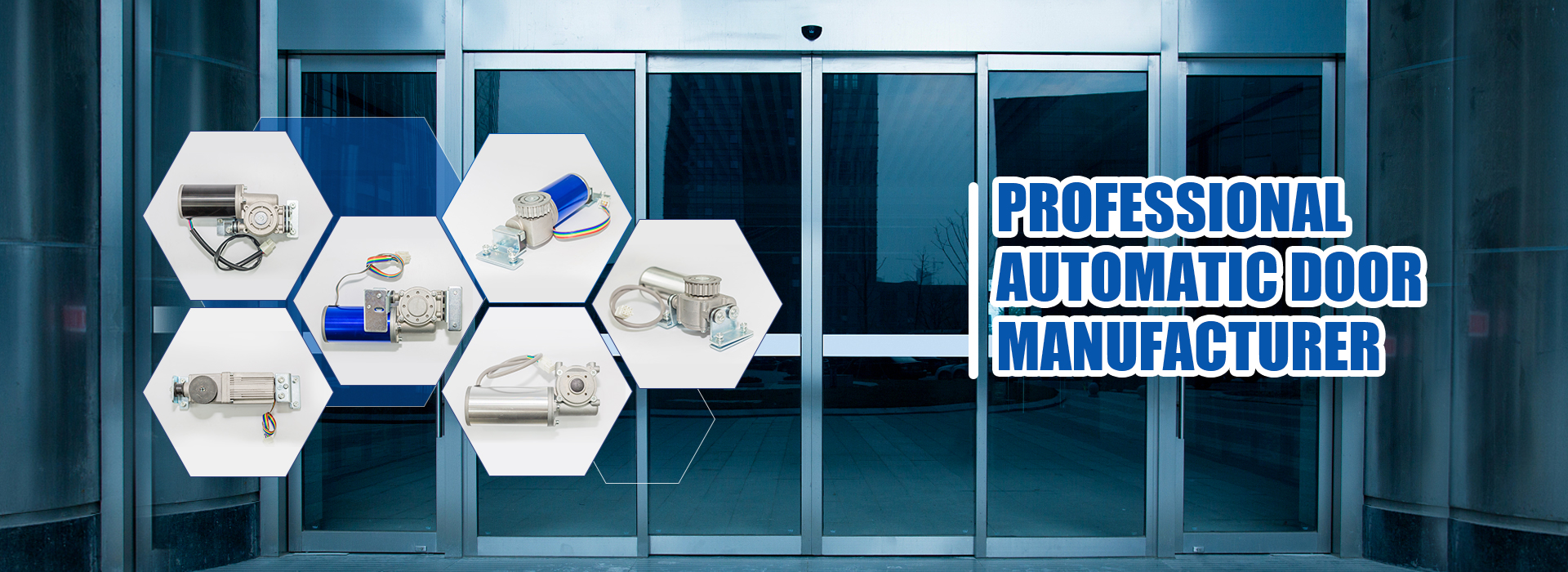
For a practical product reference, the target site organizes its range around automatic door motor models, sliding door operator solutions, and door hardware categories. That structure reflects how most projects are actually specified.
How the main parts work together
The motor is the power core, while the controller and sensors determine how the door behaves in daily use. A well-matched system opens smoothly, closes safely, and avoids unnecessary wear on the door leaf and track.
In a glass entrance, the operator must coordinate with the door leaf, guide rail, and access trigger. If the drive is oversized or undersized, the result is often noise, poor timing, or premature failure.
Common system functions by component
| Component | Main role | Selection focus |
|---|---|---|
| Drive motor | Moves the door | Torque, duty cycle, and door weight |
| Control board | Coordinates motion | Programming, delay time, and safety logic |
| Activation sensor | Triggers opening | Detection range and false-trigger resistance |
| Safety sensor | Prevents contact | Response speed and coverage area |
| Accessory set | Supports installation | Compatibility and replacement availability |
Which door types use these kits
Sliding doors and swing doors are the two most common applications for these kits. Sliding systems are preferred for high-traffic commercial entrances, while swing systems are often used where space is limited or the existing door is hinged.
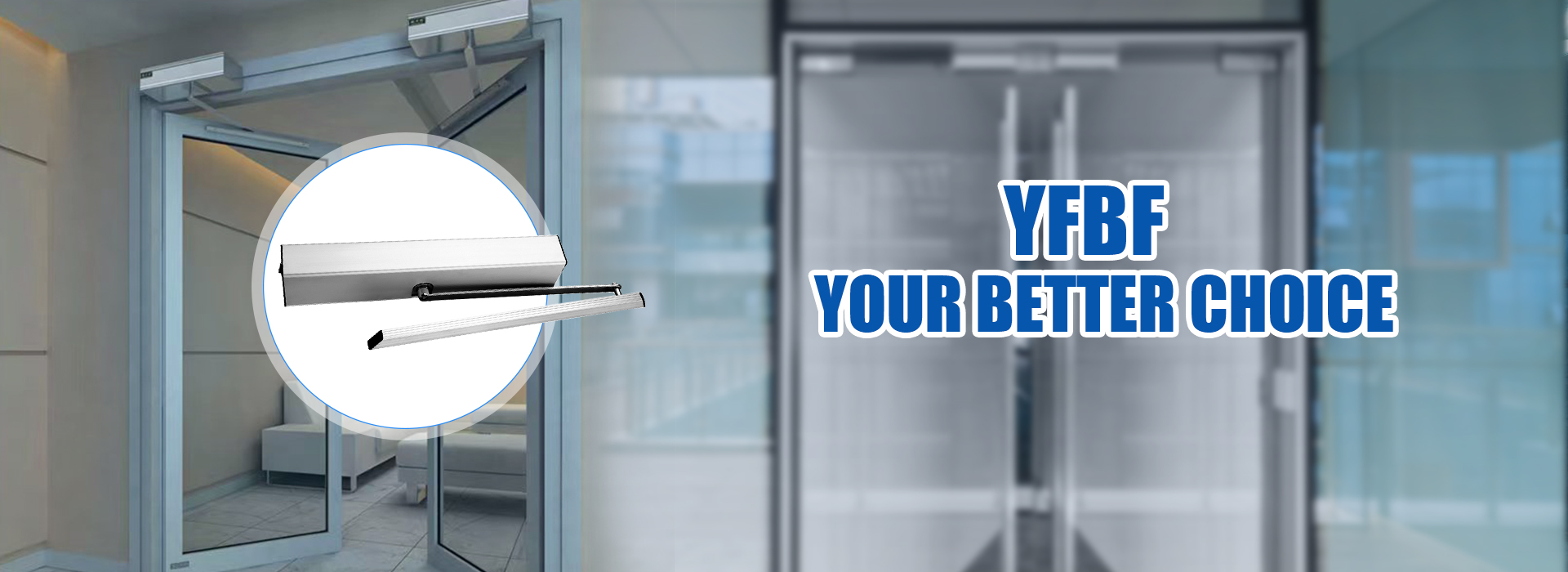
For retrofit work, a glass door automatic opener system is often selected because it supports transparent storefronts, office lobbies, and healthcare entrances. The same logic applies to a swing door operator for offices and clinics when the doorway cannot accommodate a sliding track.
- Sliding doors: best for retail, office lobbies, hospitals, and other high-cycle entrances.
- Swing doors: best for corridors, smaller rooms, and retrofit projects with hinged leaves.
- Glass doors: best for commercial spaces that need visibility, accessibility, and a clean architectural look.
How to choose the right kit
The right automatic door drive kit is selected by door weight, door width, traffic frequency, and installation space. Accessibility and control integration also matter, especially in public buildings and healthcare facilities.
Federal accessibility guidance is a useful reference point. The ADA Standards for Accessible Design define what is required for physical accessibility, and the U.S. Access Board develops accessibility guidelines for the built environment. ICC A117.1 also states that accessible routes include doors and doorways as part of the route system.
For many projects, the decision is less about brand and more about fit. A heavier door or a busier entrance needs a stronger drive and better control logic, while a light interior door may only need a low-energy operator and basic accessories.
Selection checklist for project teams
- Confirm whether the door is sliding or swing type.
- Measure door weight, width, and available header space.
- Check daily cycle frequency and expected peak traffic.
- Plan for access control, sensors, and emergency behavior.
- Verify spare-part availability for future maintenance.
Accessibility and code considerations
An automatic door drive kit should support safe, accessible passage, not just mechanical movement. In the United States, accessibility expectations are shaped by the ADA Standards, the Access Board’s guidelines, and local building code adoption of ICC A117.1.
For automatic and power-assisted doors, industry guidance commonly references ANSI/BHMA A156.10 for power-operated pedestrian doors and ANSI/BHMA A156.19 for low-energy and power-assist doors. These standards are widely used to define operating speed, force, activation, and safety behavior. 
In practice, this means the kit should be chosen with safety sensors, proper opening speed, and correct hold-open timing. A compliant system is easier to approve, easier to maintain, and less likely to create user complaints.
Why accessories matter as much as the motor
Automatic door accessories are not minor extras; they are the parts that make installation, adjustment, and repair possible. Brackets, belts, arms, rails, switches, and replacement modules often determine whether a project is completed on time.
This is especially important in maintenance work. If a replacement part is unavailable or incompatible, downtime increases and the whole entrance becomes harder to service. That is why standardized model naming and accessory continuity are valuable in commercial projects.
The target site’s product structure reflects this logic through its BF150 motor page and related operator pages, which help buyers match replacement needs to existing door hardware. For procurement teams, that kind of organization reduces specification errors.
Comparison Table: Sliding vs Swing Door Drive Kits
Comparison Table: Sliding vs Swing Door Drive Kits
| Feature | Sliding door kit | Swing door kit |
|---|---|---|
| Best use case | High-traffic commercial entrances | Space-limited or hinged entrances |
| Installation space | Needs overhead track and header room | Needs arm clearance and leaf swing space |
| Typical application | Malls, offices, hospitals, retail stores | Clinics, offices, internal passages |
| Maintenance focus | Track, belt, rollers, and alignment | Arm, hinge load, and opening force |
| Retrofit suitability | Strong for glass door upgrades | Strong for existing hinged doors |
Where to buy and how to compare suppliers
A good supplier should offer the motor, operator, and accessory set as a coordinated system rather than isolated parts. That approach simplifies specification, installation, and after-sales support.
For buyers comparing options, the most useful product pages are usually the motor category, the sliding operator category, and the swing operator category. These pages help project teams compare door type, load range, and retrofit suitability in one place.
Well-known industry suppliers beyond a single factory model also include established door-hardware manufacturers and access-control integrators. The best comparison method is to check compatibility, documentation quality, spare-part support, and compliance references before purchase.
FAQ
What is the difference between a motor and a complete drive kit? A motor only provides power, while a complete drive kit also includes control, sensing, and installation hardware. In commercial projects, the full kit is usually the better choice because it reduces compatibility problems and makes commissioning easier.
Can a drive kit be used on a glass door? Yes, many kits are designed for glass door automation. The key is to confirm the door weight, leaf size, mounting method, and available header space. Glass entrances often need a coordinated operator, track, and accessory set for stable performance.
How do I know whether I need a sliding or swing system? The door type usually decides that. Sliding systems suit wider, busier entrances, while swing systems suit hinged doors and tighter spaces. If the existing opening cannot be rebuilt, the original door geometry should guide the selection.
Do automatic door kits need safety sensors? In most commercial applications, yes. Safety sensors help prevent the door from closing on a person or object. They are especially important in healthcare, retail, and public buildings where traffic is frequent and user behavior is unpredictable.
What should maintenance teams check first during troubleshooting? Start with power supply, sensor alignment, track condition, and accessory wear. Many failures come from simple issues such as loose mounting, dirty sensors, or worn belts. Checking these items first often reduces downtime and avoids unnecessary part replacement.

David Chen
Post time: Jun-29-2026