
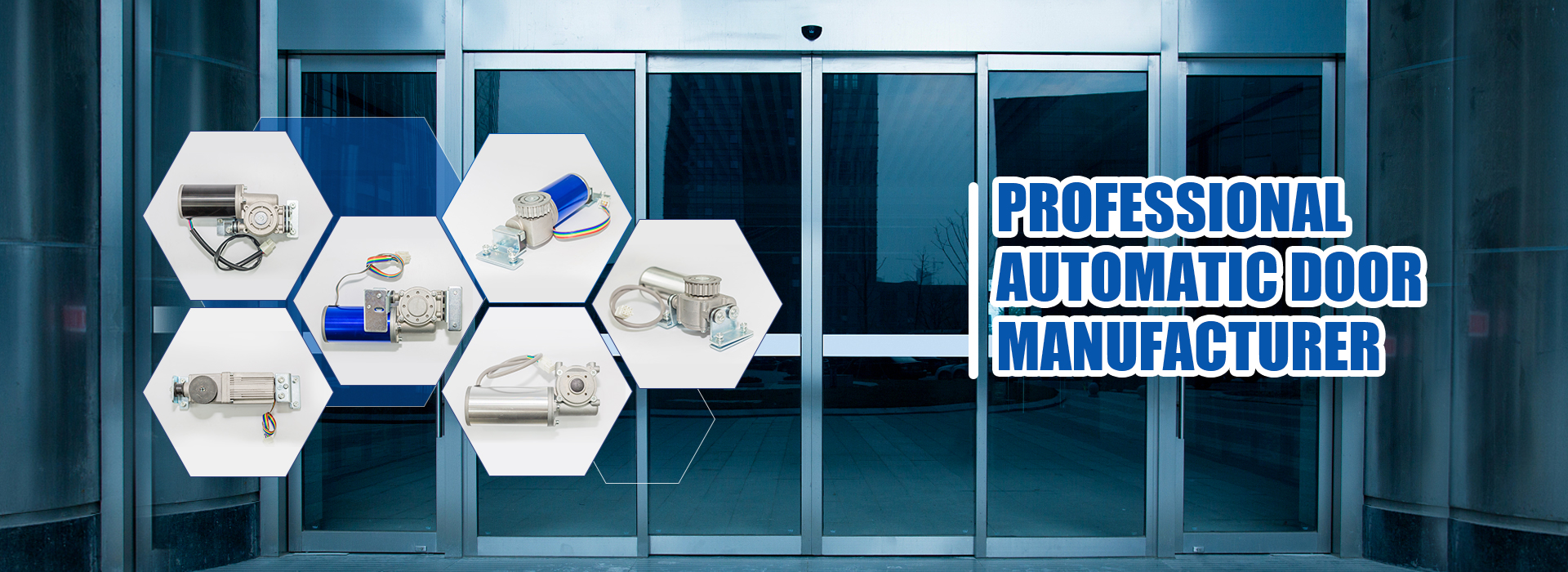
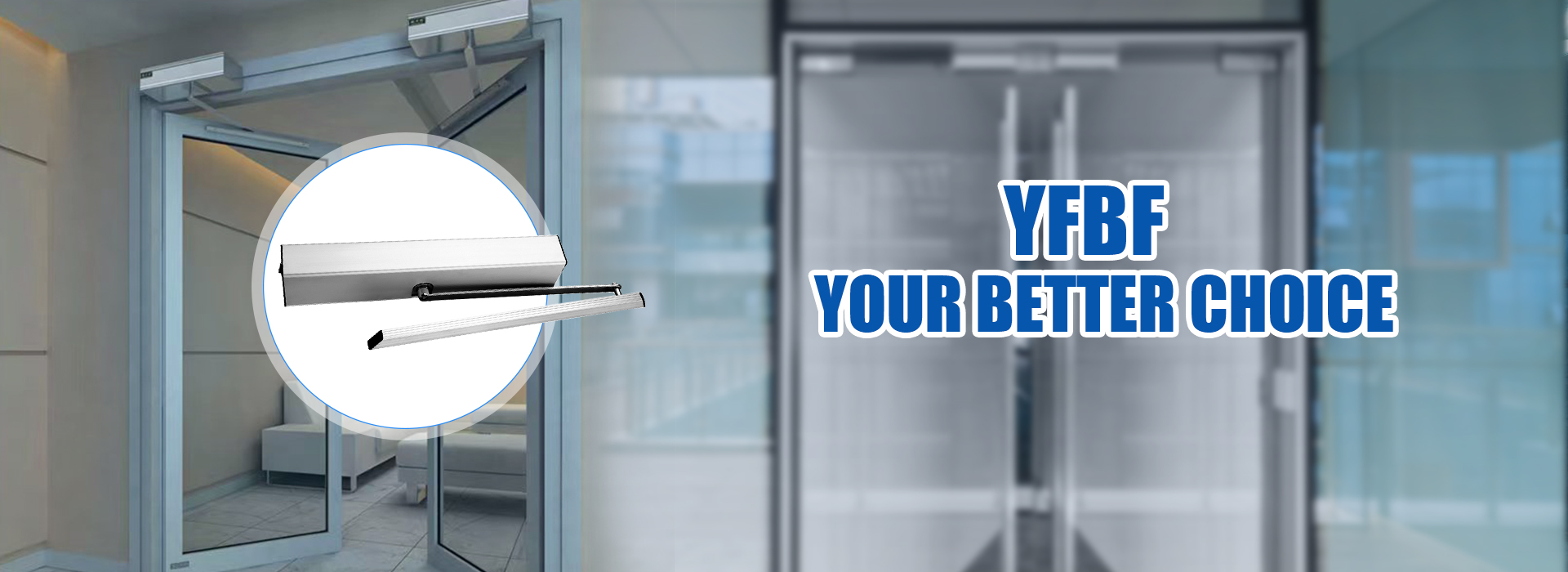
- Accessories are not secondary parts; they are the interface between the door leaf, the operator, and the site conditions.
- Installation success depends on compatibility across door weight, door width, opening mode, traffic volume, and power supply.
- Maintenance becomes faster and cheaper when replacement components are standardized and easy to identify.
- High-traffic entrances need accessories that support stable sensing, secure mounting, and repeatable motion control.
- Search intent here is both practical and procurement-driven: buyers want to know what is essential, what is optional, and what will fail first.
Automatic door accessories are essential because a door system is only as reliable as the parts that support it, from mounting hardware and sensors to control modules and replacement components. In commercial building practice, door operators must work within defined performance and safety expectations; for example, ISO 13849-1 defines safety-related control principles, while NIST SI Units provides the measurement framework used when installers check alignment, clearance, and tolerances. For a site where every minute of downtime matters, the difference between a smooth handover and repeated callbacks is often the quality of the accessories, not the drive unit alone. Related product pages such as automatic sliding door operator, automatic swing door operator, and glass door operator show how accessories and operator selection work together in real applications.
Why automatic door accessories matter for installation and maintenance
Automatic door accessories matter because they decide whether the operator can be installed once and left alone, or installed repeatedly and adjusted forever.
In a commercial entrance, the operator is only one part of the system. The rest includes brackets, arms, tracks, rollers, guide rails, sensors, activation devices, controllers, locks, and serviceable spare parts. When these parts are not matched to the door type, technicians spend more time on alignment, force balancing, and troubleshooting than on final commissioning. That is especially true for glass door retrofit work, where the site is often constrained, the existing frame may vary, and tolerance stack-up becomes visible in daily use.
For installation teams, the practical value of accessories is repeatability. A well-defined hardware set helps installers predict how the door will behave under load, how the motion profile will change with heavier leaves, and how much adjustment will be needed after the first week of traffic. For maintenance teams, standard parts reduce mean time to repair because failed items can be replaced without redesigning the whole entrance.
From a procurement perspective, accessories also reduce decision risk. Buyers are rarely just buying a motor; they are buying a workable door system with acceptable service intervals, spare-part availability, and compatibility with access control.
Automatic door accessories and the core parts of a door system
The most important automatic door accessories are the ones that connect power, motion, sensing, and safety.
In practical terms, a complete entrance package usually contains a drive unit, controller, activation sensor, mounting accessories, and one or more replacement-friendly wear components. For sliding doors, that often means rails, hangers, belt or chain drive elements, end stops, and guide pieces. For swing doors, it usually means arms, brackets, hinges, and hold-open or closing-force related components. For glass doors, clamping hardware and alignment parts become even more critical because glass leaves are sensitive to imbalance and point loading.
The following table summarizes the functional role of common parts in project delivery and service work.
| Component | Primary function | Typical installation risk if missing | Maintenance impact |
|---|---|---|---|
| Mounting brackets | Fix operator to frame or wall | Misalignment, vibration, noise | Fast re-torque checks |
| Activation sensor | Trigger opening and closing | Delayed response, false triggers | Cleaning and sensitivity checks |
| Controller | Manage motion logic and timing | Erratic speed or force behavior | Parameter review after service |
| Guide rail or arm set | Transfer motion to the leaf | Poor opening geometry | Wear inspection and replacement |
| Lock or access interface | Coordinate security and entry | Unauthorized access or lock conflict | Functional verification |
For high-frequency entrances, these parts must do more than fit; they must tolerate repeated cycles without drifting out of adjustment. In many commercial projects, the operator and accessory combination is expected to support thousands of daily openings, so small mechanical weaknesses become expensive quickly.
How door installation parts affect commissioning quality
Door installation parts determine whether commissioning is straightforward or technically messy.
Commissioning is the stage where the installed hardware is tuned to the actual site conditions. This is where installers check leaf movement, opening force, closing speed, obstruction response, and final alignment. If the brackets are not rigid enough, the operator can shift slightly under load. If the sensor position is wrong, the door may open late or too often. If the guide hardware is incompatible with the leaf type, the motion path may not stay stable across seasons.
That is why installation parts should be selected with the same seriousness as the operator itself. In a narrow office entrance, the difference between a good and bad outcome may be a few millimeters of mounting offset or a mismatched arm length. In a hospital corridor, poor accessory selection can create repeated service calls because the door is asked to operate quietly, consistently, and with a stable opening width.
Installation teams should evaluate the following before ordering parts:
- Door weight and leaf geometry
- Door width and available header space
- Mounting substrate quality
- Power supply and control wiring path
- Access control integration needs
- Expected traffic intensity
For numerical context, commercial entrance projects often reference millimeter-level fit-up rather than approximate visual alignment. NIST recommends using SI units consistently for measurement communication, which helps installers avoid confusion between metric and nonmetric working practices. In practice, technicians may also rely on hardware tolerances such as ±0.5 mm alignment targets for bracket positioning on precise retrofit work, although the acceptable target depends on the operator design and site conditions.
| Installation factor | Good practice target | Why it matters |
|---|---|---|
| Mounting alignment | Within 1 mm to 2 mm where specified | Reduces friction and side loading |
| Sensor positioning | Adjusted to full trigger zone coverage | Prevents missed activation |
| Leaf travel consistency | Uniform open/close cycle | Improves user experience and safety |
| Service access | Clear access to wear parts | Shortens maintenance downtime |
Replacement components and why compatibility is the real issue
Replacement components matter most when a breakdown happens and the entrance must return to service quickly.
In maintenance work, downtime is usually driven less by the failed part itself and more by how long it takes to identify, source, and install the correct replacement. That is why standard naming, part mapping, and model compatibility are operational advantages rather than paperwork details. A site team that can match the old accessory to the correct spare in minutes will always outperform a team that has to disassemble the operator to confirm every dimension.
Compatibility is especially important in automatic door replacement scenarios because older projects may have mixed generations of controls, sensors, and mounting hardware. One supplier may have changed connector formats, another may have revised arm geometry, and a third may have updated control logic. If the replacement component is not matched to the original operator series, the result is often a partial repair followed by another service visit.
The practical maintenance rule is simple: stock parts that fail frequently, label parts by model family, and document the site-specific configuration during installation.
| Replacement item | Typical failure symptom | Best maintenance response |
|---|---|---|
| Sensor | False triggering or no activation | Clean, test, then replace if unstable |
| Drive belt or transmission part | Slippage, noise, uneven travel | Inspect wear pattern and swap promptly |
| Mounting hardware | Loose operator or vibration | Re-torque and verify substrate condition |
| Control board | No response or erratic motion | Check power and connectors before replacement |
| Arm or rail element | Binding or incomplete movement | Confirm geometry and replace matched part |
According to ISO 21542:2021, accessibility in the built environment is a measurable design concern, which is one reason replacement parts must preserve smooth, predictable door movement. If a spare part changes opening behavior, it may affect accessibility as well as convenience.
Automatic door accessories for high-traffic commercial entrances
High-traffic entrances require accessories that are built for repetition, not just initial fit.
Retail stores, office lobbies, and medical entrances are not static environments. They experience variable crowd loads, uneven peak demand, and frequent touchpoints with users carrying bags, carts, or mobility aids. In those settings, sensor reliability, arm durability, and control stability matter more than elegant packaging or isolated peak performance claims.
For this reason, automatic door accessories for commercial entrances should be selected with wear resistance, thermal stability, and service accessibility in mind. The door may open thousands of times per week, so a component that is acceptable in a low-use interior corridor may fail early at a mall entrance. Maintenance planning should therefore assume that the accessory set is a consumable support layer, not a one-time purchase.
The table below shows how accessory priorities change by use case.
| Use case | Traffic pattern | Accessory priority | Main risk |
|---|---|---|---|
| Office lobby | Moderate weekday peaks | Access control, sensor reliability | Visitor flow delays |
| Hospital entrance | Continuous and mixed traffic | Low-noise motion, accessible operation | Service interruption |
| Retail store | Peak-hour surges | Fast sensing, durable hardware | Wear and false triggering |
| Glass storefront | Frequent public use | Precise mounting, visual consistency | Alignment drift |
In the United States, accessibility design is also influenced by the U.S. Access Board door guidance, which is useful when evaluating opening clearance, maneuvering space, and usable access width. That makes accessory selection part of compliance thinking, not only part of mechanical engineering.
How door accessories support access control and security integration
Access control works best when the door accessories make the interface predictable.
Many automatic door systems are expected to connect with card readers, keypad entry, motion sensors, remote controls, and building management logic. In those cases, the accessory package must support both opening motion and security behavior. A door that opens correctly but cannot coordinate with a lock, or a lock that conflicts with the operator timing, creates a user experience problem and a security problem at the same time.
For engineers and facility managers, this means the accessory plan should define when the door unlocks, how long it stays open, what happens during power loss, and how the door behaves under emergency conditions. In practical deployments, the control layer is often more complex than the moving hardware, so clear wiring and labeled replacement modules make future troubleshooting much easier.
When specifying automatic door accessories for access control, ask these questions:
- Does the controller support the required dry contact or signal interface?
- Can the lock and operator sequence without conflict?
- Is the sensor logic suitable for one-way or two-way traffic?
- Can maintenance replace modules without redoing the full wiring?
- Does the system retain safe behavior during power interruption?
Installation, maintenance, and the cost of getting accessories wrong
Choosing the wrong accessory often costs more than buying the right one.
At installation, an incompatible part can delay handover and create rework. During maintenance, the wrong spare can extend downtime and add labor cost. In a busy commercial building, that can affect tenant operations, customer flow, and service reputation. For healthcare sites, it may even affect patient access routing.
One reason project teams underestimate accessories is that they look inexpensive compared with the operator. But the accessory layer is what absorbs real-world variation: imperfect wall conditions, uneven glass tolerances, site-specific user behavior, and changing traffic volumes. A small issue such as a weak bracket, poor sensor placement, or an unlisted replacement part can become a recurring service expense.
A useful maintenance approach is to classify accessories into three groups:
- Critical install parts: brackets, arms, rails, and primary mounting elements.
- Functional control parts: sensors, controllers, switches, and interfaces.
- Service spares: wear items and model-specific replacement components.
That structure makes stocking and troubleshooting more practical. It also helps procurement teams avoid overbuying low-risk parts while keeping high-failure items on hand.
How to choose automatic door accessories for your project
The best automatic door accessories are the ones matched to the site, not just the catalog.
Selection should start with the door type. A sliding entrance needs different hardware than a swing door, and a glass retrofit needs different mounting logic than a framed commercial door. Next, define the service environment: office lobby, retail storefront, clinic entrance, or hospital access point. Then confirm traffic intensity, available header depth, access control needs, and maintenance expectations.
A practical selection checklist looks like this:
- Confirm door leaf weight and width.
- Confirm door type: sliding, swing, or glass retrofit.
- Check available mounting space and substrate strength.
- Identify sensor and access control requirements.
- Verify part compatibility and spare availability.
- Plan for service access and future replacement.
For project teams comparing operator families, internal product pages such as automatic door operator and automatic door parts can help map the relationship between the main drive unit and the supporting accessories. In most cases, the buying decision is not “which motor is strongest,” but “which full system will stay reliable after installation and through the next maintenance cycle.”
Comparison table: operator-only thinking vs full accessory planning
Full accessory planning produces better lifecycle results than focusing on the drive unit alone.
| Approach | Short-term result | Long-term result | Typical project risk |
|---|---|---|---|
| Operator-only focus | Faster initial quote | More callbacks and adjustment visits | Hidden service cost |
| Full accessory planning | More detailed specification | Better uptime and easier maintenance | Lower lifecycle risk |
| No spare-part strategy | Lower upfront inventory | Longer downtime during failure | Service delay |
| Standardized replacement parts | Better initial documentation | Faster repair and simpler stocking | Lower recovery time |
That difference is why automatic door accessories are a planning issue, not an afterthought. The system that looks simplest at purchase time is often the most expensive to maintain if its supporting parts are not standardized.
FAQ about automatic door accessories, door installation parts, and replacement components
What are the most important automatic door accessories?
The most important automatic door accessories are the parts that connect the operator to the site: mounting hardware, sensors, control modules, arms or rails, and compatible replacement components.
Why do installation parts matter so much?
Installation parts matter because they determine alignment, load transfer, and long-term stability. Poor mounting or mismatched hardware often causes repeated adjustment and service calls.
How do replacement components reduce downtime?
Replacement components reduce downtime by making repairs faster and more predictable. If the correct spare is available, technicians can restore function without redesigning the entrance.
Are automatic door accessories different for sliding and swing doors?
Yes. Sliding doors usually rely on rails, rollers, and motion transfer components, while swing doors depend more on arms, brackets, and opening geometry.
What should I check before ordering door installation parts?
Check door type, leaf weight, door width, header space, substrate strength, control interface needs, and spare-part compatibility.
How do accessories affect access control integration?
Accessories affect whether the door can unlock, open, hold, and close in the right sequence. The controller and interface parts must match the access system logic.
What is the most common maintenance mistake?
The most common mistake is replacing a failed part with a visually similar part that is not model-compatible. That often creates new problems after restart.

David Chen
Post time: Jul-22-2026