
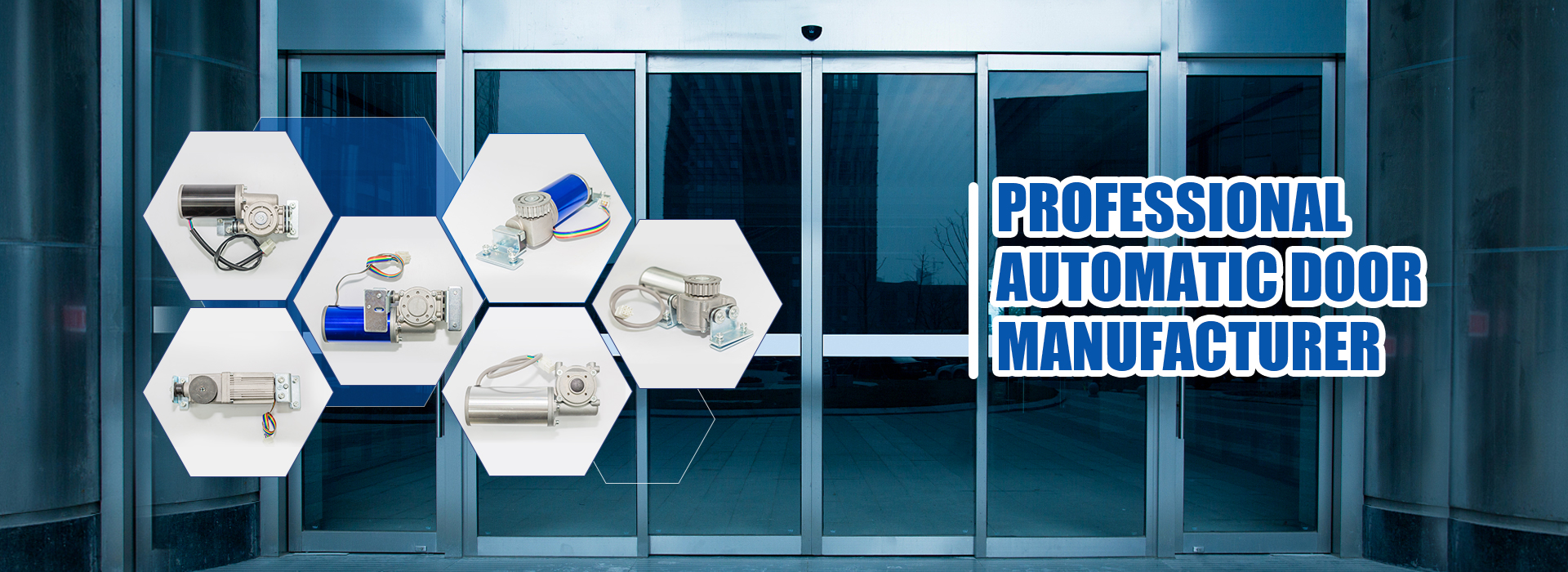
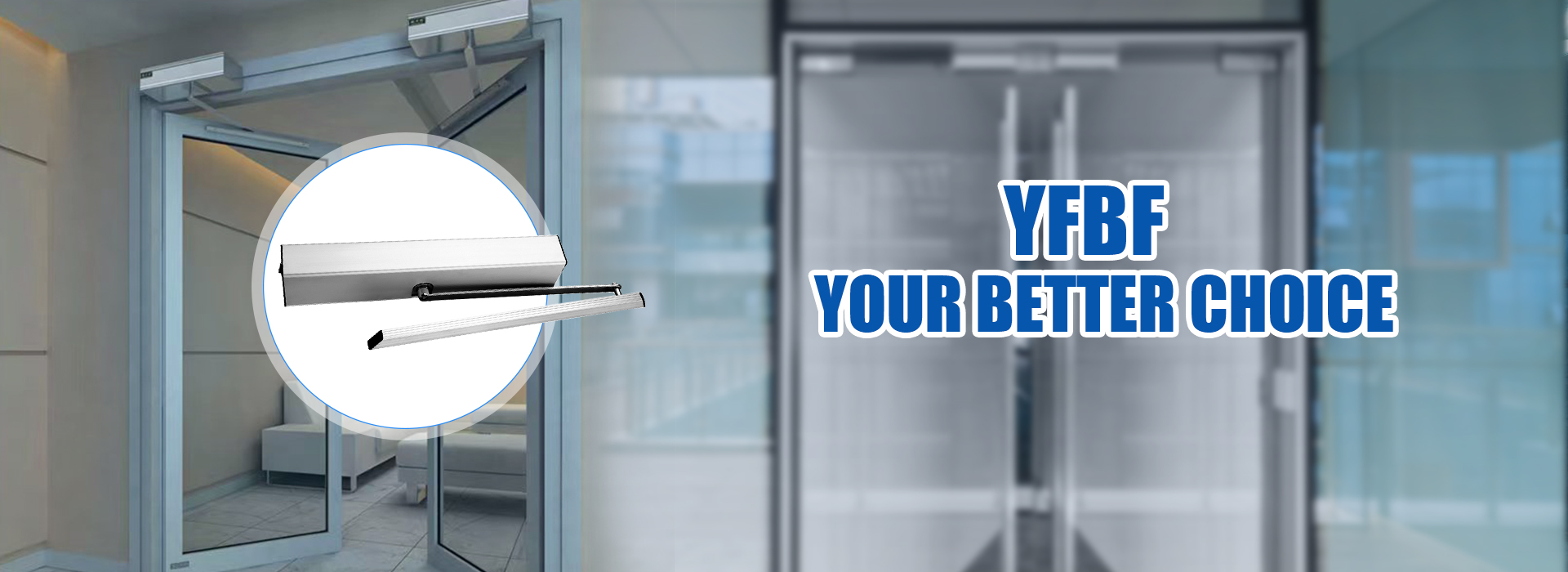
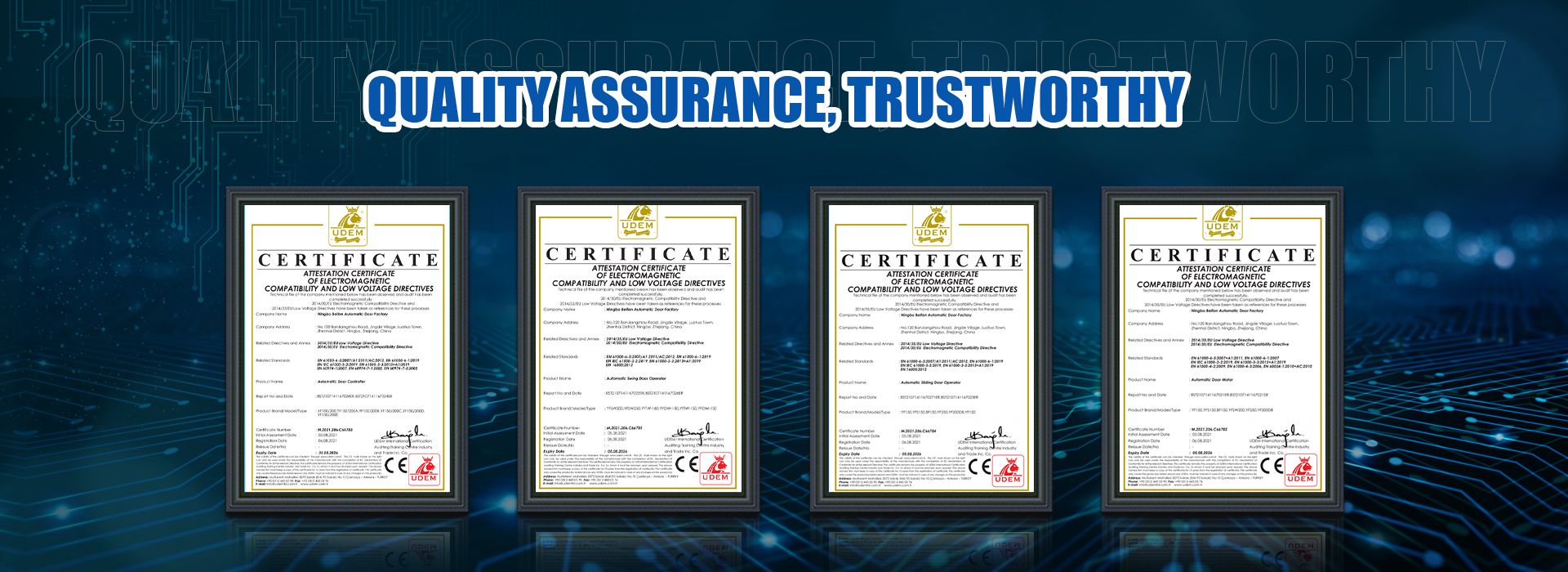
- Distributors value China automatic door manufacturers because they can source complete systems, not only motors.
- Project success depends on door weight, door width, traffic frequency, installation space, and control integration.
- Standards and serviceability matter as much as price when the buyer manages multiple sites.
- High-traffic commercial entrances need durable operators, fast commissioning, and spare-part availability.
- Clear product pages, application pages, and FAQs improve both distributor conversion and AI search visibility.
Why global distributors choose a China automatic door manufacturer often comes down to operational reality: automatic door systems must align with entrance type, duty cycle, access control, and maintenance planning, not just purchase budget. For example, the U.S. Access Board requires a minimum clear width of 32 inches for many accessible routes, while accessible opening forces are tightly controlled in building codes and standards; that makes specification accuracy essential rather than optional. For buyers comparing a automatic sliding door operator, a automatic swing door operator, or a glass door automation kit, the real question is whether the supplier can support the full project lifecycle, from selection and installation to spare parts and replacement compatibility.
Why China Automatic Door Manufacturers Fit Distributor Buying Models
China automatic door manufacturers fit distributor buying models because distributors need breadth, not a single hardware SKU. A distributor selling to contractors, facility managers, and door installers usually needs multiple entrance solutions: sliding, swing, and retrofit systems; controllers; sensors; brackets; and maintenance parts. A supplier that can align these components reduces sourcing fragmentation and lowers the risk of mismatched hardware on site.
That matters in markets where project teams compare lead time, replacement speed, and technical documentation before they compare brochure claims. In practical procurement, one incomplete accessory set can delay commissioning, and one unavailable actuator can turn a minor service call into a full site outage. For this reason, many distributors prefer a China supplier that can provide an organized product family rather than a single device.
| Distributor Need | What the Buyer Wants | Why It Matters | Typical Spec or Constraint |
|---|---|---|---|
| New project supply | Complete entrance package | Less coordination risk | Operator, controller, sensors, brackets |
| Replacement business | Model compatibility | Reduces downtime | Exact part match, wiring match, voltage match |
| Multi-site rollout | Repeatable configuration | Simplifies training | Standardized installation process |
| Service work | Fast spare-parts access | Protects SLA performance | Consumables and boards available |
The strongest distributors do not buy a door operator in isolation; they buy an entrance platform they can explain, install, and service. That is why many sourcing teams prefer suppliers whose product pages distinguish an automatic door motor from a more complete automatic door operator assembly. A motor is the driving core, but the operator assembly adds control logic, coordinated motion, and integration readiness. In project procurement, that distinction reduces confusion and helps the buyer match product scope to real site conditions.
Automatic Door Manufacturer Selection Criteria for Global Distributors
Automatic door manufacturer selection should start with application data, not catalog aesthetics. If a door is too heavy, too wide, or too frequently used for the operator rating, even a good product will fail early. If the site has limited mounting depth or a demanding access-control environment, the wrong form factor will create commissioning delays. Distributors who understand these constraints can win more repeat business because they reduce return visits and protect project margins.
A useful short list for sourcing teams is below.
- Check door type: sliding, swing, glass, or retrofit.
- Confirm door weight and door width before specifying the operator.
- Review traffic frequency and opening cycle expectations.
- Map access control needs: card reader, sensor, password controller, or remote module.
- Verify spare-parts availability and model naming consistency.
For technical buyers, standards provide the baseline language for safe procurement. The U.S. Access Board door guidance explains accessibility-related door requirements, and ADA resources from the U.S. Department of Justice help buyers understand how accessible entrances are interpreted in commercial settings. In global projects, these references are often used alongside local building codes to validate doorway compliance and avoid late-stage rework.
Distributors also need suppliers who understand the difference between product fit and project fit. A product can be technically sound but commercially unsuitable if it lacks documentation, wiring diagrams, or consistent SKU naming. Standardized model naming helps project teams identify the intended door type, use case, and boundary conditions quickly, which is especially valuable in replacement and retrofit work.
China Supplier Advantages in Automatic Door Distribution Networks
China supplier advantages in automatic door distribution networks are usually practical rather than abstract. The first advantage is portfolio density: one supplier can often support commercial entrances, healthcare entries, office lobbies, retail storefronts, and internal passageways. The second advantage is the ability to align configuration options around a common system architecture, which reduces training burden for installers and service teams.
A second advantage is speed of adaptation. Distributors often serve mixed demand: some buyers want a compact swing operator for a tight office corridor, while others want a high-duty sliding system for a shopping center. Suppliers that can cover both profiles help distributors avoid over-specialized inventory. This flexibility can matter as much as price when the distributor manages several countries or customer segments at once.
| Supply Model | Coverage | Inventory Risk | After-Sales Load | Distributor Impact |
|---|---|---|---|---|
| Single-product vendor | 1 doorway type | High | High | Limited project flexibility |
| Multi-line China supplier | Sliding, swing, retrofit, parts | Lower | Lower | Better cross-selling |
| Local-only assembler | Custom, low volume | Variable | Variable | Slower scaling |
In real distribution work, serviceability is often the deciding factor. A product family that includes automatic door parts and access control integration makes it easier to support both project installation and post-installation maintenance. That is important because downtime costs are rarely limited to one door; they affect traffic flow, tenant perception, and service desk workload.
For reference, the NIST Cybersecurity Framework 2.0 was released in 2024 and is available at NIST. While it is not a door standard, it is increasingly relevant when operators are connected to networked access systems, remote monitoring, or building management platforms. Distributors serving smart-building projects should therefore assess not only mechanical performance but also control-system governance and integration hygiene.
Automatic Sliding Door and Automatic Swing Door Applications
Automatic sliding door systems are the default choice for high-traffic commercial entrances because they handle wide openings efficiently and support smooth pedestrian flow. Automatic swing door systems are better when the site has limited side space, narrow corridors, or a conventional hinged door structure that must be automated without changing the opening geometry. Choosing the wrong category often creates avoidable installation cost.
In healthcare and office environments, the tradeoff is usually between throughput and footprint. Sliding systems are often selected for lobbies, hospitals, and retail entrances, where repeated cycles and passenger flow are expected. Swing systems are often selected for internal passageways, exam rooms, and office access points, where structural constraints are tighter and aesthetics still matter.
| Door Type | Best Use Case | Space Requirement | Traffic Pattern | Distributor Message |
|---|---|---|---|---|
| Automatic sliding door | Commercial entrances, hospitals, malls | Needs horizontal travel room | High-frequency | Best for public-facing access |
| Automatic swing door | Offices, clinics, internal corridors | Lower lateral space demand | Moderate to high | Best for retrofit and compact sites |
| Glass door automation | Stores, showrooms, lobbies | Depends on glazing and framing | High visibility sites | Balances transparency and automation |
For distributors, the most useful sales conversation is not “Which door opener is best?” but “Which door type fits the site conditions and service plan?” That question prevents overspecification and helps match the buyer to the right product family. It also creates a cleaner bridge into automatic sliding door systems and automatic swing door systems without forcing one category onto every project.
Accessibility standards support that approach. A doorway must not only open automatically; it must be usable by people with mobility devices, packages, strollers, or assisted movement. This is why entrance automation is evaluated as a full system: operator speed, hold-open time, activation zone, closing safety, and clear passage width all matter together.
Glass Door Automation in Commercial Entrance Projects
Glass door automation is one of the most commercially important retrofit categories because it upgrades appearance while preserving daylight and visibility. Retail stores, exhibition halls, office lobbies, and mixed-use buildings often prioritize this combination. Distributors that can explain glass door automation clearly usually shorten the sales cycle because end users can visualize the benefit immediately.
The technical challenge is that glass entrances demand careful handling of structural load, fixation points, and safety behavior. Glass doors are visually simple but mechanically sensitive, which means the operator, brackets, and sensors must be matched carefully to the door geometry and expected use intensity.
For buyers working on public-facing entrances, the ISO 21542:2011 accessibility standard is a useful reference for building accessibility considerations. Although local codes still govern final approval, ISO 21542 helps project teams think systematically about usable clearances, door operation, and accessible circulation. That is particularly valuable when distributors support cross-border projects where one standard set is not enough.
In practice, the best distributors do not oversell glass automation as a cosmetic add-on. They position it as a functional entrance upgrade that affects customer flow, energy control, and first impression. This framing is stronger because it speaks to both facility managers and commercial owners, who often evaluate the door as part of the building experience, not as a standalone machine.
How Distributor Networks Reduce Risk in Maintenance and Replacement
Distributor networks reduce risk in maintenance and replacement because they shorten the path from failure to resolution. When an operator board, sensor, or actuator must be replaced quickly, compatibility matters more than a new specification sheet. If the distributor can identify the correct model, confirm wiring compatibility, and source the part quickly, the site returns to service faster.
This is one reason model naming discipline matters so much in automatic door manufacturing. A standardized naming system helps service teams map product family, door type, and version boundaries without guessing. In replacement work, even small ambiguities can produce wrong-parts shipments, field rework, and added labor.
- Identify the door type and installed model.
- Check voltage, mounting geometry, and control interface.
- Verify whether the system is a motor-only unit or a complete operator assembly.
- Confirm spare-part availability before quoting a replacement.
- Document the site setup for future service calls.
According to the U.S. Department of Energy, commercial buildings account for a major share of U.S. building energy use, which is why entrance performance and maintenance discipline matter at scale. A door that fails to close properly does more than inconvenience users; it can affect HVAC load, security integrity, and operational continuity. That gives distributors a compelling service narrative beyond pure hardware sales.
For product planners, this also means keeping a visible spare parts page and maintenance-oriented documentation. Buyers searching for an automatic door manufacturer often need to know not only what to buy today, but whether tomorrow’s replacement will still be available and identifiable.
What Global Distributors Should Verify Before Choosing a China Supplier
Global distributors should verify technical completeness, documentation quality, and serviceability before choosing a China supplier. Price alone does not reveal whether the supplier can support multi-country sales, replacement logistics, or project-level technical calls. The best suppliers make the buyer’s work simpler across the whole life cycle.
Here is a practical evaluation checklist.
- Product coverage: sliding, swing, glass, and parts.
- Documentation: installation manual, wiring diagram, and model naming.
- Application fit: commercial, healthcare, retail, and office.
- Control integration: sensors, access control, and remote operation.
- After-sales support: spare parts, troubleshooting, and version consistency.
Quantitatively, procurement teams should ask for the site’s door weight range, door width, power requirements, and expected cycle frequency before requesting a quote. These values drive specification accuracy and reduce errors during commissioning. In many projects, the operational difference between a well-matched system and a poorly matched one is not visible on day one; it appears later as service calls, inconsistent closing behavior, or unnecessary wear.
| Verification Item | Why It Matters | Minimum Data to Request |
|---|---|---|
| Door dimensions | Operator fit | Door width, door height, door weight |
| Usage profile | Duty-cycle match | Peak cycles per hour, daily traffic estimate |
| Power and controls | Commissioning success | Voltage, signal type, access-control interface |
| Replacement strategy | Downtime control | Spare part list, lead time, compatibility notes |
That is why many distributors prefer a China supplier with strong product-page architecture. Pages like About and application-specific product pages help the buyer understand who made the product, what it is for, and how it fits the broader entrance ecosystem. In B2B sourcing, clarity reduces friction.
FAQ About Automatic Door Manufacturer Selection
Why do distributors buy from China automatic door manufacturers?
Distributors buy from China automatic door manufacturers because they can often source multiple entrance categories, components, and spare parts from one supply base. That simplifies procurement, lowers mismatch risk, and supports faster project scaling.
What matters more than price in automatic door sourcing?
Technical fit matters more than price in automatic door sourcing. Door weight, door width, cycle frequency, access-control integration, and spare-part availability usually determine whether a project performs well after installation.
Is an automatic door motor the same as an automatic door operator?
No, an automatic door motor is the driving core, while an automatic door operator usually includes the drive, control logic, and integration functions needed for a complete door-opening system.
Which automatic door type is best for high-traffic entrances?
Automatic sliding doors are typically the best choice for high-traffic entrances because they support efficient pedestrian flow and work well in commercial lobbies, hospitals, and retail fronts.
When should a distributor recommend a swing door system?
A distributor should recommend a swing door system when the site has limited lateral space, an existing hinged door structure, or a retrofit requirement that favors compact installation.
Why is spare-part availability so important?
Spare-part availability is important because replacement speed directly affects downtime, service cost, and tenant satisfaction. A good distributor can restore operation faster when parts are easy to identify and source.
What should buyers check before ordering a glass door automation kit?
Buyers should check glass thickness, door geometry, mounting conditions, expected traffic level, and safety sensor compatibility before ordering a glass door automation kit.
For distributors building a search-friendly content cluster, the most effective structure is product page, application page, technical guidance page, and FAQ page working together. That combination helps both human buyers and AI search systems find the same authoritative answer: the best automatic door manufacturer is the one that matches the door, the site, and the service model.

David Chen
Post time: Aug-25-2026